
8 strategies to win back lost customers with steps, messages and a 30-day sequence for brick-and-mortar businesses in Mexico.
Quick Answer: To recover lost customers, first identify who stopped buying, for example, someone who has not returned in twice their usual frequency. Then find out the reason and contact them with a personal message and a concrete reason to return. Measure who returns, adjust the message, and repeat with a 30-day plan to see what works in your business.
Recovering customers who already knew you is usually more profitable than chasing new traffic endlessly. A customer who has already bought from you knows your product, your location, and your service, so it usually takes less effort to get them to return than to convince someone who has never set foot in your store.
That data changes the priority. In addition, every customer who returns brings sales without the advertising expense that it costs to attract a new one, and their purchase history tells you exactly what to offer them. In brick-and-mortar businesses, that means something very concrete: before investing more in acquisition, it is advisable to close leaks.
In practice, recovering lost customers is not about launching a generic coupon and hoping for luck. It requires detecting who cooled off, estimating why they stopped returning, and activating the right channel with a coherent proposal. I have seen that when a business separates valuable, occasional, and disappointed customers instead of treating them as a single block, reactivation stops being an afterthought and starts looking like a commercial system.
This manual is designed for real operation in Mexico: physical retail, small chains, branches, variable tickets, and teams that need simple decisions, not abstract theory.
5-Step Checklist: How to Recover Lost Customers (Today)
Copy this list and execute it in order. It is designed for coffee shops, retail, and SMBs with brick-and-mortar locations in Mexico.
Define “lost” with your real pace — frequent coffee shop: 14 days without a visit; weekly retail: 21–30 days; bi-weekly service: 40+ days.
Pull a short list (not massive) — prioritize high ticket / high recent frequency. Example: out of 1,000 customers, contact the 30–50 most valuable inactive ones first.
Choose 1 probable cause — oversight, poor experience, change of hours, or price. The message changes depending on the cause.
Send the correct script (WhatsApp, only on Swirvle's Premium plan, or email) — use the texts below; do not improvise generic coupons.
Close in 7 days — measure repurchases, not just opens. If they don't return, a single soft reactivation; then pause.
Copy-paste scripts (top of the page — use them now)
WhatsApp — oversight / loss of habit (coffee shop)
WhatsApp — poor experience (resolution)
Email — valuable customer 30–60 days
Email — relevant novelty (without giving away margin)
Operational tip: a 10–15% coupon on the product they already used to buy usually recovers better than a “20% off everything”. It protects margin and sounds personal.
Table of Contents
Segmentation and analysis of inactive customers
Quick decision guide
Define inactivity according to your business type
Win-back campaigns with personalized offers
The right offer is not always the biggest discount
Ready-to-use reactivation messages by channel
Strategic multi-channel communication
Design a sequence with commercial intent
Reactivation program with gamification dynamics
Make returning have visible progress
What is actually worth measuring
Analysis of causes of abandonment and operational improvement
Correct first and communicate later
Segmented email marketing with emotional storytelling
The email should sound like a helpful reminder, not a newsletter
Reactivation with exclusive experiences and events
A well-crafted invitation changes perception
Retargeting and programmatic advertising for lost customers
Helpful retargeting, not filler advertising
Comparison of 8 strategies to recover lost customers
How I chose these strategies to recover lost customers
How to recover lost customers: frequently asked questions
From lost customers to sustainable growth: your next step
1. Segmentation and analysis of inactive customers
Most mistakes start here. Many businesses call anyone who hasn't bought recently a “lost customer,” even if their natural purchasing pace is different. A grab-and-go coffee shop does not behave the same as a car wash, a pharmacy, or a convenience store.
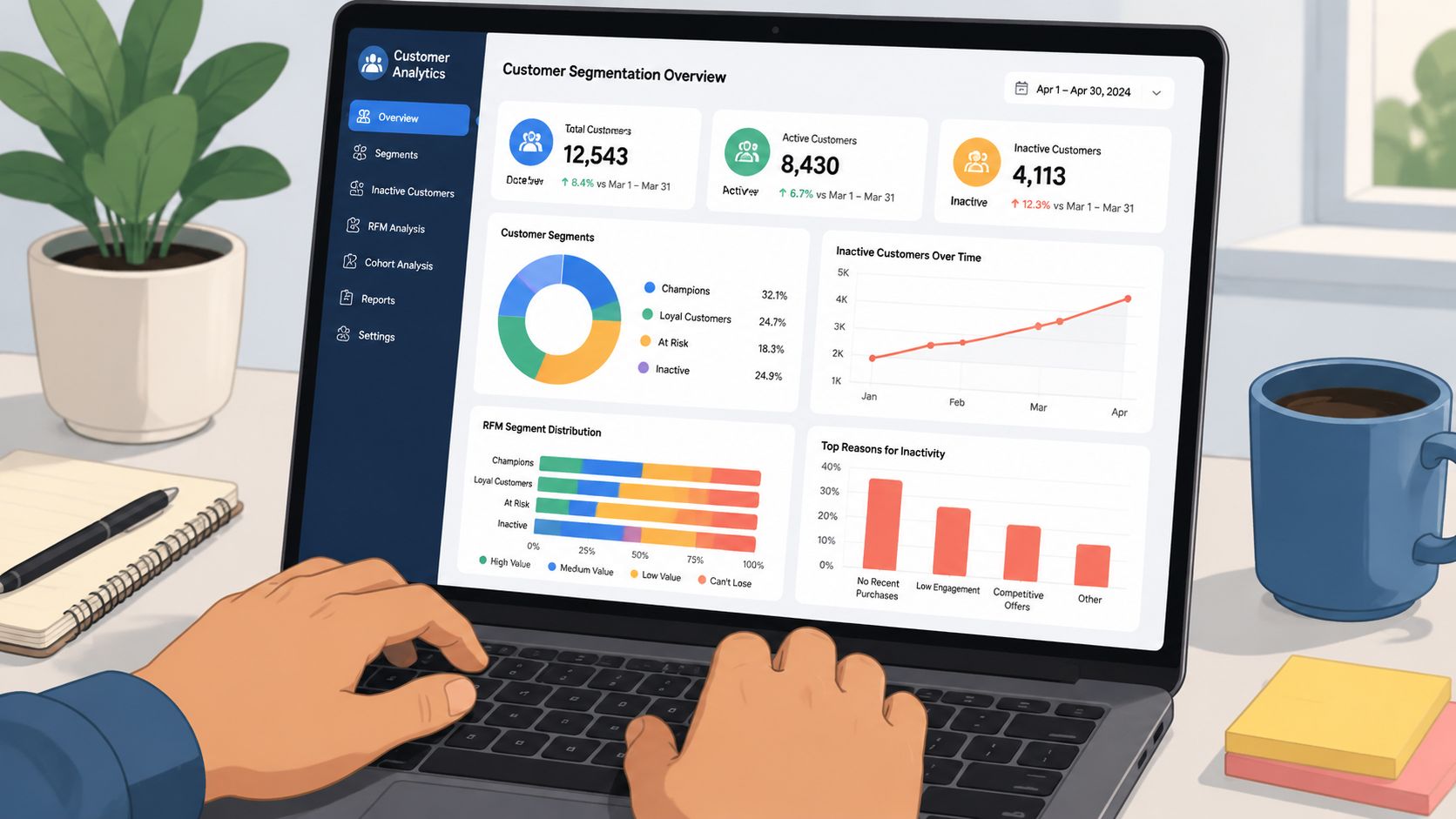
Before segmenting in detail, it is advisable to make a quick decision:
Valuable customer with recent inactivity: personalized offer and short window.
Inactive customer due to likely poor experience: operational correction first and reparation message second.
Occasional or low-frequency customer: reminder of convenience, novelty, or assortment, without giving away margin.
High-value customer with 60+ days without purchase: multi-channel sequence with manual follow-up and immediate exclusion if they repurchase.
In the restaurant and coffee shop sector, this speed matters because churn occurs very early. A 2025 report estimated that 78.8% of restaurant guests are lost each year and that only 25% of first-time visitors return in the first 90 days, according to Bloom Intelligence. In high-frequency categories, waiting for "a bit more data" usually means arriving too late.
Quick decision guide
If you need an operational path to take action today, use this four-step process.
Define inactivity according to your business type
1) Define inactivity according to the real frequency of the business. Do not start from a universal rule. Start from the normal interval between purchases.
Coffee shop: if a customer used to buy twice a week and 14 days pass without a visit, it is no longer "normal"; it is a case for early reactivation.
Car wash: if their pattern was bi-weekly, going 35 or 40 days without a visit is already a useful alert.
Convenience store: if they bought 3 times a week at a specific branch and it drops to zero for 10 days, the risk is high even if they continue buying in another area.
2) Classify by value, not just by absence. The correct order is not "who is missing the most," but "who is worth more and has the best chance of returning."
Historical frequency
Average ticket
Margin of the categories they buy
Main branch
Recency of the last profitable purchase
3) Infer the probable cause of abandonment. You don't need to guess perfectly; you need a reasonable hypothesis to avoid sending the wrong message.
Oversight or loss of habit: they used to go often and stopped doing so without signs of complaint.
Routine change: they changed hours, branch, or category.
Poor experience: frequency dropped after a return, complaint, or negative review.
Migration to competition: the drop coincides with visible external pressure: price, hours, or assortment.
4) Prioritize who to contact first. In my experience, the best order is usually: high-value customers with recent abandonment, then valuable customers with a correctable cause, followed by medium-frequency customers, and finally one-time buyers. Doing the opposite inflates work and almost never maximizes repurchase.
A simple example helps to see the logic:
Coffee shop: 1,000 active historical customers. 120 bought weekly. If 35 of those 120 do not return in 14 days, that group deserves contact before 300 one-time visitors.
Car wash: 600 customers with history. 80 had bi-weekly frequency and premium ticket. If 20 exceed 40 days without a visit, there is your first recovery list.
Convenience store: 2,500 loyalty-identified customers. If 150 bought at the same branch three or more times a week and disappear for 10 days, the priority should look at assortment, hours, and branch before launching a massive promotion.
There is an important methodological note. The most useful signals are usually historical frequency, ticket, main branch, purchased category, and service events. The ones I would discard at the beginning are flashy but weak variables for immediate action, such as isolated opens of past campaigns or vanity metrics without an associated purchase. If the signal does not change the commercial decision, it does not deserve to govern the segmentation.
When you centralize tickets, visits, and channels in a CRM, segmentation stops being a live spreadsheet that no one maintains. If you need to organize that database, this guide on what is customer segmentation lands how to structure it for a physical business.
2. Win-back campaigns with personalized offers
A generic coupon can move volume. To recover valuable customers, it almost always falls short. What usually brings them back is not the "most creative" message, but the one that demonstrates commercial memory: what they bought, how much they spent, at which branch, and what incentive makes sense for that history.
Communication personalization has been documented as a key factor in recovering customers in the Mexican environment. Using the customer's name, recommending specific products, and offering personalized discounts showed superior results, according to the ICEX Radar on digital commerce. Although the data comes from e-commerce, the logic applies perfectly to the sales floor when you already know the history.
The right offer is not always the biggest discount
A bakery in CDMX can reactivate better if it offers the product the person already used to buy, instead of a broad discount on the entire catalog. A gas station in Yucatan can add a wash or light tuning benefit for those who already used complementary services. A retailer in Baja California can trigger more returns with extra points or a timely upgrade than with a direct discount.
What is best avoided:
Same discount for everyone: erodes margin and trains customers to wait for promotions.
Incentives without context: if they don't connect with history, they feel massive.
Windows that are too long: without urgency, action cools off.
Campaigns on old or poorly cleaned lists: you end up giving away margin to those who would have returned anyway.
In operations with multiple branches, smart coupons help because they allow rules to be defined by habit, ticket, or location. If you want to dive deeper into that part, review how to create smart coupons for my store.
Ready-to-use reactivation messages by channel
The part that is usually missing is not the theory, but the text ready to execute. These examples serve as a base and should be adjusted by category, ticket, and probable cause of abandonment.
Segment | Suggested Offer | Channel | Sending Window | Success Metric |
|---|---|---|---|---|
Valuable, inactive 15-30 days | Product or benefit already consumed | 24-72 hours from detection | Repurchase in 7 days | |
Dropping frequency | Convenience reminder or novelty | Email + push | 3-5 days | Recovered visit |
Recent poor experience | Resolution + human follow-up | WhatsApp or call | Within 48 hours after correction | Second purchase |
Occasional customer | Light offer or new assortment | SMS | Weekend or payday | Incremental visit |
High value 60+ days | Multi-channel sequence with limited incentive | Email + WhatsApp | 7-day cadence | Repurchase and ticket |
1) Email for oversight or loss of habit
When to use: recent inactive customer with clear history.
Tone: close, helpful.
CTA: return this week.
Example:
“Subject: What you used to order is back
Hi, Laura. We saw that you stopped visiting us a few weeks ago and just this week the combo you ordered most at our Reforma branch has returned. If it's on your way, we have saved it for you today and tomorrow with an active benefit upon arrival. CTA: Reply to this email or visit us before Thursday.”
When not to use discounts: when the category already had good frequency and the problem seems to be oversight, not price.
2) WhatsApp for routine change
When to use: when the customer seems to have changed hours or routine.
Tone: direct, practical.
CTA: reply with a word or reserve.
Example:
“Hi, Diego. We noticed that you used to stop by the Centro branch in the afternoon. We have extended our hours and now serve until 9 pm. If you want to return this week, we'll activate your usual benefit. CTA: reply 'GO' and we'll leave it ready for you.”
When not to use discounts: if the obstacle was schedule or convenience; in that case, it's best to communicate the improvement.
3) SMS for occasional customer
When to use: broad databases with low ticket and little attention time.
Tone: brief and clear.
CTA: visit within a short window.
Example:
“We await you again at the Norte branch. This week you have access to 2x points on your return purchase. Valid until Sunday. CTA: show this message at the register.”
When not to use discounts: if the margin is very narrow; points or a high-rotation product are better.
4) WhatsApp for poor experience
When to use: after a resolved complaint or verifiable operational improvement.
Tone: reparation, not promotion.
CTA: give another opportunity.
Example:
“Hi, Ana. I am Marco, the branch manager. We reviewed the issue you had with service and we have already corrected delivery times in that window. If you decide to give us another chance this week, I will personally look out for your visit. CTA: let me know what day works best for you.”
When not to use discounts: almost always. First, trust must be rebuilt.
5) Email for dropping frequency
When to use: customers who kept buying, but much less.
Tone: observational, non-invasive.
CTA: return to a routine.
Example:
“Subject: It's easier for you to return
You used to visit the Universidad branch frequently, and now you can get your service in less time thanks to the new fast lane. If you return this week, we'll activate your preferred access. CTA: schedule or stop by directly before Friday.”
When not to use discounts: if the main friction was time.
6) WhatsApp for high-value customer with 60+ days without purchase
When to use: small groups with profitable history.
Tone: personal and exclusive.
CTA: confirm visit.
Example:
“Hi, Patricia. We haven't seen you in a while and we want to invite you back with a benefit designed according to your history at our Valle branch: your usual product + priority service this week. CTA: if you're interested, reply 'RETURN' and we'll share times.”
When not to use discounts: when perceived value can come from service, priority, or a favorite product.
7) Email for relevant novelty
When to use: when there is a real change in assortment, menu, or hours.
Tone: informative with memory.
CTA: check out the novelty.
Example:
“Subject: The category you searched for most is back
We have restocked inventory in the line you bought most with us, and it is available again at your usual branch. CTA: come this week or reply to save yours.”
8) SMS of controlled urgency
When to use: closing campaigns with short dates.
Tone: simple, urgent, not aggressive.
CTA: use benefit.
Example:
“Last 2 days to reactivate your benefit at the Sur branch. Return before Friday and use it at the register. CTA: present this SMS.”
In campaigns compared by segment, I usually see a clear difference: high-value customers respond better to relevance and preferential treatment than to deeper discounts. Discounts save weak campaigns; commercial memory sustains profitable campaigns.
The best recovery does not “buy” the customer back. It gives them a specific reason to return now.
3. Strategic multi-channel communication
An inactive customer rarely returns from seeing a single message. In LATAM physical businesses, reactivation improves when each channel serves a different function and appears at the right time. That order weighs more than the number of impacts.
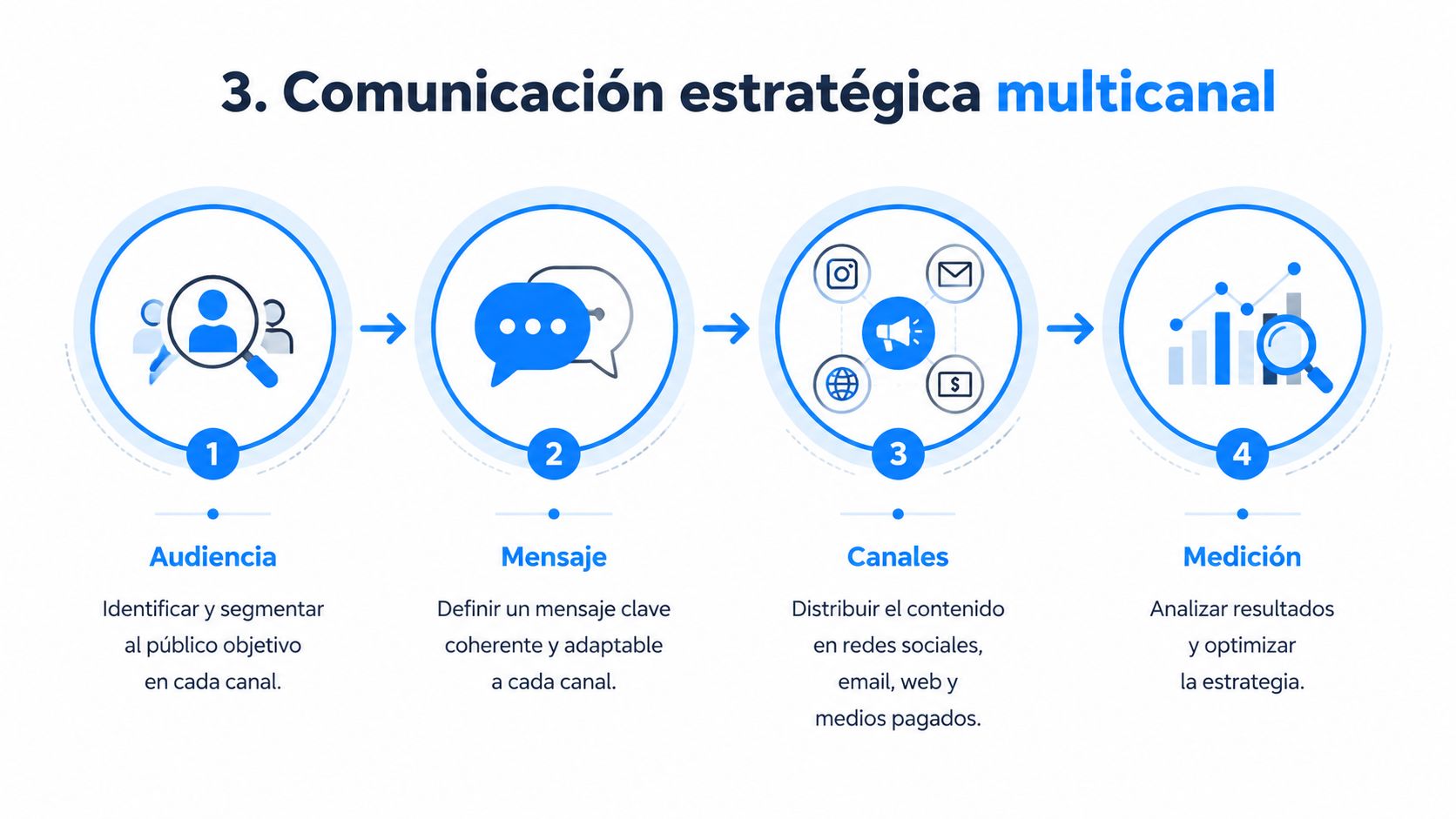
In operation, the pattern repeats: email to explain, WhatsApp to drive response, and push to capture the moment close to the visit. The common mistake is to use all three as copies of the same flyer. That increases friction, lowers attention, and makes the brand feel disorganized.
Design a sequence with commercial intent
More than “being everywhere,” it is advisable to follow a simple sequence of 7, 14, and 30 days.
Day 7: Context contact
Objective: remind of value or communicate an improvement.
Ideal channel: email if you need to explain; WhatsApp if the ticket is high or the list is small.
Example: “Your usual product is back”, “we extended hours”, “the fast lane is now operating”.
Day 14: Incentive contact
Objective: convert attention into a visit.
Ideal channel: WhatsApp or SMS.
Example: timely benefit, extra points, preferred access, or complementary product with a short expiration date.
Day 30: Urgency or closing contact
Objective: decide if the customer remains in an active window or moves to another strategy.
Ideal channel: short SMS, push, or very short WhatsApp.
Example: “Last 3 days to reactivate your benefit” or “this is our last invitation for now”.
Silence rule after repurchase: as soon as the customer buys, the sequence must stop. It seems obvious, but it is one of the mistakes that most damage experience. In editorial analyses I have reviewed, few things damage a campaign more than continuing to insist after repurchase.
WhatsApp integration is included only in Swirvle's Premium plan. The logic per channel also changes depending on ticket, frequency, and urgency:
WhatsApp: best for medium or high tickets, small or medium databases, need for quick response, and contexts where a human tone matters.
Email: best for explaining changes, recovering value perception, telling a story, or moving broad segments at low cost.
Push: best for already established habits, close consumption windows, and last-mile reminders.
A cafe in CDMX can open with an email to someone who stopped going 45 days ago because they need context: new hours, seasonal drinks, or service improvement. If there is no interaction, WhatsApp works better as a second touch with a short, easy-to-answer invitation. If the person already uses the app, the push serves as a reminder close to the usual consumption hour.
At a car wash in Guadalajara, for example, email can remind them that they already have history and active benefits. WhatsApp proposes returning this week with a concrete advantage. Push is reserved for the same day, close to the hour they used to visit the branch. This coordination can be operated from a platform like Swirvle without improvising isolated campaigns per branch.
Orchestration errors that affect results
Duplicating messages within 24 hours: the customer does not perceive it as follow-up, but as pressure.
Not excluding reactivated users: generates wasted budget and a poor experience.
Using the same copy across all channels: what works in email is usually redundant on WhatsApp and gets in the way in push.
Not respecting the probable cause of abandonment: if there was a poor experience, commercial urgency worsens rejection.
Measuring only opens or replies: a campaign can "look good" in interaction and bad in repurchase.
I recommend looking at return per recovered visit and per subsequent second purchase, not just open rates. If someone returned once with an incentive but didn't make a second purchase in 30 days, you haven't recovered a customer yet; you only bought a visit.
A good multi-channel scheme does not repeat the message. It adapts it so that each contact brings the next visit closer.
4. Reactivation program with gamification dynamics
Recovering a lost customer with permanent discounts is almost always expensive. In high-frequency physical businesses, it is advisable to use a mechanic that rewards the return and protects margin from the first recovered visit.
Gamification works well in coffee shops, car washes, and stores because it converts an isolated repurchase into a measurable sequence. The goal is not to entertain. It is to get the customer to see a concrete reason to return soon, complete a simple goal, and resume a habit.
In Mexico, this logic usually performs better when the dynamic fits on a single screen and is also understood at the register. If the customer needs too many rules, the campaign loses strength. If the reward takes too long, the second visit drops. That is why it is advisable to operate simple, visible, and easy-to-activate programs from a platform like Swirvle.
Make returning have visible progress
A coffee chain in Monterrey can launch a return mission with a clear condition: return this week and double points on your next two purchases. A car wash in CDMX can reactivate paused benefits after the first return visit. A convenience store in Nuevo Leon can reward three purchases in 15 days with a high-rotation product, instead of giving away open balance that erodes margin.
The structure that usually works best on the sales floor includes four elements:
Easy entry: one visit is enough to reactivate the program.
Close reward: the benefit arrives quickly, not on the fifth step.
Visible progress: points, stamps, or accumulated visits are checked without friction.
Profitable prize: it is more beneficial to offer products, upgrades, or frequency benefits than a general discount.
There is a real trade-off here. The more attractive the prize, the easier it will be to recover visits. It also increases campaign cost and the risk of attracting opportunistic customers who only return for the incentive. To avoid this, the reward must drive profitable behavior: more frequency, better average ticket, or return to categories with a good margin.
It also helps to connect the dynamic with the in-branch experience. If the customer returns and the team does not recognize the benefit, the mechanic loses credibility in seconds. That is why it is worth reviewing how to improve customer service in a physical business before scaling a reactivation campaign.
What is actually worth measuring
It is not enough to count sign-ups to the program. What matters is how many inactive customers return, how many complete a second purchase, and how much margin they leave after the incentive.
A practical reading for this type of campaign includes:
Reactivation rate: inactive customers who purchased again.
Second visit in a short window: how many repeat in 7, 14, or 30 days.
Cost per recovered customer: delivered incentive plus operational cost.
Post-reactivation margin: real utility after the prize.
If the dynamic improves visits but not repetition, the program is giving away traffic, not recovering customers. If it achieves second and third purchases, it starts to justify the investment. That is where gamification stops being a tactical whim and becomes a serious ROI lever for physical retail in LATAM.
5. Analysis of causes of abandonment and operational improvement
Not all lost customers want an incentive. Some want a reason to believe that something changed. If the leak started due to slow times, poor inventory, poor service, or differences between branches, putting budget into reactivation without correcting operation only accelerates rejection.
I have seen this mistake many times in small chains. Marketing drives campaigns while the real problem is on the floor: one branch serves well and another doesn't, a key product is missing, hours no longer adjust, or the team does not recognize a recurring customer.
Correct first and communicate later
Perform an operational review before the win-back. A franchise in Puebla can detect that only one branch concentrates the drop in visits and, from there, review cleanliness, times, training, and consistency. A restaurant in Yucatan can note that the drop coincides with menu changes. A store in the State of Mexico can see that the competition extended hours and started taking night visits.
Useful signals usually come from three places:
Purchase history: when they stopped coming and what they stopped buying.
Direct feedback: messages, reviews, complaints, and counter conversation.
Comparison by branch: where recurrence drops and where it is maintained.
Once the problem is detected, it is advisable to say so clearly. “We adjusted hours,” “your favorite dishes are back,” “we improved service times.” That communication rebuilds trust better than a simple “we miss you.” If you are working on the service part, this guide on how to improve customer service helps to ground operable improvements.
Alert signal: if many recovered customers try you once and do not repeat, the problem was not communication. It was experience.
6. Email marketing segmentated with emotional storytelling
Email remains profitable in reactivation because it enters a more intimate space than an ad or a post. In physical LATAM businesses, it serves a very specific purpose: to return context to the visit. It does not just remind of a past purchase. It explains why it is worth returning today.
Here, segmentation defines the result. It is not advisable to send the same message to someone who stopped going 30 days ago as to someone who hasn't appeared for six months. Nor to someone who bought cappuccino every week compared to someone who only went for Sunday brunch. A coffee shop in Guadalajara, a car wash in Queretaro, and a convenience store in CDMX need different stories according to habit, frequency, and average ticket.
The email should sound like a helpful reminder, not a newsletter
A good win-back email starts from a recognizable scene for the customer. “The breads you ordered on Fridays are back”. “Now you can schedule your express wash during the week”. “New merchandise arrived in the category you bought most”. That kind of detail triggers memory, relevance, and action. Emotional storytelling does not mean writing long. It means connecting an improvement or novelty with the customer's real routine.
In implementation, it is advisable to work with simple and measurable segments from the CRM or from a platform like Swirvle:
Recent inactives: stopped coming recently and respond better to low-friction reminders.
Valuable lost customers: had good frequency or good ticket. Here, a personalized message is worth more than an aggressive discount.
Seasonal customers: only bought on specific dates, payday, or weekends.
Customers by category: coffee, premium wash, bakery, car care, accessories, according to the business.
The format also matters. An email with a single story, a clear mental image, and a concrete action usually performs better than a template saturated with promotions. On the sales floor, that translates into more intentional visits and fewer opportunistic redemptions.
What I recommend in practice:
Specific subject line: mention a novelty, habit, or category known by the customer.
Direct opening: state what changed or what returned, without beating around the bush.
Short story: one single idea. A product, an improvement, a reason to return.
Single CTA: visit, reserve, reply, or activate benefit.
Brief measurement window: review opens, clicks, visits, and repurchase by segment, not just total sending.
There is a clear trade-off. If you over-personalize, the operational load rises. If you automate everything, the message loses warmth. The practical solution for physical businesses in Mexico is usually to semi-automate: templates by segment, basic purchase variables, and manual adjustments for higher-value groups.
It is also advisable to limit the sequence. Three emails are usually enough. The first reconnects with a concrete memory or change. The second reinforces value with social proof, novelty, or convenience. The third closes with a specific incentive or reasonable deadline. More than that wears out the list and reduces response, especially in low-frequency categories.
If you are going to measure this channel seriously, it is worth aligning open, visit, and repurchase indicators with a consistent definition. To organize that part without staying with loose metrics, this EvolvIA guide on KPIs in marketing can be useful.
If the email is well-segmented, the customer does not feel they received advertising. They feel the business understood why they went before and gave them a credible reason to return.
7. Reactivation with exclusive experiences and events
There are customers who do not return for discounts, but do for a different experience. This occurs a lot in categories where consumption has a social or sensory component, such as coffee shops, restaurants, bakeries, and some specialized stores.
The key is that the invitation feels selective and relevant. Not like a disguised open event. At this point, reactivation looks less like a promotional campaign and more like a hospitality operation.
A well-crafted invitation changes perception
A bakery in Puebla can invite customers who used to buy frequently to a private seasonal session. A restaurant in Monterrey can organize a return night with a tasting of renewed dishes. A car wash in the State of Mexico can present a premium service with dedicated attention for customers who stopped visiting.
Operational details weigh more than the announcement:
Limited list: invite small and well-defined groups.
Personal attention: make sure someone on the team recognizes the returning customer.
Physical benefit: sample, gift, or experience, not just a coupon.
Subsequent follow-up: thank you and brief feedback request.
This type of strategy works well when you need to change brand perception. If there was emotional distance or a break in experience, a well-executed event can do more than several consecutive promotions. Of course, it is not advisable for the entire list. Reserve it for high-value customers, local neighborhood customers with strong history, or segments that previously had clear frequency.
8. Retargeting and programmatic advertising for lost customers
An important part of purchases in physical businesses does not occur on the first visit or on the first advertising impact. Therefore, chasing only immediate conversion usually wastes budget. In customer recovery, paid advertising works best as a targeted reminder to people who already know the business and stopped returning.
For a coffee shop, a car wash, or a store in Mexico, this has a clear advantage: the ad does not need to educate from scratch. It only needs to reactivate memory, interest, and urgency with a message that connects with the customer's real history. If the business already segmented inactives by absence time, average ticket, or purchased category, it can convert a generic campaign into a much more profitable operation. Here, a platform like Swirvle helps to organize audiences, exclusions, and follow-ups without depending on manual cross-referencing between channels.
Helpful retargeting, not filler advertising
A coffee shop in Tijuana can show seasonal drinks to those who previously bought twice a week and have gone 30 days without returning. A restaurant in Guadalajara can announce a new menu only to customers who previously visited on weekends. A car wash in Naucalpan can reactivate those who used a premium package with an ad focused on speed, extended hours, or special finish, depending on what they valued most.
The difference is in the precision.
What should be configured from the start:
Audiences with commercial logic: separate valuable, recent paused, and almost lost customers. Not all deserve the same cost per impact.
Creative based on probable cause of abandonment: if the problem was price, show value. If it was oversight, remind of convenience. If there was a routine change, present a concrete novelty.
Controlled frequency window: too many impressions lower response and raise rejection, especially in local businesses where saturation is noticed quickly.
Automatic exclusion of reactivated users: anyone who already repurchased should not keep seeing the same return ad.
Measurement by real visit or repurchase: impressions and clicks are of little use if they do not connect with in-branch sales.
There is a clear trade-off. Programmatic advertising provides scale, but loses efficiency if the database is poorly segmented or if the message does not reflect the customer's context. In physical LATAM businesses, the common mistake is not advertising too little. It is advertising the same to everyone, even though the reasons for abandonment are different between one branch, one neighborhood, and another.
It is also advisable to monitor the destination of the ad. If you promise a benefit, that benefit must appear immediately on the destination channel, whether landing, WhatsApp, or a valid coupon at the register. If there is no consistency, the click is paid for and the visit does not occur.
Used this way, retargeting does not replace WhatsApp, email, or a follow-up call. It reinforces them. It is a support layer to maintain presence with control, especially useful when the customer has already stopped responding to direct messages but still recognizes the brand and has reasons to return.
Comparison of 8 strategies to recover lost customers
Strategy | Implementation Complexity | Resources Needed | Expected Results | Ideal Use Cases | Key Advantage |
|---|---|---|---|---|---|
Segmentation and Analysis of Inactive Customers | Moderate, requires clean historical data and segment setup | Clean CRM, analyst/BI, integration by branch | Identification of customers with highest reactivation potential and better targeting | Businesses with sales history and multiple branches | Prioritizes efforts and reduces budget waste |
Win-Back Campaigns with Personalized Offers | Low‑Moderate, offer creation and coupon automation | Coupon platform, channels (WhatsApp/email), promotional budget | Quick reactivation with high potential ROI | Stores with margin for discounts and individual purchase data | High conversion due to relevant offers |
Strategic Multi‑channel Communication | High, orchestration and frequency control across channels | Omnichannel platform, consents, creatives per channel | Higher contact and read rate; synchronized reach | Companies with multi-service customers and varied preferences | Increases contact probability while respecting preferences |
Gamified Reactivation Program | High, mechanics development and gamification platform | Gamification platform, rewards, product/marketing team | Increase in engagement, frequency, and average ticket | Businesses seeking loyalty without permanent discounts | Generates return habits and emotional engagement |
Analysis of Causes of Abandonment and Operational Improvement | Moderate‑High, qualitative and quantitative research | Analysts, surveys, listening tools, and operational time | Identification of real issues and corrective measures | When inactivity may be due to operational or product failures | Avoids spending on reactivation without solving the root cause |
Segmented Email Marketing with Emotional Storytelling | Moderate, requires good copywriting and automated sequences | Copywriter, design, email platform, and segmentation | Emotional reconnection and greater long-term loyalty | Brands with a story or changes to communicate | Differentiation from purely promotional messages |
Reactivation through Exclusive Experiences and Events | High, logistics, selection, and event execution | Space, staff, personalized invitations, and budget | Memorable connection; FOMO and organic word-of-mouth | High-value customers or local communities | Creates a tangible and emotional experience |
Retargeting and Programmatic Advertising | Moderate, technical setup and campaign management | Ad budget, performance team, creatives | Keeps the brand top‑of‑mind; clear ROI measurement | Businesses with digital presence and investment capacity | Scalable and less invasive; allows for quick testing |
How I chose these strategies to recover lost customers
I did not select these tactics by popularity, but by operational utility in physical businesses. The main filter was five criteria: probable impact on repurchase, ease of implementation in face-to-face retail, need for previous data, risk of eroding margin, and applicability in Mexico. That is why segmentation, personalized offers, and the multi-channel sequence appear before flashier tactics: they usually demand less initial complexity and allow for faster learning.
I also discarded approaches that depend too much on advanced data, large teams, or sustained acquisition budgets. If a tactic needs a highly used app, a mature CDP, or complex omnichannel attribution, I would not make it a priority for an SMB with one or few branches. And if a strategy only works by giving away margin, I would not consider it a solid recovery base either.
These recommendations fit best in coffee shops, casual restaurants, car washes, convenience stores, local chains, and businesses with an identifiable purchase history. They require adaptation in very sporadic purchase services, extremely high tickets, or businesses where individual transactional data is almost non-existent. The clearest sign that a tactic does not apply is simple: if you cannot measure repurchase or if the real problem is operational, insisting with promotion only accelerates fatigue.
How to recover lost customers: frequently asked questions
How to reactivate a business's sales?
Start by detecting where recurrence dropped, not just total sales. Then separate customers by value and probable cause of abandonment, create a specific offer for the priority group, and execute it with a short sequence through one or two channels. Recovery improves when the business measures recovered visits and second purchases, not just responses or redemptions.
What to say to get the customer to buy again?
The most effective is usually a concrete and contextual message: what changed, what returned, what advantage they have now, or what benefit was activated for them based on their history. “We miss you” works worse than “the product you bought is back” or “we have corrected delivery times at your branch.” If abandonment came from a poor experience, first communicate the correction.
When is a customer considered lost?
When they exceed their normal purchase interval with a clear drop in likelihood of return. There is no universal number. In a coffee shop, 14 days may be enough; in a car wash, 35 or 40; in a convenience store, even less if there was high weekly frequency. The correct rule is to compare them against their own pattern and that of their category.
Which channel should be used first?
It depends on the friction you want to resolve. Use email if you need context or to explain an improvement; WhatsApp (included in Swirvle's Premium plan) if you are looking for a quick response or human treatment; SMS or push if the window is short and the message can be very brief. If the customer is of high value, it is rarely advisable to start with an impersonal channel without context.
Should we always offer a discount?
No. When the problem is oversight, schedule change, assortment, or convenience, a discount may be unnecessary. For valuable customers, a benefit aligned with their habit often works better: priority, usual product, points, or a service improvement. Discounting without diagnosis usually cuts margin more than it recovers profitability.
How to know if a reactivation campaign actually worked?
Measure four things: repurchase rate, time until visit, second purchase within 30 days, and margin after the incentive. If only opens, clicks, or replies rise, you still do not know if you recovered customers. The strong signal is that they return and repeat.
From lost customers to sustainable growth: your next step
These strategies were prioritized with a very concrete editorial criterion: first those that usually have the most impact on repurchase, then those easiest to implement in physical retail, followed by those that require less prior data, and, finally, those that best protect margin in the Mexican context. That is why segmentation, personalized messages, and multi-channel sequences weigh more here than flashier tactics. In reviews of real campaigns, I have almost always seen that the problem is not a “lack of ideas,” but a lack of order in deciding whom to contact, with what offer, and at what moment.
Not all businesses should apply everything the same way. Coffee shops, casual restaurants, car washes, convenience stores, and local chains usually benefit quickly. Very sporadic purchase services, very high tickets, or businesses without individual history need to adapt windows, channels, and metrics. And there are signals that invalidate a tactic: if the branch has an unresolved operational issue, if you cannot exclude those who already repurchased, if the offer only works by destroying margin, or if you have no way to measure second purchases, the campaign is born weak.
If you want a 30-day plan, use it like this: week 1, define inactivity by category and branch and prioritize segments; week 2, build messages and offers by probable cause of abandonment; week 3, execute the multi-channel sequence with exclusion rules; week 4, measure repurchase, second purchase, ticket, and margin. That order prevents waste and turns recovery into a process.
If you want to organize your data, detect inactive customers, and activate win-back campaigns from one single place, you can discover Swirvle. For SMBs with physical stores, it helps centralize customers, segment by branch and consumption habits, and execute reactivation actions with a clearer reading of return.
Related Blogs

Nov 10, 2026
How to manage multiple restaurant locations from a single system?

Nov 9, 2026
Which CRM is best for a small business in Mexico? 2026

Nov 8, 2026
What works better for a small business: WhatsApp promotions or email promotions?

Nov 7, 2026
How do you calculate a business's net purchases? Formula and example in MXN

Nov 6, 2026
How much does a point-of-sale system cost for a small business in Mexico?

Nov 5, 2026
How to Create an Executive Breakfast Menu to Sell to Offices: 2026 Guide