What is a frequent customer card, stamp models, points or tiers, how to transition from paper to digital, and what metrics to track in your SMB.
Quick answer: A loyalty card is a program that rewards returning customers: customers earn stamps or points with each purchase and redeem them for a reward. To make it work, choose an achievable reward, register each customer using their phone number or email, and take it digital—connected to your point of sale—so you know who comes back.
Type | How it works | Reward example | Best for |
|---|---|---|---|
Stamps | One stamp per purchase; once the card is complete, the customer redeems their reward | A free coffee or pastry | Coffee shops, bakeries, ice cream shops |
Points | Each purchase earns points based on spending; points are redeemed for products | A dessert or store merchandise | Restaurants, mini-marts, convenience stores |
Tiers | The customer levels up based on visits or purchases and receives greater benefits | A complimentary drink on their birthday | Restaurants and retail stores with highly frequent customers |
On a Friday afternoon, a coffee shop in Nuevo León might fill up and empty out several times without the owner ever knowing who will return next week. They see receipts, not customers. Sales might be great for a day, but they aren't building a relationship that sustains the business for the rest of the month.
That is the real issue behind the customer loyalty card. It’s not just about giving away a free coffee after a certain number of purchases. It’s about stopping operating in the dark. If you run an ice cream shop in Mérida, a bakery in the State of Mexico, or a pharmacy in Puebla today, you’ve likely noticed the same thing: many people buy once and disappear.
When an SMB turns its loyalty program into a digital system connected to a CRM, it stops relying on the cashier's memory or a paper punch card. It starts tracking habits, visits, redeemed rewards, and repurchase signals. Businesses in Mexico that implement a digital loyalty program integrated with a CRM report an average increase of 15% in purchase frequency and up to 38% in average order value (Swirvle).
Moreover, loyalty doesn't work in isolation. It must be part of an end-to-end customer acquisition, repeat purchase, and follow-up system. If you are reviewing how to structure that strategy, it's worth first understanding the digital marketing strategies for SMBs that effectively connect marketing actions with measurable sales.
Why your customers don't return and how to fix it
Many restaurant, café, and convenience store owners believe foot traffic is their main problem. That's not always the case. Often, the real problem is a lack of retention. New people arrive, make a purchase, leave, and no one ever speaks to them again.
A well-designed loyalty card fixes that. But not just any card. The model that works today is digital, linked to customer history, and enables messaging, rewards, and follow-ups without relying on manual processes.
What happens on the sales floor
Consider a popsicle shop in Yucatán. A customer buys treats every Saturday with their family. If the business doesn't capture that pattern, it will never be able to reward that consistency or incentivize a weekday visit.
With a loyalty system connected to a CRM, the business can identify who buys, how often they return, and what type of reward makes the most sense. Instead of running generic discounts, it can trigger perks specifically for customers who have already shown an intent to return.
The loyalty card stops being just an object. It becomes an actionable database.
The right solution doesn't start with discounts
Many programs fail because they start by asking, “What freebie should we give away?” The right question is: “What behavior do we want to drive?”
Depending on the type of business, the main goal could be to:
Increase visits: ideal for coffee shops, bakeries, or ice cream parlors.
Increase average spend per purchase: common in pharmacies, restaurants, and specialty shops.
Win back inactive customers: key for businesses with high customer turnover.
Move specific inventory: useful for seasonal items or locations with slow-moving products.
When designed this way, customer loyalty truly becomes profitable.
Beyond paper cards: what is a digital loyalty card?
Paper stamp cards no longer solve the core problem. They might serve as a visual reminder, but they don't generate business intelligence. They won't tell you who purchased, when they stopped visiting, which location they frequent most, or which reward drives the highest response rate.
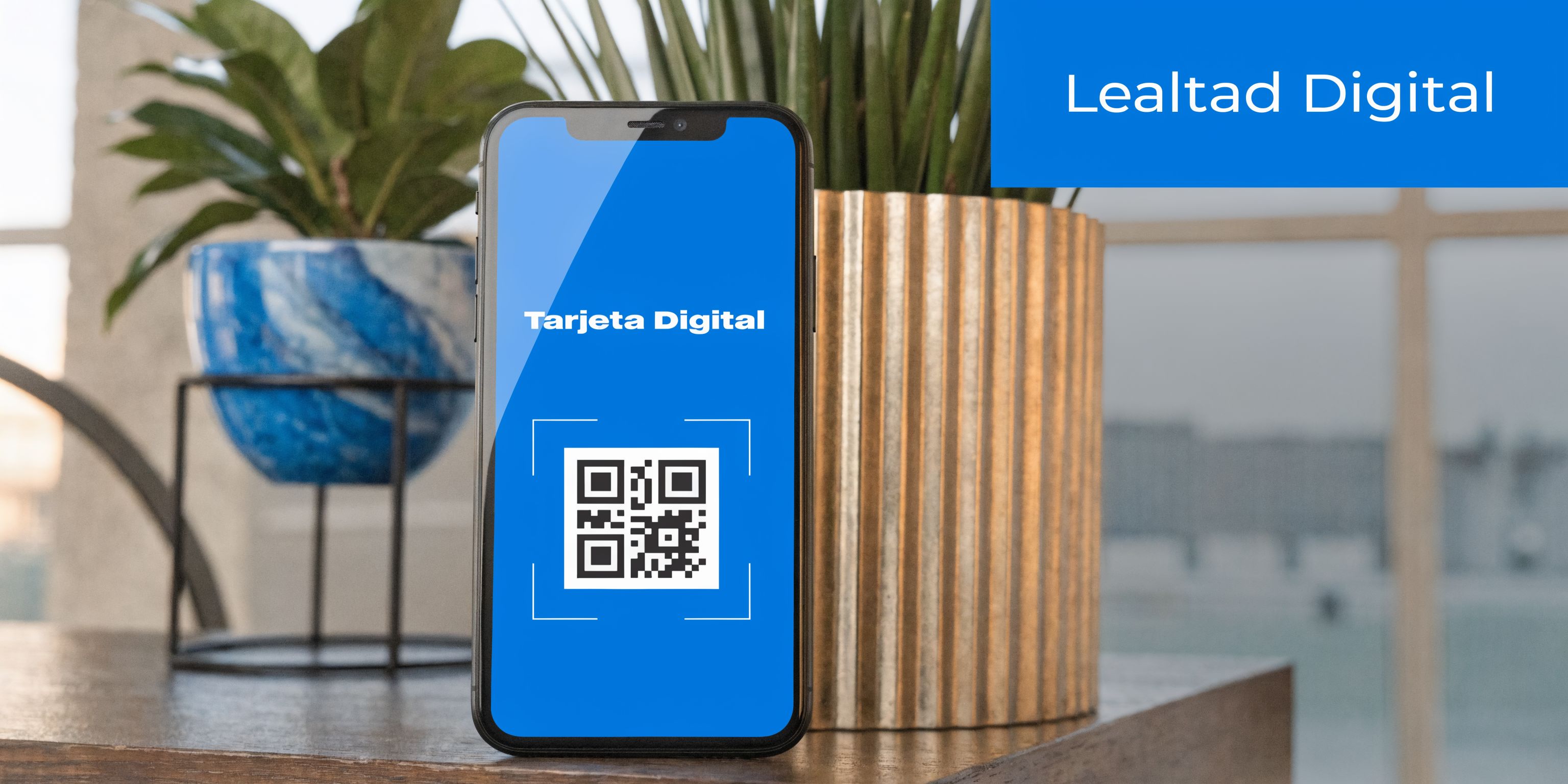
A digital loyalty card lives inside a system where every visit, purchase, or redemption is recorded. That's why the real value isn't in the QR code or the app. It’s in the CRM that manages the entire customer relationship.
What an effective digital card actually does
A reliable solution should support at least these core functions:
Identify the customer: name, contact details, and purchasing behavior.
Automatically log visits or points: without manual data entry by staff.
Configure clear rewards: based on visit frequency, spend amount, or specific product purchases.
Segment campaigns: by location, customer habits, or activity level.
Trigger direct messaging: via WhatsApp, push notifications, or email.
If you want to explore how modern programs implement this, this resource on digital cards helps illustrate the difference between a superficial setup and an operational one.
Why simple digital wallets or physical cards fall short
Some businesses switch from paper to a digital wallet pass and assume they've solved customer retention. In practice, that's not necessarily true. A mobile wallet pass can make access easier, but on its own, it doesn't create a CRM strategy.
Business owners need answers to specific questions:
Who stopped buying?
Which customers only visit during promotions?
Which location retains customers best?
Which reward drives repeat purchases versus just giving away profit margins?
If your tool can't answer those questions, the card is nothing more than a pretty interface.
The real difference lies in personalization
A coffee shop in Mexico City can track that a specific customer almost always orders iced drinks. A restaurant in Baja California can identify who regularly orders appetizers but skips dessert. A pharmacy in Puebla can recognize recurring purchases of personal care products.
With that data, communication changes completely. You no longer blast the same message to everyone. You send a relevant offer to the right person.
When a loyalty card is integrated with a CRM, rewards stop being generic and start driving profitable customer behavior.
Loyalty models: which one is right for your business?
The best program isn't the most creative one. It’s the one that aligns with the way you sell. A bakery doesn't need the same model as a pharmacy. An ice cream chain doesn't operate like a casual dining restaurant in Mexico City.
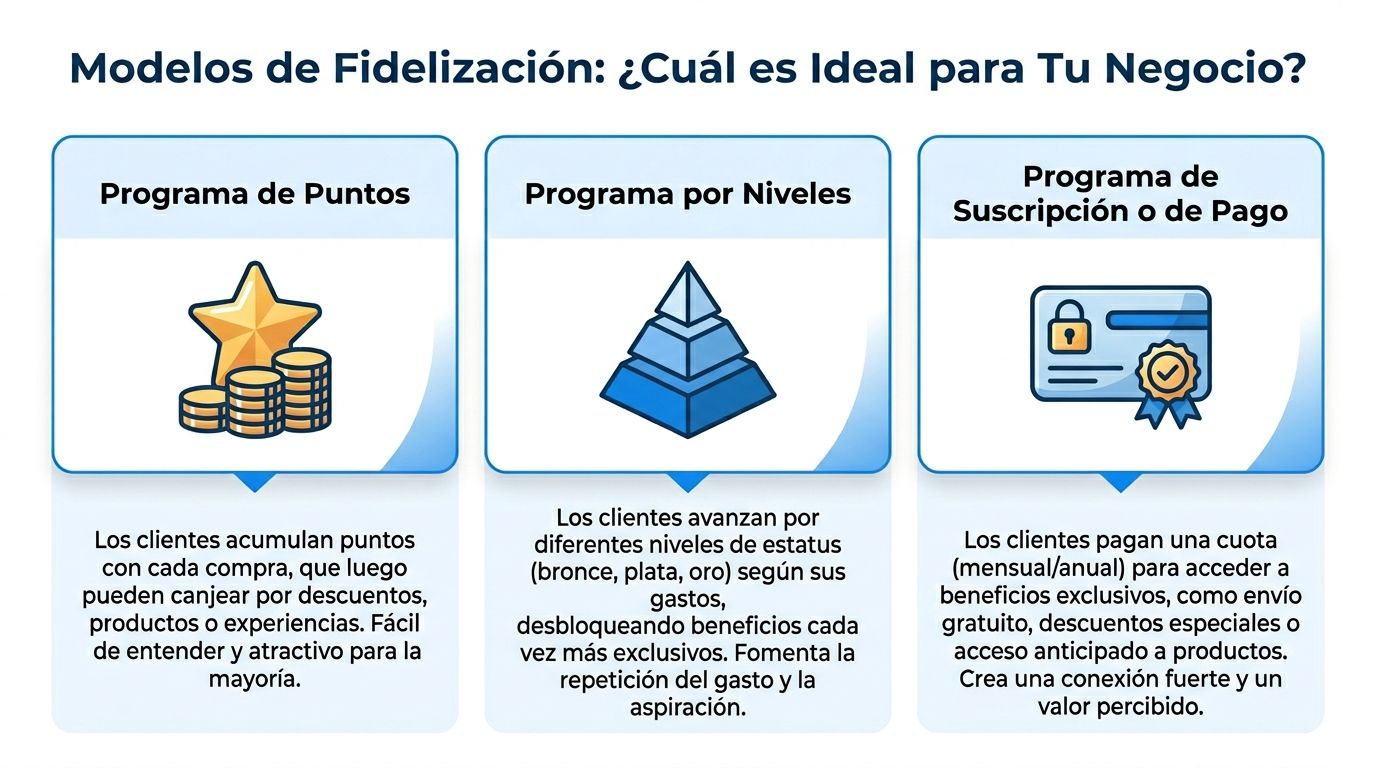
Loyalty Program Models Comparison
Program Model | Best For | Reward Example | Main Advantage |
|---|---|---|---|
Points program | Pharmacies, specialty shops, restaurants with variable order values | Earn points per purchase and redeem them for products or discounts | Adapts well to varying ticket sizes |
Visit-based program | Coffee shops, bakeries, ice cream parlors, car washes | Unlock a reward after completing a set number of qualifying purchases | Easy to understand and manage |
Tiered program | Chains with high-frequency, high-spend customers | Exclusive perks for the most active customers | Helps reward customer value, not just frequency |
Points program
Works well when average order values vary widely across customers. A pharmacy in Puebla is a great example. A customer might buy a small item one week and make a much larger purchase the next. In that scenario, rewarding total spend is often fairer than simply counting visits.
Its key advantage is flexibility. You can assign extra value to specific categories, private labels, or strategic product lines without complicating the customer experience.
The risk is also clear. If the calculation is confusing, customers won't understand what they're earning or what points are worth. When that happens, the program quickly loses momentum.
Visit-based program
This is the most intuitive model for high-frequency businesses. A bakery in the State of Mexico, a café in Monterrey, or an ice cream shop in Mérida can all benefit from simple logic: recurring purchases paired with an easy-to-remember reward.
A digital punch card stored directly on the customer's phone—such as in their Mobile Wallet—won't get lost or left at home, and it clearly shows how many visits remain until their next reward.
This adoption helps when the goal is to make sure customers see their progress and have a clear, tangible reason to come back soon.
Tiered program
This framework works best when a business wants to recognize its best customers with exclusive perks. A multi-unit restaurant in Mexico City or a pharmacy chain in the State of Mexico can use tiers to distinguish casual shoppers from truly profitable ones.
Here, the goal isn't just to give more away. It's about providing preferential access, better experiences, or advantages not available to everyone. If everyone gets the same perks, tier status loses its value.
If your business relies on visit frequency, start with visits. If it relies on varied basket sizes, start with points. If you already have a strong customer base and clear segments, consider tiers.
How to choose without overcomplicating things
Ask yourself these three questions:
Are most of your tickets similar in value, or do they vary significantly?
If they are similar, a visit-based model typically works better. If they fluctuate a lot, a points model gives you more control.Can your customers quickly grasp the benefit?
If it requires a lengthy explanation, the program design is flawed.Can your team realistically maintain it every day?
A program that looks brilliant on paper will fail if cashiers, floor staff, and marketers can't run it effortlessly.
The magic behind the counter: POS and CRM integration
The part that impacts results the most is completely invisible to the customer. It lives in the integration between your point of sale and your CRM. That is where a loyalty card evolves from a simple promotion into an operational customer retention engine.
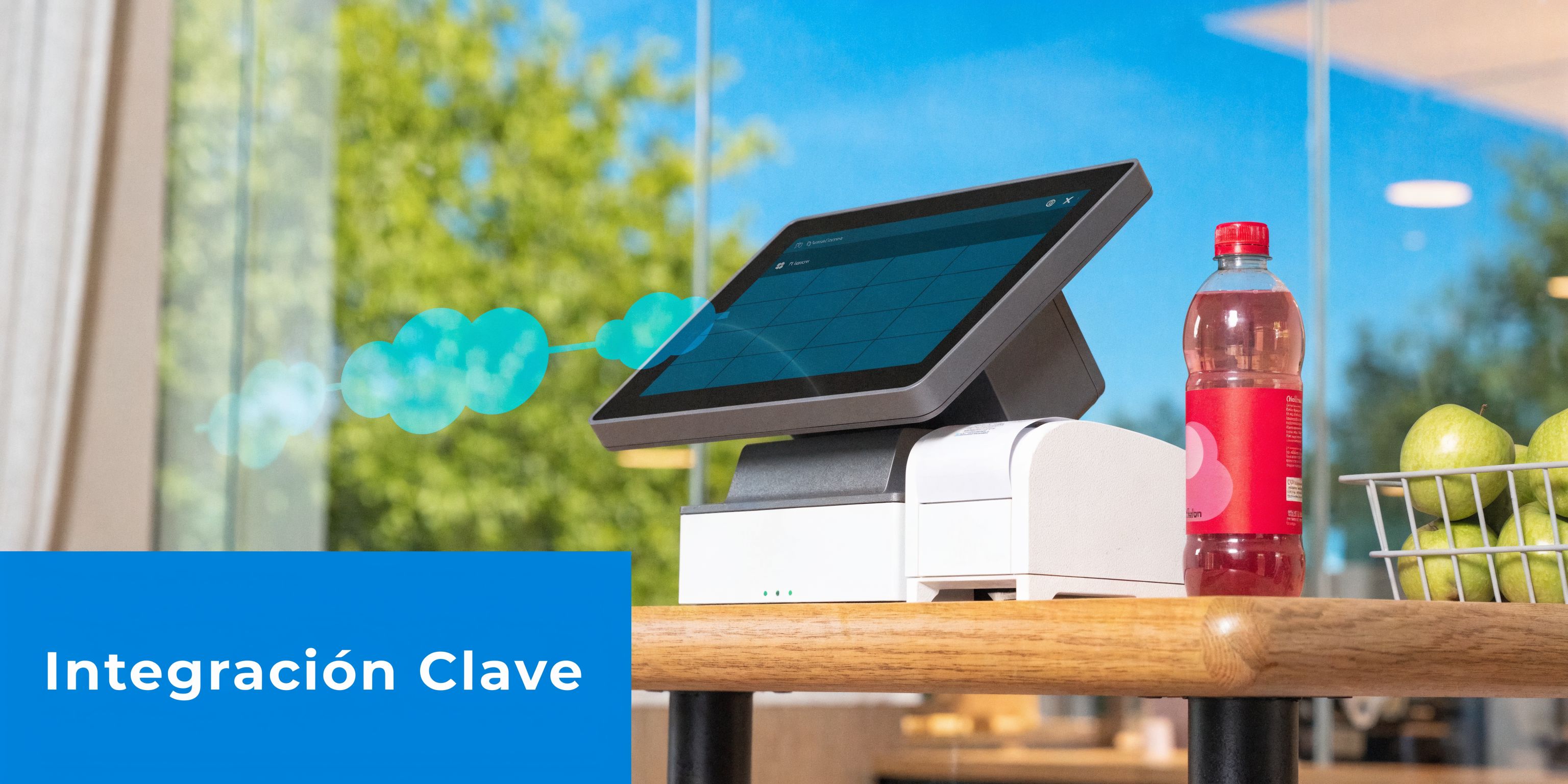
How a purchase flows in a well-integrated system
In the most practical setup, the customer makes a purchase, identifies their account, and the system records the transaction without any extra manual steps. Staff don't have to worry about adding points manually or checking a spreadsheet. Everything should happen naturally within the standard checkout flow.
When a digital loyalty card is integrated with the POS and CRM, manual data entry and human error are eliminated, and every purchase is recorded in real time so you know who is returning and how often.
The step-by-step process
The customer identifies themselves
They can show a code or scan a QR code linked to their account.The POS logs the purchase
The system captures the ticket, transaction amount, and store location.The CRM validates the transaction
A visit, points, or tier progress is assigned based on active program rules.The reward status updates instantly
The customer sees real progress, not a vague promise.Marketing receives actionable data
Based on that purchase, targeted campaigns for follow-up, re-engagement, or upsells can be automatically triggered.
What to check before implementing
There's no need to make a commercial initiative overly technical. However, you should validate a few operational requirements:
POS compatibility: it must be able to send transaction data consistently.
Simple loyalty rules: less friction leads to higher adoption.
Quick customer identification: if it takes too long, staff will stop asking for it.
Store-level visibility: essential for multi-unit chains or franchises.
Outbound messaging channels: WhatsApp, push notifications, or email to drive repeat purchases.
For those evaluating this from an operations perspective, this guide on POS software with integrated loyalty programs serves as a solid baseline for outlining requirements.
What doesn't work in practice
I've seen businesses attempt
Related Blogs

Nov 24, 2026
What is inventory turnover and how is it calculated in a store?

Nov 23, 2026
How to calculate the selling price of a cup of coffee?

Nov 22, 2026
How to identify frequent customers in a physical store?

Nov 21, 2026
How to Connect Your POS System with Restaurant Email Marketing: A Guide

Nov 20, 2026
How much does a small restaurant make per month in Mexico?

Nov 19, 2026
How to Run a Small Coffee Shop Step by Step? 2026