Learn how to increase customer loyalty with 10 proven strategies for SMBs in Mexico. From points programs to CRM automation.
In a saturated market where acquiring a new customer costs up to five times more than retaining an existing one, true profitability is not in the first sale, but in the second, the tenth, and the hundredth. Despite this, many SMBs in Mexico still focus their efforts on attracting one-time buyers, neglecting the most valuable asset they possess: their current customer base.
From a coffee shop in Condesa, CDMX, to a barbershop in San Pedro Garza García, Nuevo León, the challenge is the same: how to transform a satisfied customer into a recurring customer. The answer does not lie in selling more aggressively, but in building long-lasting and meaningful relationships. The key to increasing loyalty is not a complex secret, but a series of measurable and executable tactics that foster a genuine connection.
This article does not stop at abstract theories. Here, we will break down 10 practical and actionable strategies designed to convert sporadic visits into a predictable and sustainable source of income. We will analyze how to implement each of these tactics, from points programs and personalized WhatsApp campaigns to active churn prevention. We will show how modern tools, such as a POS platform with an integrated CRM, can automate these complex processes. This will allow you to free yourself from operational tasks and focus on what you do best: running and growing your business. Get ready to discover how to build a growth engine based on your most loyal customers.
1. Configurable Points and Rewards Programs
The points program is one of the most consolidated tactics to increase loyalty, but its modern version goes beyond a simple "buy 10 and get 1 free". The current key lies in dynamic configuration and automation, turning a passive system into a proactive tool to guide customer behavior. It is about awarding points not only for the amount spent, but also for specific actions that benefit the business.
The effectiveness of this system depends on its adaptability. For example, a pharmacy in the State of Mexico could offer double points on the purchase of private label products to improve its profit margin. On the other hand, an ice cream shop in Mérida, Yucatán, could incentivize trying new seasonal flavors, such as mamey or pitahaya, by rewarding their purchase. The technology of a POS+CRM like Swirvle allows these rules to be applied automatically at the point of sale, eliminating friction for both the cashier and the customer and ensuring a seamless experience.
The goal is not only to reward the purchase, but to incentivize smart purchases that align the customer's objectives (obtaining a reward) with those of the business (moving inventory, increasing the average ticket, or improving profitability).
Implementation and Practical Examples
Farmacias Guadalajara (Loyalty Plan): A benchmark in Mexico that rewards recurrence with points that translate into discounts, encouraging the concentration of health and wellness purchases at its branches.
Barbershops in Puebla: Many still use physical stamp cards. A modern barbershop in the Angelópolis area could digitalize this process. By using an integrated system, the visit count for a free haircut is automated, fraud is prevented, and valuable data on each customer's frequency is obtained.
Starbucks Rewards: The coffee giant perfected the model by integrating payments, ordering, and points into a single app, creating a global consumption habit and a closed ecosystem that discourages visiting the competition.
To design an effective program, it is essential to learn how to create a loyalty program that is sustainable and attractive. Define achievable goals to maintain motivation (an average customer should be able to redeem a smaller prize every 4-6 weeks) and actively communicate the benefits across all your channels.
2. Smart Segmentation and Personalized Campaigns
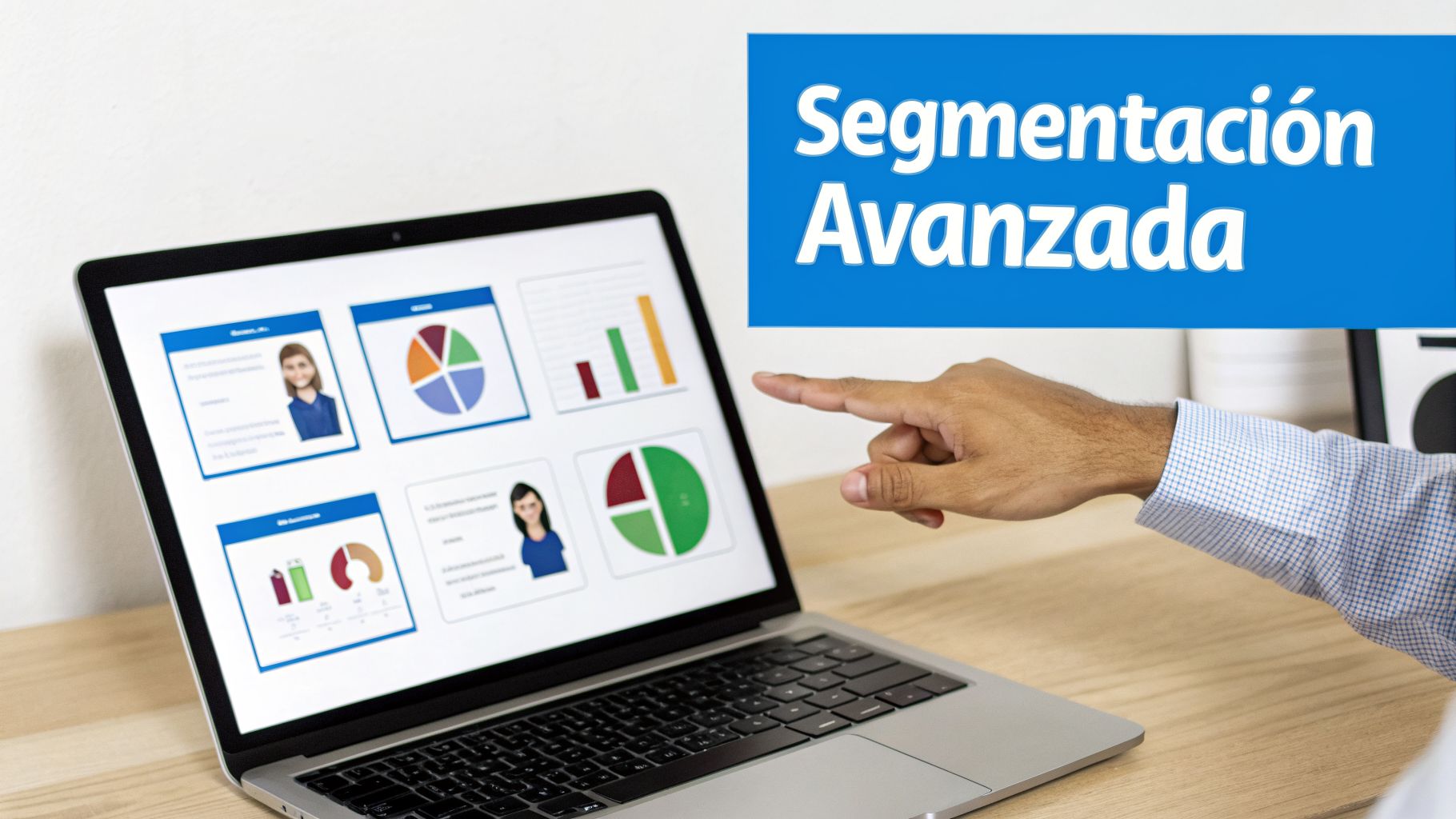
Sending the same message to all your customers is an obsolete and ineffective strategy. Smart segmentation consists of dividing your database into smaller and more homogeneous groups based on their behavior, preferences, and demographic data. This tactic allows you to run personalized campaigns, sending offers and communications that resonate with each type of customer, thus increasing loyalty in a genuine way.
Personalization is the engine of modern loyalty. A restaurant in Monterrey, Nuevo León, can identify its customers who always order vegetarian dishes and send them a WhatsApp campaign announcing the new meatless seasonal menu. Meanwhile, a pharmacy in Mexico City can create a "parents" segment to notify them about exclusive offers on infant formulas or diapers. Tools like Swirvle, HubSpot, or Klaviyo facilitate this division by analyzing data from the point of sale and creating these groups automatically or manually.
The goal is to move from mass communication to a personal conversation at scale. A customer feels valued when they receive an offer that aligns with their previous purchases, not a generic promotion that ignores their history.
Implementation and Practical Examples
Netflix and Amazon: These digital giants are masters of segmentation. Netflix recommends content based on your viewing history, while Amazon shows products related to your previous searches and purchases, creating a unique experience for each user.
At-Risk Customers: A coffee shop in the Condesa neighborhood (CDMX) can create a segment of customers who have not visited in 60 days. The system can automatically send them a "We miss you: your next coffee is on us" coupon to reactivate their relationship.
Segmentation by Average Ticket: A clothing boutique in Tijuana, Baja California, can identify its "VIP" customers (those with the highest purchase ticket) and give them early access to new collections or invite them to exclusive events, reinforcing their status and loyalty.
To start, it is not necessary to create dozens of groups. Begin with 3 or 4 key segments (new customers, frequent customers, VIP customers, at-risk customers) and measure the return on investment of each campaign to optimize your efforts. If you want to delve deeper into the topic, it is useful to understand what customer segmentation is and how to apply it to your business.
3. Campaign Automation and Multichannel Communications
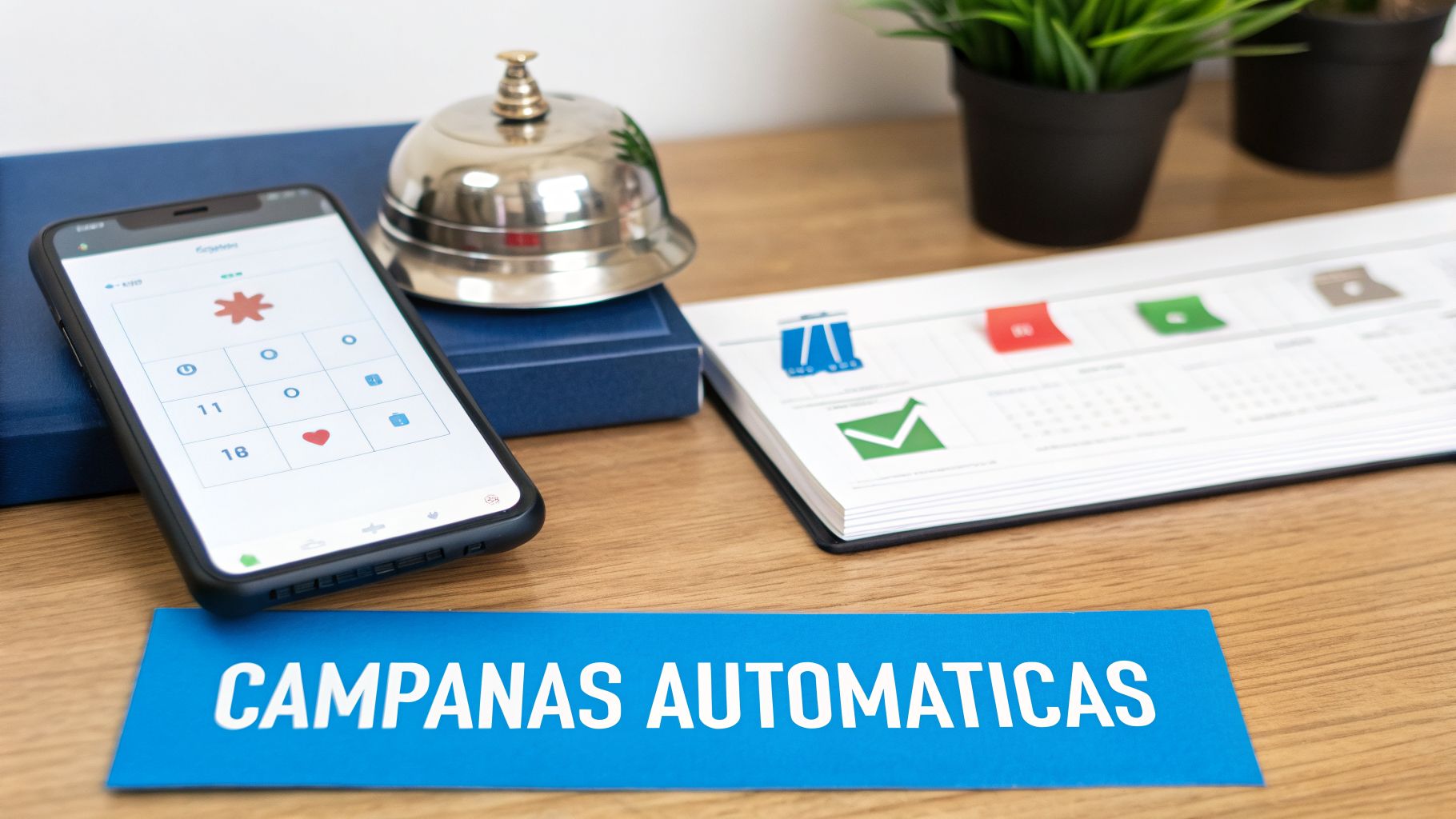
Loyalty is not built solely with rewards, but with constant and relevant communication. Automation is the engine that allows businesses to send the right message, to the right person, at the right time, and through their preferred channel (WhatsApp, email, or push notifications). It is about setting up workflows that are triggered by specific customer actions, such as their first purchase, a period of inactivity, or their birthday, transforming communication from mass to personal.
The effectiveness of this strategy lies in its ability to anticipate customer needs and react to their behavior in real time. For example, a barbershop in Mexico City can set up a welcome workflow that, after the first cut, sends a 10% discount coupon for the second visit. A restaurant in Monterrey, Nuevo León, could automate a "We miss you" message with a special offer for customers who have not visited in 60 days. Platforms like Swirvle integrate these automations natively, allowing an event at the point of sale (a purchase) to trigger a digital communication sequence without manual intervention.
The key is to move from "talking to everyone" to "conversing with each one". Automation does not dehumanize; on the contrary, it allows scaling personalized attention that would be impossible to manage manually.
Implementation and Practical Examples
Welcome Workflow: A spa in Los Cabos, Baja California, can automatically send a welcome email after the first appointment, including post-treatment tips and a link to schedule the next visit with a small incentive. The goal is to reinforce the customer's good decision and encourage a second visit quickly.
Inactivity Reminder: An ice cream shop in the State of Mexico can identify customers who have not purchased in 30 days and send them a WhatsApp message with the new flavors of the month, reactivating their interest and reminding them of their value proposition.
Birthday Greeting: It is a classic due to its high effectiveness. A coffee shop in Puebla can automate sending a coupon for a free drink on a customer's birthday. This small gesture generates a strong emotional connection and is an excellent excuse to bring the customer back to the store.
To execute these campaigns, it is vital to know how to manage bulk mailings through WhatsApp and other channels correctly. Start with 2 or 3 basic workflows (welcome, win-back, birthday), personalize the messages with the customer's name, and set frequency limits so as not to saturate them.
4. Referral Program and Incentivized Word of Mouth
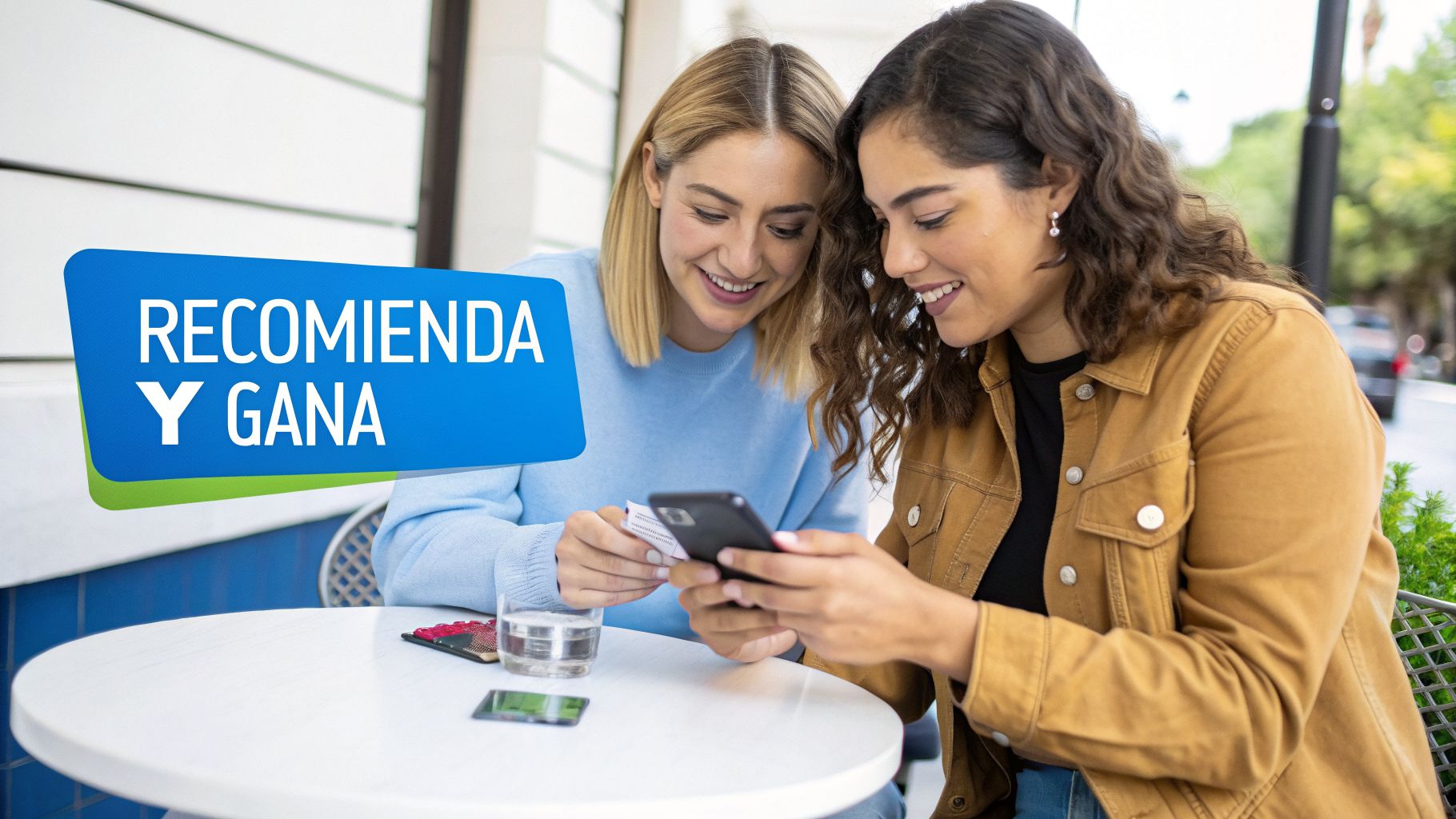
Turning your current customers into brand ambassadors is one of the most cost-effective strategies to increase loyalty and acquire new buyers. A well-structured referral program automates and rewards word of mouth, multiplying your reach without the investment associated with traditional advertising. The concept is simple: reward existing customers for each new buyer they bring to your business.
The effectiveness of this tactic lies in the trust inherent in a personal recommendation. A boutique gym in San Pedro Garza García, Nuevo León, could offer a free month to a member for every three friends who sign up. Meanwhile, a specialty coffee shop in the Roma neighborhood, Mexico City, could give a free drink to the referrer and another to the referee on their first visit. The technology of platforms like Swirvle allows generating and tracking unique referral codes or links for each customer, applying discounts or points automatically at the point of sale and measuring the campaign's success.
A successful referral program not only attracts new customers, but also reinforces the loyalty of the existing customer by making them feel part of the business's success and valuing their recommendation.
Implementation and Practical Examples
Dropbox: Its early growth program is a classic case study. They offered extra storage space to both the referrer and the referee, creating a viral loop that drove their user base exponentially.
Barbershops and Beauty Salons in Mexico: It is common to see "bring a friend" promotions. A barbershop in Puebla could digitalize this: when registering a referred friend, both receive points for their next service, all tracked automatically to prevent fraud and measure effectiveness.
Revolut and Fintechs: In the digital financial services sector, referral programs are key. They offer monetary rewards or exclusive benefits for each new user who completes their registration and makes a first transaction, ensuring the quality of the new customer.
To build an effective program, it is crucial that the process is simple, preferably completed in less than two clicks. Offering an attractive reward for both the referrer and the new customer is fundamental. Communicate success stories and create monthly competitions for "top referrers" to keep the program visible and dynamic.
5. Smart Coupons and Temporary Incentive Dynamics
Coupons are no longer just paper scraps; they are surgical precision tools to influence the purchase decision. The modern strategy is based on smart and dynamic coupons, which are personalized and temporary offers sent to specific customer segments based on their behavior. Their goal is to generate conversions at key moments, whether to reactivate an inactive customer, reward the loyalty of a VIP customer, or welcome a new buyer.
The effectiveness of this tactic lies in its relevance and urgency. For example, a pharmacy in Nuevo León can send a 20% coupon on sunscreens to customers who bought summer products last year, just before the Easter holidays. A seafood restaurant in Yucatán could offer a free ceviche to customers who have not visited in 60 days to encourage their return. Through a system like Swirvle, these coupons can be generated, segmented, and distributed automatically, ensuring that the right message reaches the right person at the right time.
The key to the smart coupon is not the discount itself, but the why and the when it is delivered. It is a dialogue with the customer that says: "We know you, we value your business, and we have something special just for you."
Implementation and Practical Examples
Retail (Hot Sale/Buen Fin): Large chains like Liverpool or Palacio de Hierro not only offer general discounts, but also send exclusive coupons to their cardholders or loyalty program members for early purchases or specific categories, segmenting demand and managing customer flow.
Supermarkets in Jalisco: Regional chains can use coupons to balance inventory. If a branch has excess dairy products close to expiring, it can send a "3x2 on yogurts" coupon to customers who live in that area and have purchased dairy before.
Delivery Apps (Rappi/Uber Eats): They are masters at using welcome coupons for new users and "free shipping" offers to reactivate those who have not ordered in weeks. This model is perfectly adaptable for local businesses, such as a pizzeria in the State of Mexico with its own home delivery service.
To design an effective coupon campaign, it is vital to create a sense of urgency with clear expiration dates (ideally no more than 7-14 days). In addition, it is recommended to set a minimum purchase amount to protect the profit margin and segment the offers: a welcome coupon for new customers, a higher-value one for VIP customers, and a "we miss you" one for inactive ones.
6. Visit Frequency Program (Check-ins and Visit Dynamics)
While points programs reward the purchase amount, frequency programs focus on a different but equally valuable goal: increasing the habit and frequency with which a customer visits you. This strategy is fundamental for businesses where recurrence is the key to profitability, such as coffee shops, fast-food restaurants, or barbershops. The goal is to turn a customer's visit from an occasional event into an ingrained habit.
The modern implementation of this tactic goes beyond the stamp card. Through a POS+CRM system, the "check-in" is automated every time the customer identifies themselves during a purchase, registering the visit without friction. This allows creating complex dynamics, such as rewarding visits on low-traffic days (e.g., Tuesday mornings) or encouraging visits to a specific branch to balance traffic. For example, a juice chain in Monterrey, Nuevo León, could offer a special reward for visiting its new branch in San Pedro during the first month.
The value is not in the individual transaction, but in building a behavioral pattern. A customer who visits you weekly, even if they spend little each time, is often more profitable in the long run than a sporadic customer with a high ticket.
Implementation and Practical Examples
Coffee Shops in Condesa (CDMX): Many specialty coffee shops use systems where the 5th or 7th drink is free. By automating it, the system notifies the barista and the customer when the reward is available, improving the experience and ensuring the prize is claimed, which is key to increasing loyalty.
Barbershops in Puebla: This model is perfect. A barbershop can reward the customer with a free styling product on their third visit of the quarter or a discount on the fifth cut of the year, encouraging regularity and preventing them from experimenting with the competition.
Starbucks (Star Dashes): The global brand popularized visit "challenges", such as the "Starboard", where customers are rewarded for making a specific number of visits or purchases in a week. This creates a sense of urgency and gamification that drives short-term repetition.
For this to work, the visit goal must be realistic. If an average customer visits you once a month, asking them for 5 visits for a reward will be demotivating. Start with achievable goals, such as offering a small prize on the second or third visit within a 30-day period, and proactively communicate the customer's progress through digital receipts or WhatsApp notifications.
7. VIP Programs and Progressive Membership Tiers
While a points program rewards frequency, a progressive tier or level system introduces an element of aspiration and status. This strategy segments customers into categories (e.g., Bronze, Silver, Gold) based on their value to the business, typically measured in accumulated spend or visit frequency. As they level up, customers unlock increasingly exclusive benefits, gamifying the shopping experience and strengthening the emotional bond to increase loyalty in the long term.
This tiered structure is a powerful tool to differentiate your best customers and make them feel genuinely valued. The goal is to create a virtuous cycle: the customer spends more to reach the next level, and the business rewards them with benefits that justify that investment and motivate them to keep participating. The feeling of exclusivity and early access to products or special events are very effective motivators.
The key is not just to reward past spend, but to communicate a clear path to higher status. Customers should know exactly what they need to do to level up and what tangible benefits they will get when they achieve it.
Implementation and Practical Examples
Sephora (Beauty Insider): Its VIB (Very Important Beauty) program is a global standard. The tiers (Insider, VIB, Rouge) are based on annual spend and offer growing benefits such as early access to sales, higher-value birthday gifts, and exclusive events, motivating customers to concentrate their beauty purchases on the brand.
Luxury Restaurants in Monterrey, Nuevo León: A restaurant in San Pedro can implement a VIP program where "Gold" customers get priority reservations, a complimentary glass of wine on each visit, or invitations to private tastings with the chef. Progress can be displayed visually in a digital profile accessible from their cell phone.
Airlines (LATAM Pass): The airline model is the archetype of tiers. Accumulating miles not only serves to redeem flights, but also to reach higher categories (Gold, Platinum, Black) that grant benefits such as priority check-in, access to VIP lounges, and cabin upgrades, encouraging absolute loyalty to a single company.
For this to work, the system must be transparent. Define 3-4 levels with clear and achievable requirements expressed in the business's currency (e.g., "spend $5,000 pesos in 6 months to become Silver"). Offer an immediate benefit when leveling up to generate instant gratification, and consider sending "surprise upgrades" to customers who are close to the goal to give them that final push.
8. Predictive Analysis and Churn Prevention
Instead of reacting when a customer is already lost, predictive analysis allows you to anticipate who is at risk of leaving and act proactively. This strategy uses historical purchase data, such as recency (when the last visit was), frequency (how often they buy), and amount (how much they spend), to identify behavioral patterns that precede churn or abandonment. It is an intelligent defense to protect the current customer base and increase loyalty in the long term.
The power of this approach lies in early intervention. For example, a barbershop in Mexico City can detect that customers who do not return for a cut in 60 days have a high probability of never returning. With this information, it can set up an automated campaign that, on day 45, sends an exclusive coupon to motivate a new visit. A POS+CRM system like Swirvle facilitates the creation of these dynamic risk segments and the execution of retention campaigns without manual intervention.
The key is to move from a post-mortem analysis (why did customers leave?) to a preventive diagnosis (who is about to leave and how can we retain them?), turning data into an income protection tool.
Implementation and Practical Examples
Banks (Risk Detection): Financial institutions analyze patterns such as decreasing deposits or lack of card usage to identify customers who might be considering switching to the competition. Then, they offer them preferential products.
Restaurants in Monterrey: A roast kid restaurant can define its churn as a customer who has not visited in 90 days. By identifying diners approaching that mark, it can send them a WhatsApp message with an invitation to try a new dish, reactivating their interest.
Spotify (User Reactivation): The music platform detects inactive users and sends them personalized emails with playlists based on their historical tastes ("Look what you've missed") to re-engage them.
To apply this, it is vital to define what an "inactive" customer means for your business and monitor cohorts to understand the drop-off points. Customer retention strategies are most effective when based on data and automated to act at the precise moment.
9. Omnichannel and Seamless Shopping Experience
Modern customer loyalty is not built on a single channel, but on the coherent sum of all their interactions with the brand. An omnichannel strategy seeks to eliminate barriers between the physical store, the website, the mobile app, and messaging channels like WhatsApp. The goal is for the customer to perceive a single unified experience, where their history, points, and preferences follow them regardless of how they choose to interact.
The true power of this approach is consistency. A customer who accumulates points in a physical branch of a pharmacy in Monterrey, Nuevo León, must be able to see and use them when buying from their cell phone. This real-time synchronization is essential to increase loyalty, as it shows that the company values the customer as an individual, not as an isolated transaction on a specific channel. Modern technology allows this vision to be an operational reality, not just a concept.
Omnichannel transforms touchpoints from isolated silos to an interconnected network. The customer does not "switch channels"; they simply continue their conversation with the brand wherever it is most convenient for them.
Implementation and Practical Examples
Walmart (Buy online, pick up in store): A global example of how to merge the digital and physical worlds. The customer takes advantage of the convenience of online shopping with the immediacy of in-store pickup, validating their profile and keeping their purchase history unified.
Restaurants in Mexico City: A restaurant can allow a customer to order through WhatsApp, pay from a link sent to the chat, and pick up their order at the venue by showing a QR code. By using a system like Swirvle, the POS recognizes the customer, associates the sale with their profile, and automatically assigns them the corresponding loyalty points.
Zara (Flexible Returns): The fashion giant allows buying online and returning in-store, or vice versa. This flexibility eliminates one of the biggest frictions of e-commerce and reinforces customer trust, knowing that the brand will back them up regardless of the original purchase channel.
To build a seamless experience, it is vital that your base technology is integrated. Ensure your POS system communicates with your e-commerce platform and marketing tools. Actively communicate the advantages: place QR codes on the tables of your coffee shop in Condesa for customers to download the app, and train your staff so they can consult customer history and offer personalized recommendations at the point of sale.
10. Feedback and Surveys to Continuously Improve the Experience
Gathering customer feedback is no longer a luxury, but a strategic necessity to increase loyalty. Actively listening shows that the customer's voice matters, turning a simple transaction into the start of a conversation. The key is to do it systematically and non-intrusively, using the insights obtained to make tangible improvements in products, service, and communications. A customer who feels heard is a customer who returns.
Modern technology greatly facilitates this process. For example, a Yucatecan food restaurant chain in Mérida can send a short Net Promoter Score (NPS) survey via WhatsApp 24 hours after a visit, asking how likely they are to recommend the place. On the other hand, a barbershop in Mexico City can set up a satisfaction question directly on the digital signature screen at the point of sale. Platforms like Swirvle allow integrating these automatic post-purchase surveys, linking the response directly to the customer's profile and their purchase ticket for deeper analysis.
The goal is not only to measure satisfaction, but to diagnose friction points and discover improvement opportunities that customers themselves identify. Closing this loop, that is, acting on feedback and communicating it, is what consolidates trust and loyalty.
Implementation and Practical Examples
Amazon and Booking.com: Both e-commerce giants are masters at collecting feedback. Their automatic systems for post-purchase or post-stay reviews and ratings are fundamental to their business model, generating trust and helping other users decide.
Coffee Shops and Restaurants: A coffee shop in Puebla can send a micro-survey after each purchase: "How did you like your drink and service today? (👍/😐/👎)". This allows detecting quality or customer service issues in real time and correcting them before they escalate.
Actionable Strategy: Keep surveys short (maximum 3-5 questions). Offer a small incentive for completing it, such as bonus points or a discount on the next visit, to increase the response rate. Then, publish the changes implemented thanks to those opinions on your social networks or newsletter.
For this strategy to be effective, questions must be relevant and the response process simple. It is essential to understand how to improve customer service based on real data, not assumptions. By showing that their opinions lead to positive changes, customers feel valued and part of the business's success.
Comparison of 10 strategies to increase loyalty
Strategy | Complexity 🔄 | Resources ⚡ | Expected Results 📊 | Ideal Cases 💡 | Key Advantages ⭐ |
|---|---|---|---|---|---|
Configurable Points and Rewards Programs | Moderate: rules and POS synchronization | POS integration and redemption management | Higher frequency and average ticket | Retail, coffee shops, pharmacies | Easy to understand; direct ROI |
Smart Segmentation and Personalized Campaigns | Medium-High: cleaning and definition of segments | Clean data, CRM, and marketing team | Better conversion and lower advertising spend | E‑commerce and multichannel retail | Relevant messages; optimizes investment |
Campaign Automation and Multichannel Communications | Moderate: design and testing of flows | Multichannel platform and templates | Better timing and more conversions | Welcome, abandoned cart, birthdays | Reduces manual work; scalable 24/7 |
Referral Program and Incentivized Word of Mouth | Low-Moderate: tracking of referrals | Link/code system and rewards | Acquisition with low CAC and virality | SaaS, fintech, local businesses | Low CAC; referrals with higher LTV |
Smart Coupons and Temporary Incentive Dynamics | Low-Moderate: rules and expirations | Marketing and inventory coordination | Immediate sales and traffic increase | Promotions, recovery, stock rotation | Quick impact; easy to activate |
Visit Frequency Program (Check-ins) | Moderate: integrating POS and notifications | Customer registration and push notifications | Increase in frequency and shopping habit | Coffee shops, restaurants, gyms | Increases frequency with low cost |
VIP Programs and Progressive Membership Tiers | High: tier design and benefits | Resources for perks and tier management | Higher LTV and average ticket | Premium retail, hospitality, e‑commerce | Fosters loyalty in high-value customers |
Predictive Analysis and Churn Prevention | High: models and 6+ months of data | Data science and robust history | Churn reduction and high retention ROI | Subscriptions and retail with recurrence | Proactive intervention based on data |
Omnichannel and Seamless Shopping Experience | Very high: full technical integration | Investment in systems and training | Higher satisfaction and multichannel conversion | Chains with physical and online presence | Less friction; consistent experience |
Feedback and Surveys to Continuously Improve the Experience | Low: configuration and automation | Survey and analysis tools | Operational insights and NPS improvement | Post‑purchase, hospitality, restaurants | Detects problems and generates social proof |
The Next Step: From Strategy to Action with the Right Technology
We have explored an arsenal of ten fundamental strategies, designed not only to attract customers, but to forge long-lasting relationships that translate into sustained growth for your business. From the implementation of configurable points programs that reward every purchase, to the use of advanced segmentation to send messages that truly resonate with each individual, the goal is clear: increasing loyalty through deep understanding and personalized attention.
Each tactic, whether a referral program that turns customers into promoters or the use of smart coupons to incentivize an immediate visit, acts as a pillar in building a community around your brand. Imagine a barbershop in the Roma neighborhood, Mexico City, that not only offers a great cut, but also notifies its frequent customers about a last-minute slot available with a small discount, or an ice cream shop in Mérida, Yucatán, that launches a limited-edition flavor and announces it exclusively to its "Adventurer" customer segment who always try new things. These are not complex actions; they are smart and timely interactions that make the customer feel valued and understood.
The Connection Between Strategy and Execution
The effectiveness of these strategies does not lie in their isolated application, but in their integration. True progress occurs when purchase data, customer preferences, and communication channels work together.
Data Centralization: Trying to manage a points program on one platform, WhatsApp campaigns on another, and purchase history on your point of sale is a recipe for inefficiency and errors. Information must flow without friction from the cash register to your marketing engine.
Smart Automation: Personalization at scale is impossible without automation. Setting up campaigns triggered by specific events, such as a birthday, a customer anniversary, or a period of inactivity, allows you to maintain constant and relevant communication without spending hours of manual work.
Measurement and ROI: How do you know if your efforts to increase loyalty are working? The key is to measure. You must be able to analyze which campaigns generate more visits, which customer segments are the most profitable, and what the exact return on investment (ROI) of your loyalty program is.
Customer loyalty is not bought with discounts; it is earned with consistency, personalization, and a genuine understanding of their needs and behavior. Technology is simply the catalyst that makes it possible to execute this vision at scale.
For example, a restaurant in San Pedro Garza García, Nuevo León, could use an integrated system to identify customers who have not visited in 60 days and automatically send them a coupon via WhatsApp for a complimentary appetizer on their next visit. Without a platform that connects the POS with the CRM, this action would be manual, time-consuming, and probably would not happen.
The path to transforming your business is mapped out. You have seen how each strategy, from visit gamification to the creation of VIP tiers, can be applied to your specific industry. The next step is not to question what to do, but how to do it efficiently and scalably. Choosing the right technological tool is not an operational expense; it is a strategic investment in your company's most valuable asset: your customers' loyalty. It is the bridge that connects your vision with daily execution, allowing you to build relationships that endure and drive your growth far beyond the next sales cycle.
Ready to stop improvising and start building a loyalty system that works? Swirvle integrates your Point of Sale with a CRM and automated marketing tools so you can implement all these strategies from a single platform. Schedule a demo and discover how we can help you increase loyalty and sales in your business: Swirvle.
Related Blogs

Nov 10, 2026
How to manage multiple restaurant locations from a single system?

Nov 9, 2026
Which CRM is best for a small business in Mexico? 2026

Nov 8, 2026
What works better for a small business: WhatsApp promotions or email promotions?

Nov 7, 2026
How do you calculate a business's net purchases? Formula and example in MXN

Nov 6, 2026
How much does a point-of-sale system cost for a small business in Mexico?

Nov 5, 2026
How to Create an Executive Breakfast Menu to Sell to Offices: 2026 Guide