
Which campaigns work to fill a restaurant during the week? Compare 8 strategies, messages, metrics, and ROI to increase visits with data.
Filling a restaurant during the week works best when you combine time-limited promotions, behavioral targeting, loyalty, and automation. The choice depends on the specific problem of each location, whether it is a lack of occupancy, low recurrence, low average ticket, or poor acquisition.
Filling tables does not mean discounting everything. A general promotion can attract occasional visits, but it can also subsidize customers who already planned to visit, reduce margins, and train the public to wait for an offer. The challenge is to convert available capacity into a concrete consumption occasion, with a relevant proposal for the right person and during the right time slot.
Demand does not behave the same way across all locations either. A survey by CGA by NIQ reported that Saturday was the preferred day to visit restaurants and bars for 73% of consumers, followed by Friday with 58% and Sunday with 33%. The evidence appears in this analysis on restaurant and bar consumption in Mexico.
Therefore, a coffee shop can sell convenience during the afternoon, a restaurant can activate a quick lunch for offices, a barber shop can reward an appointment on a Tuesday, and a beauty salon can offer a benefit conditioned on a specific time slot. The same principle changes shape depending on the business.
Each campaign must be read with six questions: what objective does it activate, how is it executed, what message does it use, what automation does it need, what risk does it introduce, and what metric decides if it continues. The following eight campaigns are sorted by the main lever they move, from occupancy and recurrence to reactivation, average ticket, and acquisition.
1. Happy hour and hourly promotions
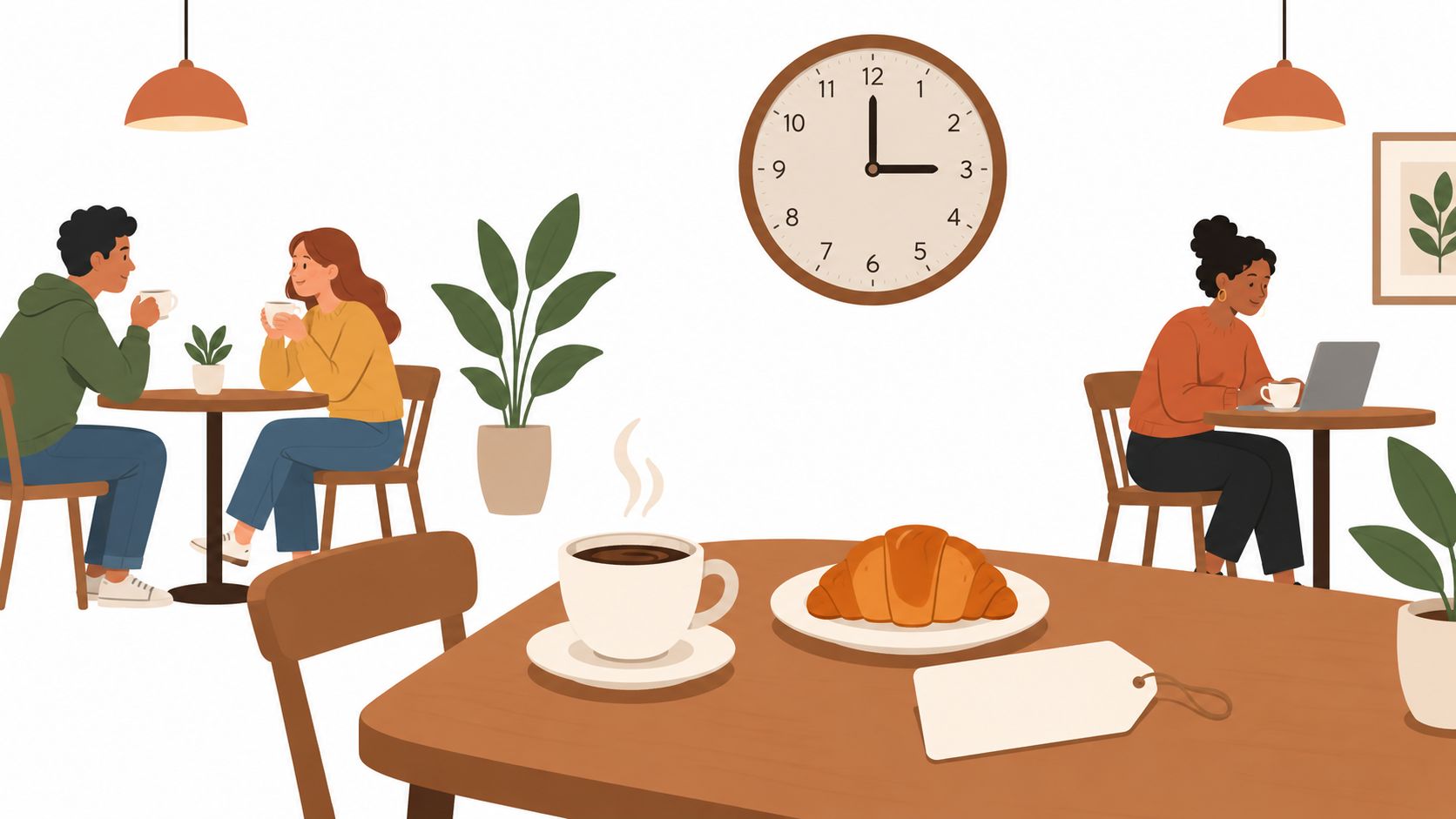
Happy hour works when it occupies a weak slot, not when it reduces prices all day long. The restaurant must review its sales by branch, day, and hour to find the gap that needs traffic. In a coffee shop, it can be a combination of coffee and pastry during the afternoon. In a restaurant, it can become an executive menu for workers who need to eat quickly. In a food bar, it can take the form of a themed weekday taco night.
The message must sell convenience and moment, not just savings. “Stop by after work, order quickly and get an extra from Monday to Thursday” offers a clearer occasion than “everything on discount.” NielsenIQ found that 27% of Mexican consumers had gone out for a drink after work during the previous three months, and that 48% of those who have this habit do so at least once a week. The opportunity exists, but part of that behavior must be shifted toward less-demanded days. The NielsenIQ report on out-of-home consumption in Mexico provides the context.
How to protect capacity and margin
A Swirvle automation can send the message before off-peak hours to customers who usually visit on Fridays or Saturdays, provided they have contact permission and are associated with the correct branch. The offer must be limited to products with controlled margins or a low variable cost benefit, such as a drink or a dessert.
Operational rule: the promotion must close automatically when the location reaches target occupancy. An offer that remains active with a full dining room ceases to be an occupancy tool and becomes a cost.
The restaurant must measure incremental visits, average ticket, margin per visit, percentage of new customers, and non-discounted sales. To better structure the mechanics, you can consult this guide on promotions to increase sales during low-demand hours.
2. Loyalty program with accumulative points and tiered rewards
A points program fills Tuesdays only if it rewards the correct behavior. If customers accumulate benefits on Friday and Saturday, the restaurant is financing visits that would likely happen anyway and is not improving weekday occupancy. The mechanics should concentrate the incentive on Monday, Tuesday, or Wednesday, depending on the day with the highest available capacity.
The structure can assign points per visit, per purchase, or for a specific category. A coffee shop can double them on low-demand days. A restaurant can offer tiered rewards based on frequency. A barber shop can provide preferred access to certain times after several visits. In a beauty salon, points can be applied to Tuesdays and Wednesdays to reinforce a schedule with open slots.
An operational reference for coffee shops proposes one point per visit and a free coffee upon reaching ten points. For barber shops, it suggests a progressive discount starting from the fourth visit of the month. These are examples that must be adjusted to the margin, the cost of the benefit, and the actual frequency of each business. The proposal appears in this guide on recurrence programs for physical businesses and in this resource on loyalty programs for restaurants.
The reward must arrive before the customer leaves
The first reward must feel achievable. A QR code at the point of sale can register the visit, while Swirvle communicates how many are left to get the benefit. An automation can also activate double points only during off-peak hours, with a message like: “Your next weekday visit adds extra points.” This guides demand without subsidizing a peak-hour purchase.
Complexity is a risk. If the rules require too many conditions, staff will have difficulty explaining them and the customer may forget their balance. The program also loses meaning if it rewards visits unrelated to the occupancy goal.
Measurement must separate visits on target days, redemption rate, average ticket, and post-redemption repetition. To attribute sales, it is best to identify each registration, message, and reward with a specific code or event, and compare the incremental margin with the cost of the benefits. Frequent customers can receive a reserved experience or an additional product, while a visit reward activates those who have not yet established the habit.

3. Personalized campaigns by segment and purchasing behavior
A customer database is not a single audience. A restaurant that sends the same offer to everyone mixes those who visit frequently, those who only go on weekends, those who stopped buying, and those who have not yet tried the business. Segmentation allows changing the incentive without unnecessarily widening the discount.
Swirvle can organize customers by branch, frequency, spend, products purchased, and time since the last visit. A customer who usually visits on Friday and Saturday can receive an invitation for Tuesday with their usual dish. A person with a high average ticket can receive access to a weekday experience, not a general price reduction. A coffee shop can distinguish between someone who buys in the morning and someone who works from the premises during the afternoon.
The message must reflect real behavior
A restaurant can write: “The dish you usually order is available on Tuesday with a special benefit.” A barber shop can send a reminder to customers with irregular visits. A salon can reactivate a person who stopped booking, offering a concrete window to return. The name and product help, but the most important personalization is the relationship between the message and the history.
WhatsApp is useful for activating demand close to the time of service, although its business adoption still offers room for differentiation. An academic study on Mexican and Spanish companies found that only 27% offered their customers contact via WhatsApp. The study on business use of WhatsApp supports the opportunity of this channel.
Automation must stop reminders when a person books, change the offer if they cancel, and limit the frequency of contact. The metric does not end with open or click. It is best to compare confirmed bookings, actual attendance, ticket, margin, and subsequent visits by segment. The most profitable campaign may be the one that uses the smallest incentive for the group most likely to respond.
4. Themed event or special weekday night
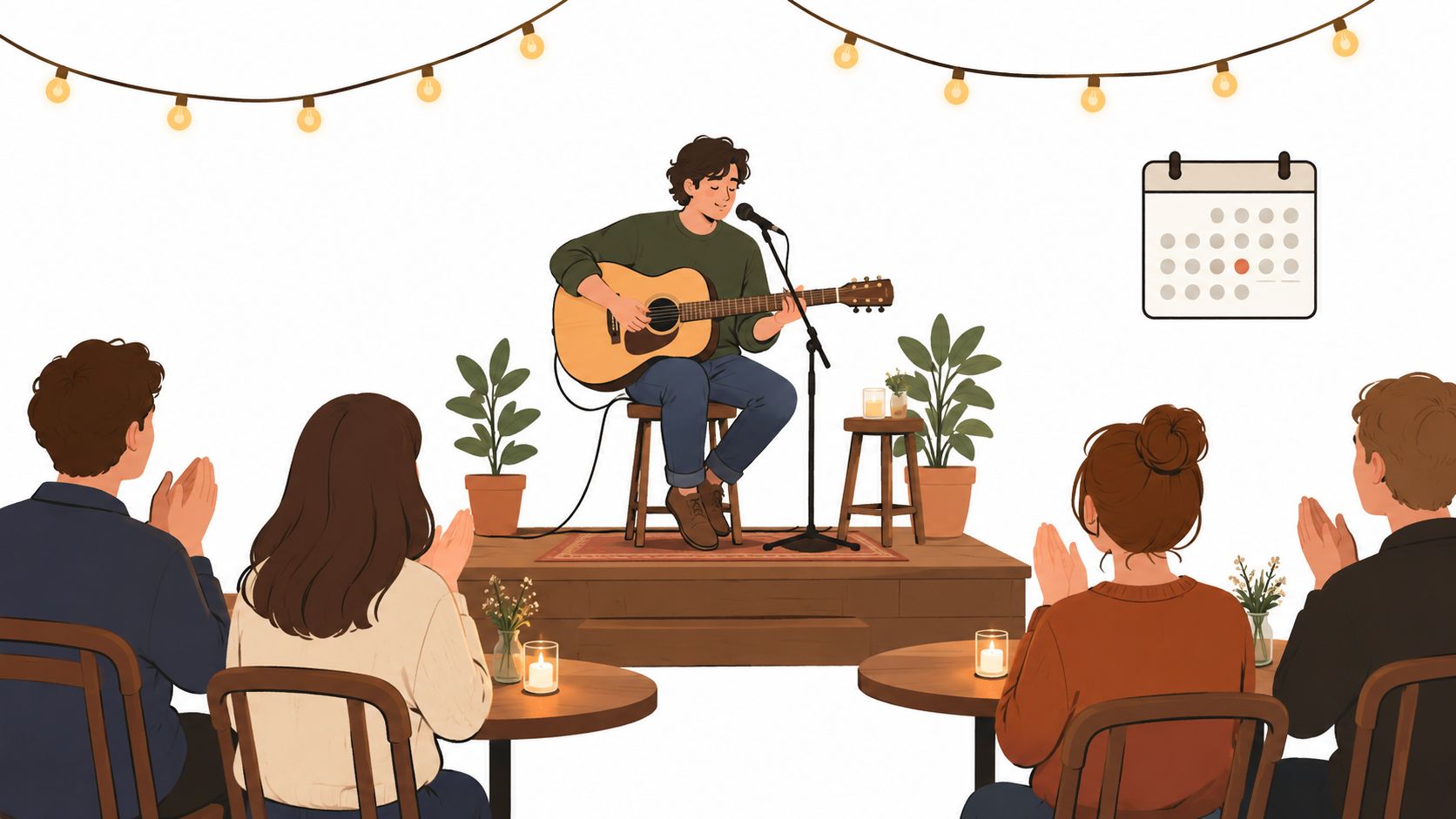
An event replaces the “there is a discount” argument with “there is a reason to go out.” This difference matters when the audience is looking to socialize, discover something, or participate in a community. A restaurant-bar can organize a jazz Thursday. A coffee shop can reserve a Wednesday for writers, students, or people working on laptops. A restaurant can turn Tuesday into a trivia or live music night.
The experience must match the audience of the branch. A noisy event might be suitable for a bar and counterproductive for a work-oriented coffee shop. A barber shop could create a day for retro cuts and visual content. A salon can collaborate with local beauty creators, provided the activity does not obstruct normal operations.
The promotion starts before the date
Communication must explain what will happen, who it is for, and how to book. Social media, email, WhatsApp, and in-store signage can work with the same event code. Pre- and post-event customer care can also be automated, as long as responses keep schedules, availability, and conditions consistent.
The risk is measuring only attendance. An event can fill tables but leave a low average ticket, require too much staff, or attract visitors who do not return. The attribution file must record the source of the reservation, consumption, cost of the incentive, and a subsequent visit. It is also useful to save interests and participation to invite each person to similar activities, without bombarding them with irrelevant events.
Optimization can begin with a narrow theme and controlled capacity. If demand exceeds space, the restaurant can prioritize pre-booking. If attendance is weak, it should change the proposal or segment before adding a discount.
5. Smart coupons and behavior-based dynamic offers
A smart coupon changes based on the value and risk of each customer. A person who stopped visiting needs a reason to return. A person who visits frequently may respond better to an additional product, extra points, or priority booking. The mistake is sending the same code to the entire database and measuring only how many times it was used.
Pressure on budgets makes it more important to protect margins. Prices at lunchrooms, local diners, sandwich shops, taco stands, and similar restaurants accumulated an increase of 42.54% since the end of 2021 and remained above 8% annually during 2025, according to the report on prices of food consumed outside the home. In this context, a conditioned benefit can be more sustainable than an open markdown.
The coupon must buy behavior
A restaurant can offer a benefit for a Tuesday to Thursday lunch to someone who has not visited in a while. A coffee shop can combine two products during a specific time slot. A barber shop can deliver an advantage on the next cut if the appointment is scheduled on low-demand days. A salon can link the reward to a package, instead of reducing all services.
The campaign needs a unique code, expiration date, branch, schedule, and limit per person. Coupons should be sent when the customer can still act, but not so far in advance that they lose urgency. They must also automatically exclude those who have already booked.
The KPI is not the redeemed coupon. It is the incremental utility per available seat or appointment.
Swirvle can help configure this logic and create smart coupons for a store. The evaluation must compare exposed customers with a non-exposed group, looking at incremental sales, margin, average ticket, and repetition. If the incentive increases redemptions but not utility, it needs a lower variable cost, a more specific condition, or a different segment.
6. Referrals and incentivized word-of-mouth
A referral turns an existing visit into an acquisition opportunity. The current customer recommends the business to a friend, colleague, or family member, and both parties receive a benefit only when the visit occurs in the time slot that needs occupancy. The mechanics work best when the action is simple and the code identifies each person.
A restaurant can invite customers to share a reward for Tuesday to Thursday visits. A coffee shop can reward someone who brings an office colleague. A barber shop can link the benefit to the next cut for both people. A salon can accumulate rewards for new customers who actually book and attend.
The business should start with frequent, high-value customers because they already know the experience and have a credible reason to recommend it. WhatsApp can facilitate sending the code, while a CRM records who shared, who booked, and what ticket the visit generated. The benefit for the referrer should not activate when the message is sent, but after the validated purchase.
Attribution avoids paying for a normal visit
Each code must contain the branch, campaign, and referring customer. If an invited person was already in the database or had booked before, the system must flag it to avoid confusing reactivation with acquisition. It is also useful to send a reminder when there is a recommendation without redemption, without turning the follow-up into pressure.
The risk is rewarding too many transactions from customers who would have visited anyway. A condition of day, time, or first-time visit helps protect the goal. The analysis must include new customers, attributable sales, cost of the reward, margin, and subsequent repetition.
The local scoreboard can show participation without displaying sensitive information. This layer of recognition adds play and conversation, but it must not replace code control or reconciliation with tickets.
7. Weekday cross-selling and automated upselling
When occupancy cannot grow immediately, the restaurant can increase the value of each visit. Cross-selling recommends a complementary product. Upselling proposes a superior version, a bundle, or an extra that fits the original purchase. Both should feel helpful, not like pressure to spend more.
A coffee shop can suggest a bakery product to someone ordering coffee. A restaurant can offer a drink or dessert to someone who has already ordered a main dish. A barber shop can recommend a hair product after the cut. A salon can combine manicure and pedicure with a specific proposal for Tuesday or Wednesday.
Purchase history helps distinguish which suggestion makes sense. High-ticket customers can receive premium options. New ones need simple combinations that do not complicate their first purchase. Staff can present the recommendation at the point of sale and the system can send a proposal prior to a usual visit.
The package must increase profit, not just units
The business must identify add-ons that are already bought together and review their variable cost before building the offer. An attractive package can include an extra with a good contribution margin, a priority booking, or a product that helps complete the occasion. The communication must explain the value of the combination, not hide individual prices.
Automation can be activated after a purchase, before an expected visit, or when confirming a booking. The message must stop if the person has already added the complement. It should also avoid offering a product that is out of stock or incompatible with the branch.
Measurement compares average ticket, margin per visit, and the proportion of purchases with add-ons against similar customers without exposure. Unit growth is not enough. If the package reduces margins or displaces a higher-value purchase, the campaign needs another combination, another audience, or a more precise time condition.
8. Alliances and co-marketing with complementary businesses
An alliance expands acquisition without depending exclusively on one's own audience. A restaurant can collaborate with a nearby cinema. A coffee shop can link up with a bookstore. A barber shop can partner with a clothing store. A salon can create a route with a restaurant so that the experience continues after the appointment.
The key is to share a compatible audience without competing for the same purchase. The benefit must be understandable and verifiable: a weekday reservation can unlock an advantage at the allied business, or a purchase at the associated retailer can activate a benefit at the branch. The offer should not require too many steps.
The alliance also needs capacity control
Each partner must have a different code and a clear clearance rule. The restaurant must know what sales came from the cinema, which branch received them, and how much the incentive cost. Swirvle can centralize communication via WhatsApp (on the Premium plan), email, or push, always with consent and segmentation by location or history.
It is best to test a single alliance before expanding it. The trial must define duration, hours, included products, and the method of attribution. The most common risk is generating low-value traffic or delivering a reward that the partner cannot fulfill. The campaign must be paused when the service reaches capacity or when the acquisition cost exceeds the available margin.
The result must be measured by attributable revenue, new customers, average ticket, margin, redemptions, and repetition. An alliance that generates many initial visits but no second purchase needs to improve the welcome experience, not necessarily increase the promotion.
8 campaigns to fill the restaurant during weekdays
Strategy | Implementation Complexity | Resource Requirements | Expected Results | Ideal Use Cases | Key Advantages |
|---|---|---|---|---|---|
Happy Hour and Hourly Promotions | Low - Moderate (schedule setup and automation) | Adjustable margins, delivery platform (Swirvle), staff | Higher occupancy in off-peak hours and better demand forecasting | Coffee shops, bars, and restaurants with idle capacity | Quick to implement, automatable, increases traffic |
Loyalty Program with Points and Rewards | Moderate - High (tier and rule design) | CRM platform, initial operational investment, continuous communication | Higher recurrence, increase in average ticket and LTV | Businesses with repeat visits (coffee shops, salons) | Retains customers and generates actionable data |
Personalized Campaigns by Segment | High (segmentation, A/B testing, and modeling) | Clean data, analytical tools, marketing team | Better open/conversion rate and lower CAC | Businesses with a database and varied purchasing patterns | Highly relevant messages, measurable ROI by segment |
Themed Event or "Special Night" on Weekdays | Moderate - High (logistics and production) | Investment in entertainment, multi-channel promotion, physical space | Attracts new customers and generates social content | Bars, restaurants, and venues with event capacity | Experiential differentiation and possibility to charge premium |
Smart Coupons and Dynamic Offers | Moderate (dynamic rules and testing) | Behavioral data, Swirvle, validity control | High redemption rates and recovery of inactive customers | Restaurants, coffee shops, and services with customer history | High conversion, sense of exclusivity, scalable |
Referral and Incentivized Word of Mouth | Low - Moderate (tracking system) | Unique codes, tracking dashboard, incentives | Low-cost acquisition and customers with higher LTV | Businesses with satisfied customers and personal networks | Low cost per acquisition and organic viral effect |
Automated Cross-selling and Upselling | Moderate (recommendation models) | Product data, POS/WhatsApp integration, staff training | Increase in average ticket without more customers | Coffee shops, restaurants, salons with complementary products | Better ROI per existing customer, relevant recommendations |
Alliances and Co-marketing with Complementary Businesses | Moderate (negotiation and coordination) | Strategic partners, alliance codes, campaign coordination | Access to new audience and increased traffic without paid advertising | Complementary local businesses (cinema, bookstores, shops) | Low cost, wider reach, and measurable cross-promotion |
Turn Tuesday visits into a measurable system
The question “What campaigns work to fill a restaurant during weekdays?” has no universal answer. A branch next to offices may need speed at midday. One located in a residential area can activate an after-work experience. A coffee shop may seek recurrence, while a barber shop or beauty salon may need to fill specific appointments without saturating other hours.
The first phase is to diagnose. The business must review occupancy by day and hour, average ticket, margin per product, frequency, time since the last visit, and available capacity. It must also separate branches. A weekly average can hide that one location needs more traffic on Tuesday afternoons while another is already full during that slot.
The second phase launches a single campaign with a single objective. If the problem is occupancy, a time-limited offer may be enough. If the problem is recurrence, it is best to prioritize points or a reward for a second visit. If the problem is reactivation, the coupon should target inactive customers. If the problem is acquisition, referrals or an alliance can provide a different source.
The third phase compares results against a reference period and, when possible, against non-exposed customers. The dashboard should include:
Incremental sales: revenue that would not have occurred without the campaign.
Cost of the incentive: discount, product delivered, points, or partner commission.
Margin per visit: profit after variable cost and reward.
Average ticket: value of the exposed purchase compared to comparable purchases.
Frequency and repetition: subsequent visits within the business's purchasing cycle.
ROI: attributable result after subtracting the activation cost.
The consumer context requires budget care. In Mexico, household spending in restaurants represented 7.4% of total expenditure in 2022, while spending on food and beverages consumed inside the home equated to 30%. Within that spending, the proportion allocated to restaurants was 19.7%, compared to 13.4% in 2020, according to data from INEGI on household expenditure. The practical takeaway is clear: a value proposition can help, but it must respect margins and focus on available capacity.
Swirvle can centralize segments, points, coupons, automated campaigns via WhatsApp (on the Premium plan), email, and push, as well as attribution by campaign and branch. The team should document each test with its audience, schedule, message, incentive, and result. To streamline decision-making, it is useful to calculate the return on investment of each campaign.
The final rule is to keep the campaigns that generate profitable incremental sales, not just those that produce opens, clicks, redemptions, or visits. Schedules, rewards, and messages must be adjusted with data until the promotion stops being an isolated event and becomes a repeatable occupancy system.
Swirvle brings together CRM, segmentation by habits and branch, loyalty, smart coupons, and automated campaigns via WhatsApp (on the Premium plan), email, and push notifications for physical businesses. To test weekday campaigns with sales attribution and ROI measurement, the restaurant can learn about Swirvle and choose a first automation based on the problem of its branch.
Related Blogs

Nov 22, 2026
How to identify frequent customers in a physical store?

Nov 21, 2026
How to Connect Your POS System with Restaurant Email Marketing: A Guide

Nov 20, 2026
How much does a small restaurant make per month in Mexico?

Nov 19, 2026
How to Run a Small Coffee Shop Step by Step? 2026

Nov 18, 2026
How can you check out customers faster in a coffee shop during peak hours?

Nov 17, 2026
How to create a loyalty program for a clothing store or boutique?