
Discover 10 dessert ideas to sell, from gas station kiosks to subscriptions. Learn about costs, pricing, and marketing for your business.
Transform your business: the secret ingredient is a dessert. Many entrepreneurs in Mexico already have the premises, the cart, the counter, or the kitchen ready, but they continue to leave money on the table because they only sell the obvious. A well-chosen dessert can boost ticket sizes, improve repeat business, and fill slow hours in coffee shops, car washes, gas stations, bakeries, and local businesses. The key is not to just “have desserts,” but to choose formats that survive real-world operations, can be replicated without chaos, and leave room to sell to the same customer again.
In the Mexican market, the demand exists and is not distributed randomly. An analysis cited by Poster México, based on Kantar Worldpanel, reports that 2 out of 10 Mexicans consume desserts at home at least 2 times per week, with strong consumption at night, in the afternoon, and also in the morning, alongside peaks on Saturday and Sunday and lower consumption on Tuesday, which helps in planning rotation and promotions by time and day ideas de postres para vender en México. Tiendanube also points out that some desserts can reach a profit margin of up to 70% over the cost of ingredients, while the typical margin usually sits between 30% and 50%, depending on the preparation rentabilidad del negocio de postres. With this foundation, the business stops relying on inspiration and begins to look like a system.
Table of Contents
5. Healthy Desserts for Gyms, Wellness Centers, and Fitness Businesses
6. Themed Desserts for Events, Weddings, and Corporate Celebrations
7. Mini Desserts and Single-Serve Portions for Delivery and Apps
10. Artisanal Desserts with a Pre-sale System and Interactive Workshop
1. Customized Desserts with a WhatsApp Ordering System
A themed cake for birthdays, decorated brownies for an office in Mexico City, or a gluten-free tart for Puebla sell well because they solve a specific need. The customer isn't just buying flavor; they are buying convenience, context, and the feeling that the detail was made for that occasion. With a gift like this, the price is accepted with less friction, and repeat purchases come more easily.
WhatsApp serves as the entry point, but the business is better organized when that contact is registered in a CRM like Swirvle. There, it is useful to save preferences, special dates, order history, and type of celebration, so that the next message doesn't start from scratch. Support for this mass communication dynamic on WhatsApp can be found in mensajes masivos por WhatsApp.
How to make it profitable without slowing it down
Operations become more profitable with a short base menu. Three flavors, three decorations, and pre-arranged combinations allow you to sell customization without forcing the business to improvise every order. This helps immensely in Monterrey, where a home bakery can handle local delivery, and also in Puebla, where a gluten-free niche needs consistency and zero errors.
A single packaging or decoration flaw affects customer perception and the order's margin.
Segmentation by occasion: birthdays, weddings, and corporate events require different messages, different timelines, and even different handling in the confirmation.
Retention coupons: work well with customers who have already tried the product and may return for another special date.
Visible referrals: are useful when the gift made a great impression and the customer wants to share the contact.
Short base catalog: speeds up production and reduces errors in decoration, packaging, and delivery.
In practice, this format serves entrepreneurs who want to sell fewer units but with a higher value per order. If the CRM also tracks which flavors are ordered in each state, communication becomes more precise without complicating the counter.
2. Gourmet Desserts for Coffee Shops and Food Businesses
A coffee shop might order a brownie because it looks good in the display case, but they will only reorder it if the packaging holds up, the portion is consistent, and the flavor doesn't change between batches. There lies the difference between a pretty dessert and a product that actually moves. Artisanal brownies, specialty cheesecakes, and signature desserts work best as a product line for coffee shops, restaurants, and food stores that require stable presentation and constant replenishment. The Zona Rosa in Mexico City, certain restaurants in Puebla, or wellness stores in Baja California do not buy the same selection, so the portfolio must respond to the channel, not the producer's personal taste.
The operation completely changes when the dessert stops being sold as an individual piece and starts functioning as a recurring supply. Swirvle helps organize wholesale clients by business type, track which flavors sell best at each location, and trigger reorder alerts based on consumption history. This matters because a wholesale sale is not sustained by an attractive photo; it is sustained by continuity, quick response, and follow-up control. The internal support link for this coffee shop loyalty logic is programa de lealtad para cafeterías.
What changes when the customer buys in volume
The margin doesn't just depend on the dessert; it also depends on the channel. A cheesecake that looks premium can become a problem if it travels poorly, causes too much waste, or forces order remakes due to small variations. That's why it is best to separate offerings by business type, because a high-traffic coffee shop does not buy the same way as a hotel or a health-focused store. The supplier who understands this stops improvising and starts planning assortment, packaging, and replenishment with commercial logic.
Useful practice: selling gourmet desserts in volume requires fewer last-minute changes and more inventory discipline than selling over the counter.
Volume discounts: help sustain replenishment without heavily impacting the unit price.
Points for repeat purchases: reduce the likelihood of wholesale clients switching suppliers over minor details.
Reorder alerts: prevent you from running out of stock right when the customer has integrated your dessert into their menu.
Segmentation by business format: allows adjusting flavors, portions, and packaging to actual use.
In Baja California, for example, sugar-free desserts can fit wellness centers and gyms, while in Puebla sales to restaurants and hotels usually reward consistency over extravagance. The business grows when the CRM reveals who is buying, how much they are buying, and when they are buying again.
3. Quick Dessert Kiosks in Gas Stations and Car Washes
A car wash at peak hour and a gas station with a short line have one thing in common: the customer is already there and will accept an additional purchase if it doesn't delay their departure. That is the real advantage of the quick dessert. Packaged donuts, cookies, truffles, and brownies work because they satisfy an impulse buy without asking for extra attention from the consumer.
In Monterrey, a car wash can move packaged desserts while the car is being washed. In Querétaro, a gas station can set up a corner with artisanal brownies and cookies. In Guadalajara, a station with local brands can add variety without carrying too much inventory. The operational criterion is clear: sell something that won't melt, won't fall apart, and won't complicate the main service.
The model works when the counter doesn't get in the way
Swirvle helps identify frequent customers at the car wash or gas station and records what they buy alongside the main service. With this information, dessert promotion stops being generic and starts depending on the actual visit, the ticket, and repetition. The internal link connecting to this operational logic is software para gasolineras.
Operational key: at high-traffic points, the dessert must capture impulse, not prolonged attention.
Service combos: washing the car and grabbing a dessert improves perceived value.
Combined points program: a sweeter service creates a reason to return.
New flavor notifications: are useful when the customer already knows the location and just needs a nudge.
Durable packaging: matters more than excessive decoration.
The business works best when inventory is low and turnover is clear. If the location sells a lot of the main service, the dessert must come in as a profitable complement, not an extra burden for the team. On higher-traffic days, a small repeated sale usually yields more than chasing large orders that disrupt operations.
4. Gourmet Dessert Boxes by Monthly Subscription
A well-crafted subscription turns a box of desserts from an impulse buy into recurring revenue. The business stops depending on daily cravings and can produce with more order, because it already knows how many deliveries are committed and what kind of flavors best drive repeat purchases. In a monthly box, every decision weighs more than the decoration: portion size, margin per piece, ease of assembly, and consistency between one edition and the next.
The logic also changes depending on the market. In Mexico City, a themed box proposal can sustain a broad subscriber base if communication is clear and the packaging conveys value. In Guadalajara, the model fits better with independent creators and customers looking for different experiences each month. In Monterrey, the fit version of desserts reads better for active people, provided the product does not look generic or sacrifice flavor.
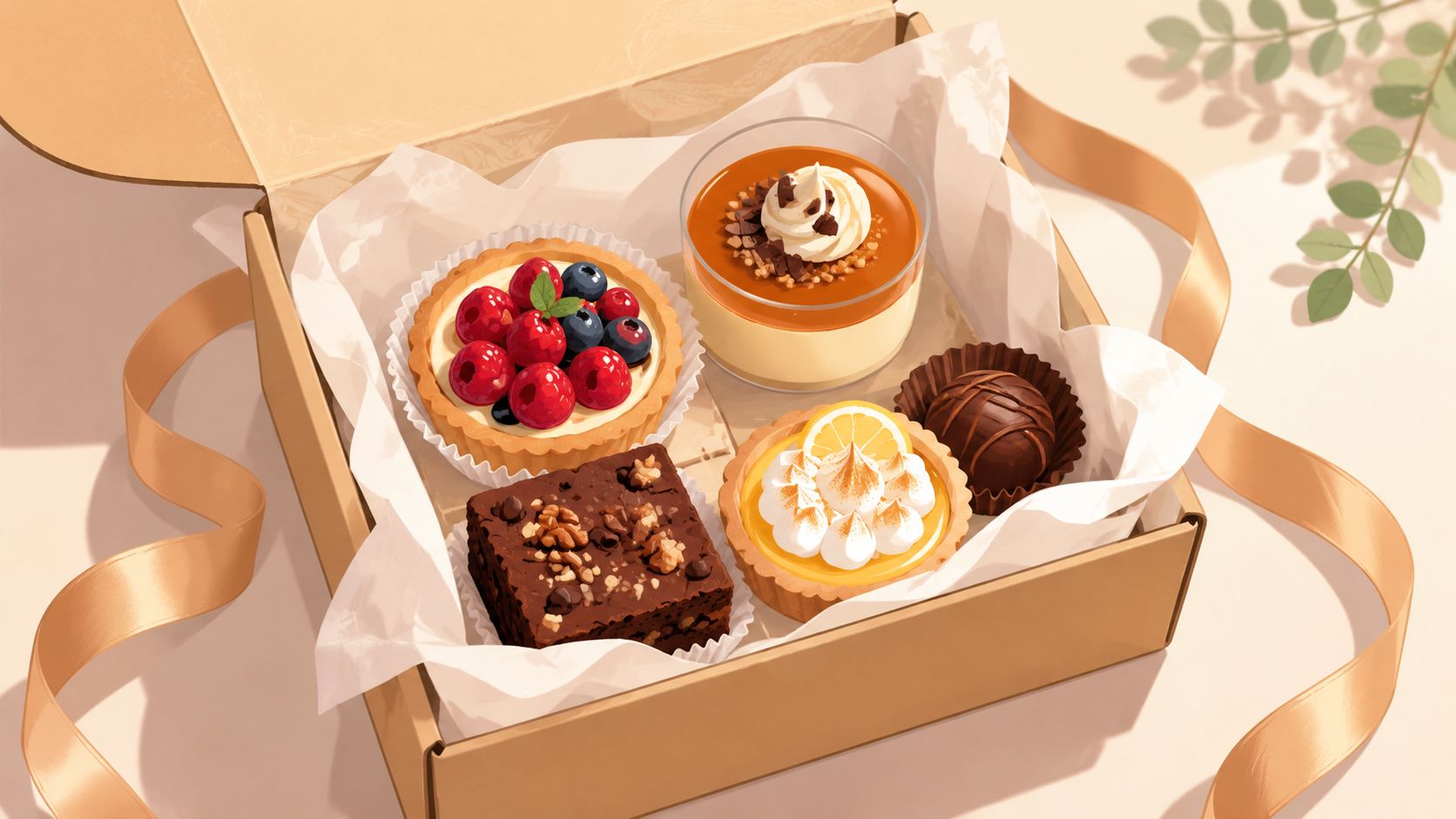
What sustains customer retention
Swirvle helps manage that retention with segmentation by preferences, allergies, and diet type, which reduces shipping errors and unnecessary complaints. It also allows you to announce what the next edition will include, because anticipation sells just as much as the contents of the box. If the customer understands the value of what they will receive beforehand, cancellation loses strength and the subscription becomes easier to maintain.
Next box sneak peek: reduces uncertainty and keeps interest active.
Monthly surveys: serve to adjust flavors without improvising.
Referral rewards: can bring in subscribers at a lower cost than an isolated promotion.
Segmentation by diet: avoids costly mistakes and improves the perception of care.
Subscriptions don't survive by packing in more pieces; they live on curation that the customer wants to experience again.
In this format, profitability improves when production becomes predictable and marketing stops fighting for every individual order. Retention is the asset that sustains the business.
5. Healthy Desserts for Gyms, Wellness Centers, and Fitness Businesses
A gym with an in-house juice bar, a wellness studio in Polanco, or a sports club in Tijuana doesn't sell desserts out of pure indulgence. It sells a sweet alternative that doesn't break the customer's routine. Protein brownies, options with no refined sugar, keto desserts, or gourmet bars work best when the buyer is already thinking about performance, portion control, and healthier habits.
Critical point: if the packaging looks like it came from a generic bakery, the health message is weakened even if the recipe is correct.
Swirvle helps organize that business by actual buying profile. It allows segmenting by diet type, recording preferences, and activating different campaigns for active clients, new users, or frequent buyers. In a Monterrey branch or in an agreement with a fitness center in Baja California, this prevents pushing the same message to people with different goals and improves the repeat rate.
Marketing must educate, not just sell
A healthy dessert moves better when the customer understands why it is good for them. It is helpful to explain what the portion provides, where it fits in their routine, and the difference between a functional option and a traditional sweet labeled as “fit.” It also helps to send nutritional tips via WhatsApp, share simple recipes, and build community dynamics with challenges or rewards.
Points program for regular purchases: makes the habit visible and helps sustain repeat buys.
Campaigns by sports season: are useful before competitions, internal challenges, or high-attendance seasons.
Educational content: reduces doubts and improves appreciation of the real value.
Samples for new customers: lowers the barrier to entry and allows risk-free tasting.
In this type of business, the CRM is not an administrative ornament. It is the tool that shows which diets buy the most, which ones repeat, and which offer is best to push at each branch or partner location. It also helps detect when a customer is cooling off, so you can reactivate them with a proposal that actually fits their routine.
6. Themed Desserts for Events, Weddings, and Corporate Celebrations
An event client buys operational peace of mind. A wedding in Mexico City, a corporate event in Puebla, or a dessert catering gig in Monterrey doesn't just pay for taste; they pay for pieces that assemble easily, look great in photos, and are delivered complete on-site. In this type of sale, the proposal that works best combines design, flavor variety, and flawless last-mile delivery.
Profitability is defined from the first contact. If the prospect inquires today and the event is weeks away, follow-up matters as much as the recipe. Swirvle helps organize that pipeline, save customer notes, and activate tasting reminders before the event, which reduces losses due to forgetfulness, late responses, or internal disarray.
The sale starts with the first response
An event proposal should not be treated as a fixed menu. It is best to show a portfolio segmented by weddings, birthdays, and corporate events, because each buyer evaluates different things. In weddings, aesthetics and visual consistency usually matter; in corporate events, punctuality and ease of service carry more weight; and in birthdays, customization with cost control is key.
Pricing should also be presented clearly. It helps to show volume options and explain what changes when the order grows or is scaled down. This transparency prevents unnecessary haggling and helps the client understand where the real value lies.
Business rule: an event is not won on the day of setup; it is won with the follow-up that happens beforehand.
Digital portfolio by event type: accelerates client trust.
Custom proposals: reduce back-and-forth messaging.
Referral system: rewards those who bring in another event.
Tasting reminder: keeps the prospect from cooling off.
This format also allows you to charge for the experience, not just the dessert. Logistics, setup, and aesthetic judgment have a real cost, and it's best to state this starting with the quote. Whomever communicates this well stops competing solely on price and can better protect their margin.
7. Mini Desserts and Single-Serve Portions for Delivery and Apps
An app order is decided in seconds, and single-serve portions play in favor of that quick purchase. Mini tarts, bite-size brownies, and desserts in cups survive transit better, are easier to photograph, and reduce complaints about poorly served portions or messy presentations. In Mexico City, a micro-business can sustain high volume with a short offering; in Monterrey and Guadalajara, a small but well-presented catalog usually yields more than a long menu that confuses the customer.
The key is selling a quick entry point and repeat purchases, not just a dessert. If the brownie looks moist, the tart maintains clean edges, and the cup reveals clear layers, the product advances better in the catalog. Swirvle helps retain those frequent customers with exclusive coupons, win-back campaigns, and a bridge to guide app traffic to physical stores after several orders.

Delivery doesn't forgive presentation mistakes
A dessert that looks bad in photos usually sells less, even if it tastes great. That's why it is best to set production standards, use the same packaging for all orders, and check that each piece arrives with the same visual appeal. In this format, consistency weighs more than many entrepreneurs initially realize.
It also helps to organize the offering by consumption time. Afternoon snack time and late night usually respond differently, so it is smart to rotate flavors and combinations according to the hour. In physical businesses, a coupon to return to the store ensures that the first app purchase doesn't remain isolated, and standardized photography improves catalog conversion without relying on long descriptions.
Segmentation by schedule: afternoon and night can push different flavors.
Coupon for physical store: turns the app purchase into a direct visit.
Standardized photography: improves conversion in the catalog.
Promotions for new flavors: keep repeat purchases active.
In delivery, imagery doesn't replace flavor, but it does decide if the customer clicks.
This format works well when the business already has volume and needs to standardize without losing a premium perception. It also opens up space to test regional flavors in small portions, measure what rotates best, and adjust production without carrying unnecessary inventory.
8. Functional and Adaptive Desserts for Specific Diets
A customer looking for a gluten-free dessert is not just buying taste. They are buying trust, consistency, and the certainty that the product actually delivers what it promises. The same goes for vegan, keto, paleo, dairy-free, or diabetic-friendly options, because each unlocks a specific need and, if served well, a more stable repeat purchase stream. Swirvle helps separate these audiences from the first contact, so the business avoids mixing messages and can recommend products based on diet, time of consumption, and purchase history.
In Mexico City, a gluten-free bakery can sustain a counter and deliveries if it maintains clear labels and a short catalog. In Monterrey, a vegan line can sell better in health food stores and via recurring WhatsApp orders. In Guadalajara, keto desserts respond better when the message focuses on real compatibility with the customer's lifestyle, rather than a passing trend. Therein lies the margin: the business that communicates with precision sells less on impulse, but retains better.
Precision sells better than decoration
This segment requires operational order. If a dessert is suitable for a specific diet, the product sheet must say so clearly, the packaging must reinforce it, and the team must repeat the process identically in every batch. It is also beneficial to use Swirvle to send personalized recommendations and trial campaigns to those who have already purchased a similar category, as this customer tends to compare ingredients before ordering again.
A business can build credibility with support from nutritionists or expert validators, provided communication is honest and does not promise more than the product actually delivers. Education also sells. Explaining why a recipe works for a certain dietary profile reduces doubts and lowers purchase friction, especially when the customer does not fully know the difference between a keto, vegan, or dairy-free option.
Clear labeling: reduces errors and repetitive questions.
Educational content: helps the customer understand the real value.
Free samples: facilitate the first trial without stalling the decision.
New launch alerts: reactivate customers who purchased previously.
When a specific diet is served with order, repeat purchases come more from trust than from cravings.
This niche works best with a short catalog and clean communication. The business doesn't need to speak to everyone; it needs to speak well to those who do buy. That difference improves profitability, because each recipe has less waste, fewer returns, and a higher chance of becoming a recurring order.
9. Functional and Adaptive Desserts for Specific Diets
A customer arrives with a clear question: will this work for me or will it break my diet? That's where the sale is decided. Gluten-free, vegan, keto, paleo, dairy-free, or diabetic-friendly—each line opens up a different opportunity, but also demands discipline in recipe, labeling, and attention to detail. If the product promises a functional benefit, the first purchase depends on the message being precise and the packaging leaving no room for doubt.
In Mexico City, a gluten-free bakery can sustain a physical store and home deliveries. In Monterrey, a vegan business can move well in health food stores and high-traffic retail points. In Guadalajara, keto desserts work best when the pitch stops sounding like a trend and focuses on real compatibility with the customer's lifestyle. In Mexico, this alignment between promise and daily use is worth more than any catchy phrase.
Trust is earned with precision
Swirvle helps segment by diet type and send personalized recommendations without mixing messages that confuse the customer. This organization reduces errors and also allows for trial campaigns targeted at people who already bought a similar category. If the business works with nutritionists or expert validators, credibility rises, as long as communication is honest and does not promise more than the product actually delivers.
Clear labeling: reduces friction and repetitive questions.
Educational content: explains why the product fits into that diet.
Free samples: facilitate the first purchase without blocking the decision.
New launch alerts: reactivate customers who purchased previously.
When a specific diet is served with order, repeat purchases come more from trust than from impulse.
This niche yields better with a short catalog and clean communication. The business doesn't need to speak to everyone; it needs to speak well to those who do buy. This difference improves profitability because each recipe has less waste, fewer returns, and a higher chance of becoming a recurring order.
10. Artisanal Desserts with a Pre-sale System and Interactive Workshop
Selling desserts and teaching how to make them might seem like two different businesses, but they actually reinforce each other. A space that offers finished products, workshops, and take-home kits creates more touchpoints with the customer and generates more reasons to return. Monterrey, Coyoacán in Mexico City, and Puebla are great examples of locations where the experience carries real weight.
The pre-sale reduces operational risk. If the business knows how many pieces it must produce for a workshop or a delivery, it manages ingredients, time, and waste better. Swirvle helps register workshop participants, send automated confirmations, and separate communication between buyers, attendees, and customers who do both.
Experience also sells desserts
A workshop should not be seen as just a class, but as an entry point to recurring business. Whoever attends, tastes, learns, and later buys with more confidence. Following up with special home kits also works, because the experience continues after the event.
Automated reminders: reduce no-shows.
Post-workshop follow-up: turns the experience into a future sale.
Loyalty program: rewards those who attend multiple times.
Segmentation by profile: buyer, attendee, or hybrid.
A well-designed workshop doesn't compete with the sale; it strengthens it.
This model is useful for businesses that want community, not just a transaction. The brand grows when the customer touches the product, tastes it, and then recreates it at home or buys it again.
Comparison of 10 dessert ideas to sell
Model | Complexity (🔄) | Resources and Logistics (⚡) | Results / Impact (📊) | Ideal Use Cases (💡) | Key Advantages (⭐) |
|---|---|---|---|---|---|
Customized desserts via WhatsApp | Moderate: CRM flow and artisanal production | Low-moderate: WhatsApp + CRM, specialized labor | High loyalty and margin per unit | B2C, custom orders, and local deliveries | Extreme customization; frequent referrals |
Gourmet desserts for coffee shops and food service | Medium-high: regulatory compliance and scale | High: equipment, packaging, and B2B logistics | Stable volume and recurring orders | Distribution to coffee shops, restaurants, and stores | Multiple channels; branding and contracts |
Kiosks in gas stations and car washes | Low: compact point of sale and rotation | Low: small space, frequent replenishment | Constant impulse sales (moderate margin) | High-traffic locations and quick consumption | Low initial investment; impulse sales |
Gourmet boxes by monthly subscription | High: subscription logistics and churn | Moderate-high: premium packaging and regular shipping | Recurring revenue and high customer lifetime value | Loyal subscribers, gifting, and flavor clubs | Predictability; high perceived value |
Healthy desserts for gyms/wellness | Medium: nutritional R&D and labeling | Medium: specialized ingredients and partnerships | Niche with willingness-to-pay and B2B expansion | Gyms, wellness centers, and fitness clients | Customer willing to pay premium; collaboration with nutritionists |
Themed desserts for events and weddings | High: event logistics and on-site setup | High: setup staff, tastings, and transport | High average ticket and powerful visual marketing | Weddings, corporate events, and launches | Significant margin; potential recurring contract |
Mini desserts for delivery and apps | Medium: transport optimization and photos | Medium: secure packaging; platform fees | High reach and volume; tight margin | Sales via Uber/Rappi/Didi in large cities | Mass access to customers; combo possibilities |
Traditional desserts with a modern twist | Medium: R&D respecting tradition | Medium: premium ingredients and cultural validation | Market differentiation and tourist appeal | Boutique stores, food tourism, and online | Emotional connection and premium price justification |
Functional/adaptive desserts (gluten-free, vegan, etc.) | High: certifications and strict control | High: specific ingredients and certifications | High loyalty and willingness to pay more | Dietary niches; partnerships with nutritionists | Less competition; customer loyalty |
Artisanal desserts + pre-sale and workshops | Medium-high: workshop and sales coordination | Medium: workshop space, kits, and marketing | Multiple revenue streams and active community | Experiential stores, shop-schools, and local events | Diversified income; strong community and organic content |
From Idea to Sale: Your Next Step to Success
You have explored 10 profitable business models with desserts. Success lies not just in the recipe, but in the strategy. Choose the idea that best fits your vision and start building a loyal customer base from day one. Tools like Swirvle can help you manage customers, automate campaigns, and measure growth, turning data into profits and keeping every sweet-toothed customer coming back for more.
The right decision is not always the flashiest one. Sometimes it's the one that best fits the climate of your city, the foot traffic of your branch, the type of customer who already visits, or the hours when your business has the most activity. In Nuevo León, Estado de México, Ciudad de México, Puebla, Yucatán, or Baja California, the same dessert can perform differently depending on the channel, neighborhood, and occasion. That is why it pays to think about a short inventory, clear promotions, and real follow-up, rather than an endless menu that ends up wearing out the team.
A sweet business grows when the dessert becomes part of a system. A system that saves preferences, segments audiences, remembers special dates, triggers coupons, and reveals who buys, when they buy, and why they return. This is where a CRM and loyalty platform like Swirvle stops being just “software” and becomes part of daily operations, especially for physical businesses that need to retain more and rely less on isolated sales.
If the goal is to sell more desserts without improvising every week, it is worth reviewing how Swirvle organizes customers, campaigns, and loyalty in one place. Visita Swirvle to evaluate how to apply these ideas to your business and start building repeat sales today.
Related Blogs

Sep 22, 2026
Loyalty Marketing Services for SMBs: 2026 Guide

Sep 21, 2026
Strategic difference between a soft launch and a grand opening for a coffee shop

Sep 19, 2026
Effective promotions to increase sales during low-traffic hours: 2026 guide

Sep 18, 2026
Examples of coffee shop loyalty programs (physical and digital)

Sep 17, 2026
Pros and cons of the "free coffee for the first 100 customers" promotion

Sep 16, 2026
How to organize a private coffee tasting: a practical guide
Try Swirvle for free
No card required · 30 days free
Start your free trial