
Desserts to pair with coffee: Customer favorites, featuring pairings, prices, variations, and promotions to boost sales in your business.
The right dessert can elevate every order. In Mexico, the consumption of sweets is part of daily life: a source from LabDO, with data from a 2013 study, indicates a consumption of 19.9 kilograms of cakes and desserts per person per year and places the country in first place globally in that historical record (LabDO). The business opportunity is not in adding just any piece to the counter, but in turning an everyday drink into a more complete purchasing occasion.
The selection must match the profile of the business. A coffee shop may prioritize speed and repetition; a restaurant, presentation and ending a meal; a barbershop, clean portions for quick consumption; and a beauty salon, products that are easy to serve while the client waits. The type of coffee, preservation, price, and moment of consumption also change the outcome.
The following eight desserts are ordered as sales opportunities. Each is analyzed by pairing, operation, presentation, potential profitability, and segmentation. The goal is to use combos, schedules, preferences, and rewards to increase recurrence without relying on general discounts.
1. Chocolate Nut Brownies
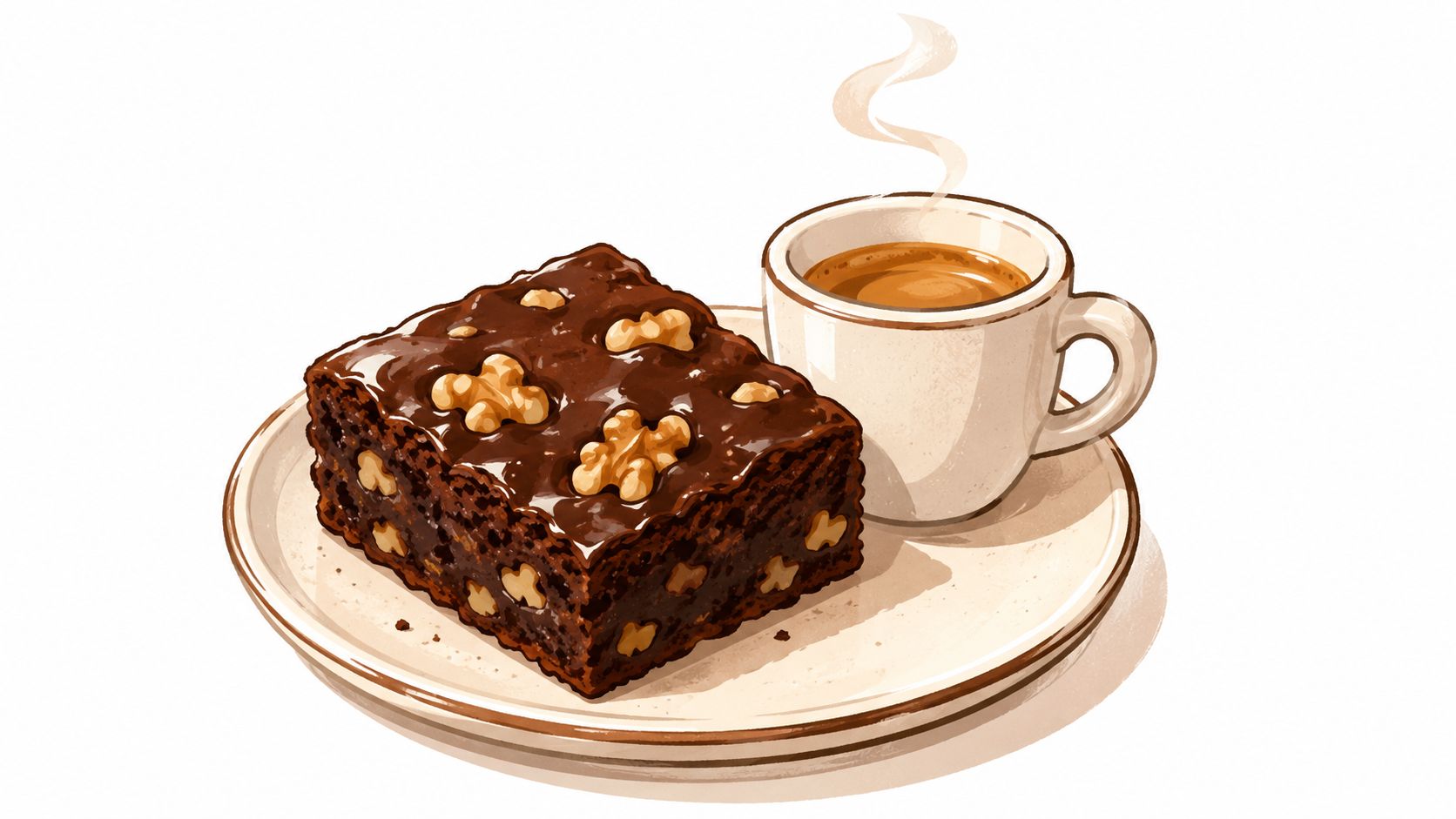
The brownie works because it concentrates an intense experience in a compact portion. The chocolate provides sweetness and depth against the bitterness of an espresso or an americano, while the nuts introduce texture and prevent the bite from feeling flat. In a counter-service coffee shop, it can be sold ready-to-go; in a barbershop, it fits on a small tray without complicating the service.
The operation favors individual sales. A coffee shop can offer a base recipe and rotate variations like double chocolate or chocolate chip, without turning the menu into a list that is difficult to manage. A homemade version communicates closeness, while a more polished presentation, with wax paper and its own label, helps justify a gourmet proposal. The product also appears as a packaged accompaniment in coffee chains, a sign that the format is compatible with immediate and grab-and-go consumption.
Business rule: the brownie must be displayed next to the beverage, not isolated in a dessert showcase. Proximity turns the decision into a natural addition to the order.
How to activate the purchase
The combo can change depending on the time of day. In the morning, a brownie with americano coffee communicates speed; in the afternoon, a brownie with a latte or cold drink can be presented as an indulgent break. In a barbershop, a welcome offer can pair a hot drink with an individual portion for new clients, while a coffee shop can reserve a special variation for afternoon tea.
Swirvle allows you to track who buys coffee and send automated campaigns via WhatsApp, push notifications, or email. The business can test a brownie reward for new clients, segment those who buy coffee frequently, and save in the CRM whether they prefer double chocolate, chocolate chip, or nuts. That information is useful for recommending the right flavor on the next visit, instead of sending the same promotion to the entire database.
2. French Butter Croissant
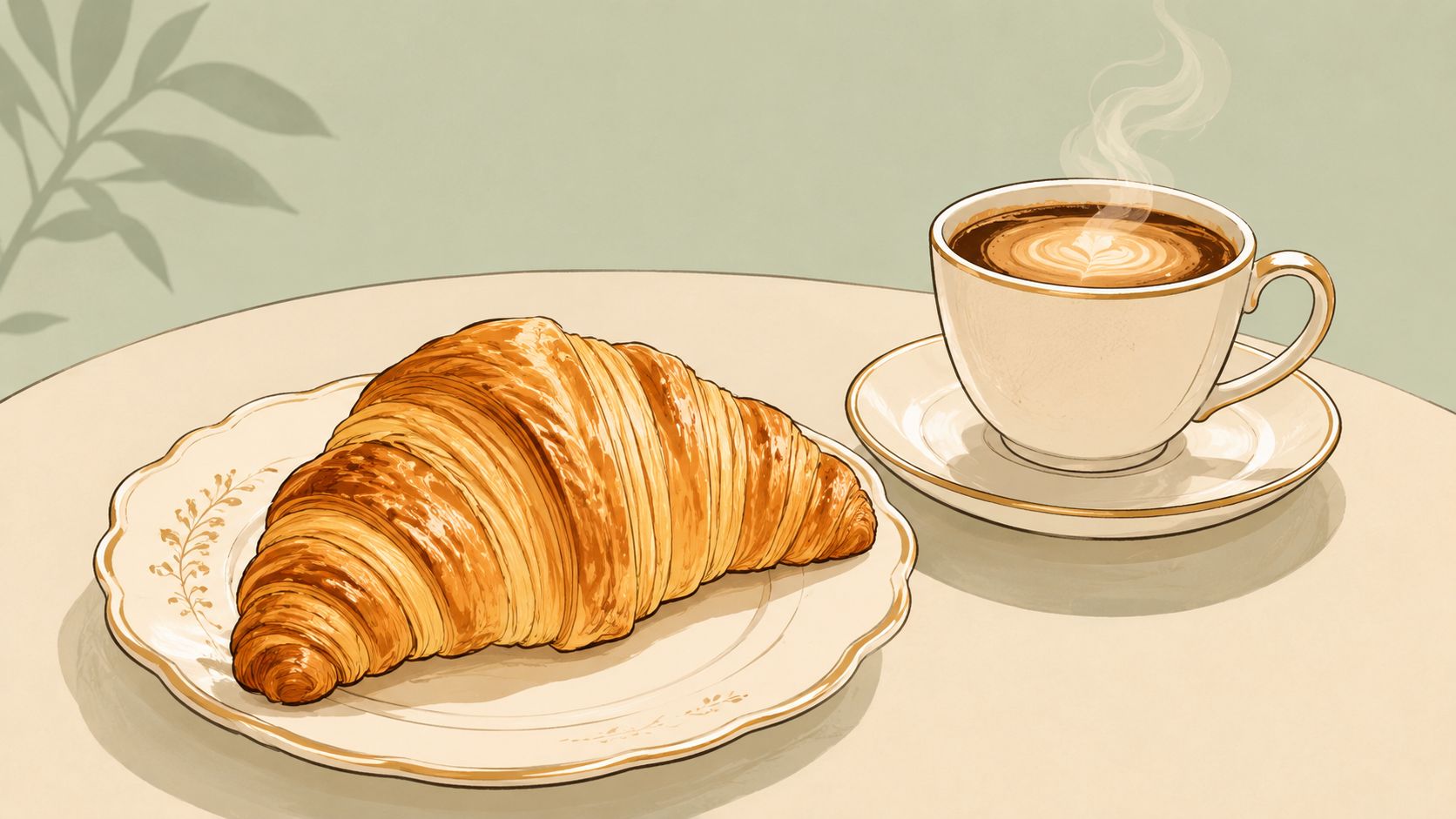
The croissant competes in a different consumption occasion. Its flaky texture and aroma work especially well with hot drinks, particularly during breakfast. Coffee with milk softens the butter and creates a familiar combination, while an espresso offers a shorter, more intense contrast for clients looking for speed.
In a premium coffee shop, the croissant can occupy a visible position near the espresso machine, with baking or replenishment scheduled for the morning rush. In a restaurant, it can be integrated into a breakfast or brunch. In a beauty salon, an individual piece is more elegant and less messy than a dessert with heavy toppings. Presentation matters: a clean tray, a quality napkin, and a special drink elevate the perception without requiring complex preparation on the spot.
Café Martínez has used the croissant as a featured product, while businesses like Café Lucía in Mexico can draw inspiration from the drink-included format to simplify the choice. Bakeries with a French recipe narrative also show how perceived origin can become a selling point.
Frequency before discount
The croissant has a strategic advantage: it can create a morning habit. A loyalty program can reward cumulative purchases, for example, five units and a subsequent reward, as long as the business calculates the real cost of the promotion. Segmentation should focus on clients who already visit early, not the entire database.
Frequent morning clients: sending an offer via WhatsApp at 7:00 AM can coincide with the breakfast decision.
Product preference: registering whether the client chooses a plain or chocolate croissant allows you to personalize future notifications.
Recent absence: an automatic campaign can contact someone who stopped buying for several days with a specific proposal rather than a general discount.
The main metric is not just the daily sale. It is useful to observe if the client returns, what beverage they buy, and if the combo increases the total order value.
3. Individual Tiramisu in a Cup
The individual tiramisu shifts the conversation from "something sweet with coffee" to "a premium ending." Coffee, cocoa, and mascarpone form a profile that pairs well with both an espresso and filtered coffee. The individual container controls the portion, protects the presentation, and facilitates service in restaurants where dessert arrives after the meal.
The small cup also helps resolve an operational tension. The restaurant can prepare portions in advance, maintain an organized display, and sell a sophisticated experience without plating from scratch. For a boutique coffee shop, the format is photogenic and works with a small spoon; for a beauty salon, it can be offered as a celebratory courtesy or as a special product for clients who stay longer in the establishment.
Italian restaurants in the region often treat tiramisu as a quality reference. Boutique coffee shops in Buenos Aires have popularized mini versions, and premium chains with a presence in Italy have used tiramisu cups as seasonal proposals. The commercial lesson is not to copy a recipe, but to use the product to mark a category difference.
The combo that must protect the margin
"Tiramisu plus espresso" is a logical combination because the coffee in the dessert is reinforced by a short, intense drink. The suggested price must be built based on the cost of ingredients, waste, packaging, and preparation time, not from an automatic discount. A client who already buys premium products can receive a push notification when a new variation appears, while an afternoon coffee buyer can receive a specific coupon to try the tiramisu.
Professional photographs help sell the cup via WhatsApp, especially to segments that value presentation. It is also convenient to track the first purchase and repetition. A subsequent reward can incentivize the next visit, but it must be linked to a clear action, like returning for another portion, instead of indiscriminately discounting the entire menu.

4. Artisanal Dulce de Leche Alfajor
The alfajor brings an advantage that other desserts do not have with the same clarity: it can sell tradition in a small format. Two butter cookies, dulce de leche, and a chocolate coating create a compact bite to accompany an espresso, an americano, or coffee with milk. The client does not need to sit down to eat it with utensils, so it fits perfectly on counters, barbershops, and salons where the drink accompanies a wait.
The recipe can be adapted to the territory and the narrative of the business. A boutique coffee shop can present it as a "grandmother's recipe"; a local bakery can use its own brand; a Latin restaurant can offer a variation that connects with its clients' origins. The coating, the filling, and the packaging leave room for a special edition without altering the entire operation.
Grab-and-go sales are especially relevant. Individual packaging protects the product, improves perception, and can include a QR code to connect the purchase with the loyalty program. Rotation, storytelling, and promotion ideas for this category can be expanded with ideas of desserts to sell.
Segmented nostalgia
Nostalgia should not be treated as a uniform audience. The CRM can identify clients by location, purchase history, and response to traditional flavors. An "alfajor of the month" can change the filling or the coating, while the classic product remains for those looking for consistency.
Combined purchase: anyone who buys an alfajor and coffee can receive a reward for their next visit.
Packaging with identity: a label with the history of the recipe makes the artisanal difference visible.
Local recommendation: notifications can highlight the variation closest to the client's registered preference.
Potential profitability comes from the controlled portion and the ease of adding it without slowing down the line. The business must measure how many sales are additional and how many replace another dessert.
5. Classic Cheesecake Portions
Cheesecake justifies a premium position because it combines creaminess, acidity, and a recognizable presentation. An individual slice can accompany a filtered coffee, a latte, or an americano, and also works as a closing after a meal. In a gourmet restaurant, it can be a house signature; in a specialty coffee shop, an artisanal slice can elevate the perception of the menu without requiring multiple plating elements.
The operational key lies in controlling the cut, preservation, and decoration. Cheesecake does not need a complicated sauce to look complete. A clean base, a uniform portion, and a simple garnish help the client perceive consistency. For a barbershop or salon, it is convenient to choose a presentation that is easy to transport and consume, because the experience must be pleasant without generating hard-to-manage waste.
Businesses looking to increase average ticket sales can review the commercial reasoning behind offering dessert to increase the average sale. The product works best when the staff recommends it after identifying the occasion, not when they offer it as an automatic phrase to everyone.
A proposal for higher-value clients
A cheesecake and coffee combo can occupy a premium tier, with a drink that supports the price, such as a latte, cappuccino, or double espresso. The restaurant can announce a cheesecake of the month to VIP clients via WhatsApp and use professional photographs to present new flavors on social media. In a coffee shop, rotation must be visible enough to generate curiosity, but without removing the classic that sustains stable demand.
A subsequent reward can be linked to the purchase of another dessert on the next visit. The discount percentage must be defined based on margin and behavior, rather than assuming that every promotion produces profitability. Tracking must distinguish between those who buy cheesecake after eating and those who choose it as an accompaniment to coffee.
6. Churros with Melted Chocolate
Churros sell an immediate sensory experience. The crispy dough, sugar, and hot chocolate create a contrast of temperature and texture, so the product calls for a simple coffee drink that does not compete with the chocolate. An americano can cleanse the palate; coffee with milk can reinforce the comforting feeling. In Mexico, the regional custom of pairing coffee with sweet bread is clear, and a source on habits by region describes this practice in the center of the country (Gourmet de México).
The operation requires more coordination than a brownie or a muffin. The business must manage the frying timing, the temperature of the chocolate, and the speed of delivery. An artisanal churrería can produce in batches; a coffee shop can offer the product at specific times; a churro truck can work with a short, high-rotation menu. In a restaurant, churros can end a meal, but also work as an afternoon snack to share.
The hour defines the product: a message sent when the churros are freshly made has more power than a permanent promotion.
Recurrence by occasion
Afternoon tea is the natural moment to activate a push notification, for example, at 3:30 PM. WhatsApp can communicate immediate availability with a photo of the hot product. The loyalty program can reward repeat visits, and a win-back campaign can target someone who stopped purchasing for several days.
The item can also be part of the commercial design. A client who brings a friend can receive a reward, as long as the system records both purchases. The proper metric includes frequency, schedule, associated beverage, and percentage of grab-and-go orders. This way, the business will know if churros generate new visits or simply displace other products.

7. Gourmet Artisanal Muffins
The muffin offers variety without requiring an extensive operation. Chocolate, vanilla, blueberry, and carrot allow covering different flavor profiles with the same production and display logic. Their individual size works at any time of day, from a quick coffee at a coffee shop to a drink during an appointment at a beauty salon.
The pairing changes depending on the flavor. The chocolate muffin calls for black coffee or espresso; the blueberry one can accompany a latte; the carrot one can be integrated into a coffee with milk and spices proposal. The recommendation must be concrete, because "muffin with coffee" leaves the decision incomplete. Naming the combination on the menu reduces friction and allows staff to suggest it quickly.
Starbucks has used muffins as a standard accompaniment, while gourmet bakeries in LATAM and boutique coffee shops differentiate them using premium ingredients and chef recipe names. For an SMB, the opportunity lies in rotating flavors without losing inventory control.
Flavor as CRM data
The muffin is one of the best products for learning preferences. Swirvle can track the chosen flavor, the associated beverage, and the purchase frequency. If a person repeats a flavor, a notification can alert them that their favorite muffin is available, without offering them an irrelevant promotion.
Monthly rotation: highlighting a muffin of the month creates novelty and facilitates communication.
Variety tasting: a dynamic that rewards trying various flavors helps identify preferences.
Cross-selling: a reward associated with a hot drink can increase the likelihood of the muffin turning into a combo.
Availability must be communicated honestly. If a flavor is limited, the message must reflect it and inventory must be updated to avoid frustrating frequent clients. To dive deeper into counter usage, you can consult this guide on grab-and-go counter snacks for small coffee shops.
8. Fruit Tart with Pastry Cream
The fruit tart occupies the most visual end of the selection. The shortcrust pastry, pastry cream, and fresh fruit form layers that justify table consumption and a more careful presentation. An espresso balances the cream; a filtered coffee allows appreciating the fruit better; a cold drink can work in warm seasons without taking center stage away from the dessert.
The product requires greater discipline in preservation and sourcing. The fruit changes, the decoration must remain attractive, and availability may vary during the day. That complexity also creates an advantage: the tart can become a seasonal edition with a specific story. A French pastry shop can use it as a technical reference; a gourmet restaurant can incorporate local fruits; a boutique coffee shop can create seasonal designs.
Presentation that activates special occasions
The individual tart works with a fork on-premise and in a special box for takeout. In a beauty salon, it can be offered as part of a birthday experience; in a restaurant, it can close a meal; in a coffee shop, it can be paired with an espresso for a premium break. Photography must show layers, shine, and fruit, because visual appeal is part of the perceived value.
A "tart of the month" allows updating the product without redesigning the entire menu. WhatsApp can communicate daily availability, especially when the fruit changes. For high-ticket clients, a push notification with a professional image can announce the new version. You can also test a package with a tart, coffee, and an additional dessert for celebration occasions, but the business must measure if the package increases units sold or reduces the margin.
In Mexico, the market for dessert mixes and frozen baked goods reached US$486.6 million in retail sales during 2021, and recorded a compound annual growth rate of 9.2% between 2016 and 2021, according to a sector analysis by Agriculture and Agri-Food Canada (Mexican bakery market analysis). That context supports the scale of the category, but each business must still validate its own rotation, waste, and acceptance.
Comparison: 8 desserts to accompany coffee
Product | Implementation Complexity | Resource Requirements | Expected Results | Ideal Use Cases | Key Advantages |
|---|---|---|---|---|---|
Chocolate Nut Brownies | Low (fast and repeatable) | Oven, trays, refrigeration | High margin, fast sales | Coffee shops, espresso accompaniment, take-away | High margin, easy in batches, freezes well |
French Butter Croissant | High (lamination and technique) | Quality oven, resting time, skill | Daily recurring purchases, premium perception | Premium coffee shops, breakfast, executive clientele | Creates purchasing habits, allows variants |
Individual Tiramisu in a Cup | Medium (easy technique, requires resting) | Mascarpone/imported ingredients, refrigeration, cups | High average ticket, photogenic | Restaurants and boutique coffee shops, premium combos | Very profitable, strong social media appeal |
Artisanal Dulce de Leche Alfajor | Low-moderate (simple baking) | Affordable ingredients, packaging, dry storage | Repurchase due to nostalgia, low breakage | LATAM coffee shops, retail, local storytelling | Cultural identity, long shelf life, high margin |
Classic Cheesecake Portions | High (water bath baking and cooling) | Cream cheese, precise oven, refrigeration | High margin, gourmet perception, virality | Gourmet restaurants, premium coffee shops, meal closer | High margins, easy variants, premium presentation |
Churros with Melted Chocolate | Medium (frying and specialized equipment) | Fryer, extruder, staff, thick chocolate | Very high margin, immediate sales, high recurrence | Afternoon tea, on-premise or food-truck sales, peak hours | Extreme margin, low ingredient cost, sensory experience |
Gourmet Artisanal Muffins | Low (simple batch production) | Oven, flavor/inventory management, optional freezing | Variety attracts clients, cross-selling | Coffee shops, bakeries, grab-and-go | Great variety, easy production, builds loyalty through flavor |
Fruit Tart with Pastry Cream | High (delicate technique and assembly) | Fresh fruits, pastry cream, resting and refrigeration | Very high average ticket, photogenic | Special occasions, gourmet clients, celebrations | Luxury perception, highly photogenic, elevated margin |
Turn the craving into a recurring visit
The most profitable selection does not start with eight active desserts at the same time. It starts with a controlled test. The business can choose two options for daily consumption, one premium option, and one seasonal option. For example, a coffee shop could combine a brownie and a muffin for speed, cheesecake to elevate the proposal, and a fruit tart for seasonal rotation. A restaurant could replace the brownie with tiramisu; a barbershop can prioritize alfajor and brownie; a beauty salon can choose a muffin and cheesecake for ease of service.
Each product needs a defined coffee and schedule. The croissant must compete in the morning; the churros make sense for afternoon tea; the tiramisu and cheesecake can occupy the afternoon or end a meal. The business must set a specific presentation, review its production cost, and set a price that considers ingredients, packaging, preservation, waste, and channel commissions. The combo price must not hide a loss.
Mexican demand allows making decisions on a broad foundation. One survey reported that 96.7% of people interviewed consume traditional sweet bread and that 25.5% consume packaged sweet bread or pastries from some brand at least once a week (data cited by LabDO). Another report from Kantar Worldpanel, cited by a market publication, indicated that 2 out of 10 Mexicans eat desserts up to twice a week at home; consumption was concentrated at dinner with 41%, between meals with 37%, and in the morning with 22% (data on dessert habits in Mexico). This data guides the hypothesis but does not substitute the measurement of each location.
Measure before expanding
During a defined period, the business must record:
Product and flavor: what dessert is sold, in what variant, and with what beverage.
Purchase moment: morning, lunch, afternoon, or end of day.
Client type: morning, afternoon, premium, occasional, or new.
Campaign response: coupons used, attributed visits, and subsequent purchases.
Economic outcome: additional sales, margin, waste, and return on promotion.
The industry mix confirms that dessert deserves commercial attention. In coffee shops, soda fountains, ice cream parlors, juice bars, and similar businesses, desserts represent 31.6% of income, while beverages for immediate consumption represent 50.2%, according to El Economista. Dessert is not just a menu decoration. It is a secondary line with enough weight to justify combos, training, and tracking.
Swirvle can centralize client information, segmentation by habits and branch, campaigns via WhatsApp, push notifications, and email. It also allows configuring points, visits, purchases, coupons, and rewards, as well as consulting panels to measure ROI and attribute sales to campaigns. For a coffee shop, restaurant, barbershop, or beauty salon, that structure helps replace general intuition with decisions based on who buys each dessert, when they return, and what offer they accept.
Implementation should proceed in cycles. First, test four products with different roles. Then, keep what achieves rotation and margin, adjust what attracts visits but generates waste, and remove what does not find a clear occasion. The expected result is not to sell the most striking dessert just once, but to build a combination that makes the visit more frequent and each order more complete.
Swirvle offers CRM, loyalty, automated campaigns, and measurement so that coffee shops, restaurants, barbershops, and salons turn dessert sales into recurring purchases. Visit Swirvle to centralize clients, activate personalized offers, and measure which coffee and dessert combinations generate better results.
Related Blogs

Oct 22, 2026
How to prevent employee petty theft in my business?

Oct 21, 2026
How to Control Food Waste in a Restaurant: 2026 Guide

Oct 20, 2026
What is the global invoice for the general public and when is it issued? SAT Guide

Oct 19, 2026
How to take restaurant orders on WhatsApp without losing any?

Oct 18, 2026
How to Create a WhatsApp Business Catalog to Sell More: 2026 Guide

Oct 17, 2026
How to set up quick replies in WhatsApp Business?