Learn how to
Your coffee shop may have great coffee, a good location, and customers who already know you. Even so, many days feel unpredictable. One Tuesday is packed. The next, slow. New people walk in, but they don't always return. And when someone stops going, you almost never know why.
That happens to countless restaurants and coffee shops in Mexico. The problem is usually not the food. Neither is the service. The problem is that the business relies on the team's memory, loose social media posts, and promotions launched without a clear system to attract, convert, and retain customers.
That is where marketing funnels come in. Not as complicated theory, but rather as a practical map to organize what you already do, detect where the customer is cooling off, and set up automations that work even when you are on the floor, at the register, or managing operations.
The Challenge of Growing Your Restaurant Beyond Regular Customers
A coffee shop in Puebla can recognize its regular customers as soon as they cross the doorway. The barista already knows who orders a small latte, who always adds a pound cake, and who only goes on Saturdays. That knowledge is highly valuable, but it has a limit. It doesn't scale. If the business wants to grow, it needs something more than good memory and friendly service.
The real challenge appears with two groups. The first is new people who discover you but don't end up entering. The second is people who have already bought from you once and then disappeared. In restaurants and coffee shops, that second group is usually the most expensive to ignore, because they have already tried your product and trusted you.
When generic marketing isn't enough
A lot of content about funnels speaks as if everyone sells courses, software, or online stores. But a restaurant in Mexico City or a coffee shop in Nuevo León lives another reality. Here, peak hours, proximity, weekly repeat purchases, craving-driven visits, and the physical in-branch experience matter.
Additionally, there is a clear opportunity in channels that people actually use every day. Funnel integration with WhatsApp remains an under-addressed angle for physical SMEs in Mexico. 92% of retail SMEs report low retention, with less than 30% monthly recurrence, and 78% do not use automated segmentations by branch. At the same time, WhatsApp Business generates 40% more conversions in Mexican retail, according to data cited in this analysis on retention, branch automation, and WhatsApp usage in Mexican retail.
That data matters because in a physical business, it is not enough to just "send a promo." What makes a difference is knowing who to send it to, at what time, and with what objective.
Rule of thumb: if your marketing depends on posting something and waiting to see who arrives, you don't have a system. You have isolated attempts.
The funnel as a real sales map
A marketing funnel for restaurants doesn't start with an ad and end with a click. It starts when someone hears about your place, sees a photo of your chilaquiles, checks Google Maps, walks past the front, or receives a WhatsApp message. And it continues after the first purchase.
Seen this way, the funnel stops sounding technical. It becomes a simple path:
They discover you
They consider you
They visit you
They return
They recommend you
If you organize that journey, you can stop improvising. You can also measure something that matters more to many owners than any "vanity" metric: specific conversions and the value of those conversions. That is, how many concrete purchases a campaign produced and how much money they generated.
What is a Marketing Funnel and How It Works in a Physical Business
Think of a taco shop in Monterrey that someone recommends to you. First you hear the name. Then you look up photos. You check if there is a line, if the menu appeals to you, and if it's nearby. Then you go. If the experience delivers, you return. If they also surprise you with great service, you recommend it.
That is a marketing funnel. The customer journey, not a rigid template.
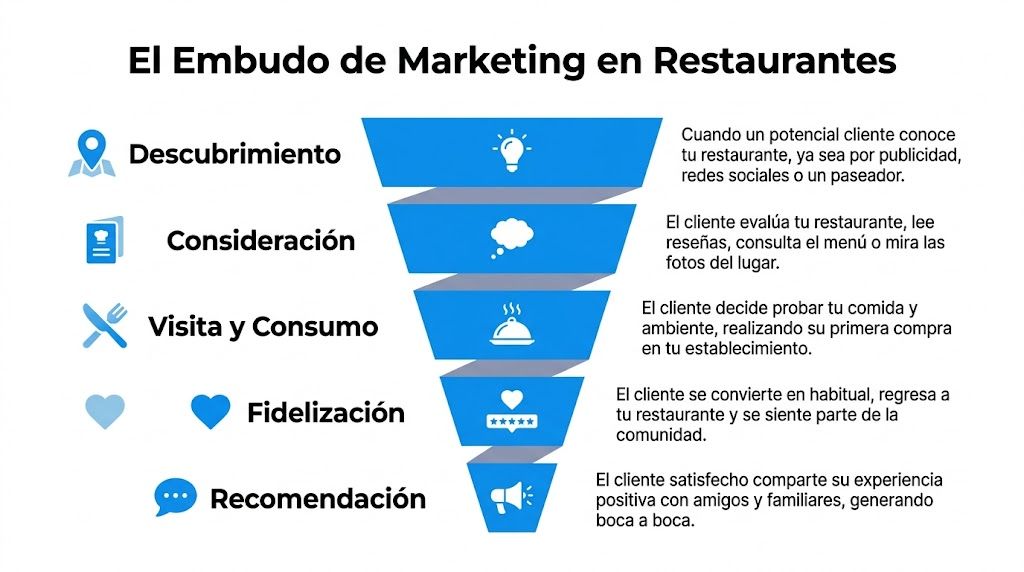
In restaurants and coffee shops, it is helpful to translate classic terms into something much more grounded. Instead of ToFu, MoFu, and BoFu as jargon, it is more useful to think in terms of discovery, consideration, visit, loyalty, and recommendation.
The five stages in restaurant language
Discovery
Here, someone is just finding out that you exist. They might see you on Instagram, Google Maps, TikTok, a customer's story, or simply walk past the premises. In this phase, they are not buying from you yet. You have just entered their radar.
A coffee shop in the State of Mexico can attract people with photos of seasonal drinks, a clear location, and visible hours. A restaurant in Yucatán can do the same by showing dishes, atmosphere, and proximity.
Consideration
The person has already located you, but they are still comparing. They look at reviews, check prices, see if there is parking, consult the menu, and wonder if it's worth going. Many visits are won or lost here.
That is why an incomplete Google profile, old photos, or a hard-to-read menu stall sales. Not because the product is bad, but because the customer did not find enough trust.
When someone is in consideration, they don't need more noise. They need less friction.
Visit and purchase
This is the first purchase. In a restaurant, it can be a full meal. In a coffee shop, perhaps a coffee and a pastry. The key here is not just to sell once. It is to capture the opportunity for a second visit.
That changes how you view the cash register. It is no longer just the closing of a transaction. It is also the moment to ask for a loyalty program registration, activate a coupon for the next visit, or identify what that person bought.
Loyalty
This is where the part that many businesses leave loose begins. If someone went once and liked it, you have to give them a reason to return. It doesn't always have to be a discount. Sometimes a reward for visits, a promotion during slow hours, or a recommendation based on what they already ordered works better.
If you want to delve deeper into the foundation of all this, it is useful to understand what a CRM system is. In a restaurant or coffee shop, a CRM helps you save history, habits, and campaign responses so you don't treat everyone the same.
Recommendation
The final stage does not depend solely on the product. It depends on how easy you make it to share the experience. A satisfied customer can recommend your place on WhatsApp, upload a story, or bring another person along the following week.
Why this changes daily operations
When you understand the funnel, you stop making isolated decisions. You no longer think "I need to post more." You think "I have a discovery problem" or "the first purchase is happening, but I am not generating repeat visits."
That difference seems small, but it changes everything. It allows you to better allocate budget, adjust messages, and stop asking the same ad to solve every stage of the business.
Stages and Key Metrics for Your Restaurant or Coffee Shop
Many owners look at likes, views, or followers because they are easy to see. The problem is that those metrics don't always tell you if the business is selling more or if your customers are coming back. In restaurants and coffee shops, it is best to look at the funnel with indicators that actually connect to the cash register and repeat visits.
If you are already monitoring specific conversions and conversion value closely, you are on the right track. Those two variables force you to ask the right question: which campaign triggered an actual purchase and how much money did it generate.
What to measure at each stage
Funnel Stage | Main Goal | Key Metrics (Examples) |
|---|---|---|
Discovery | Get more of the right people to know the business | Post reach, menu views, location clicks, messages received asking about hours or address |
Consideration | Turn interest into visit intent | New reviews, menu views, story replies, WhatsApp button clicks, post saves |
Visit and purchase | Achieve the first purchase | Tickets generated per campaign, coupons redeemed, registered first purchases, specific conversions |
Loyalty | Make the customer return | Purchase frequency, reward redemptions, repeat visits, conversion value per customer |
Recommendation | Turn satisfied customers into promoters | Referrals, positive reviews, shared messages, visits originated by recommendation |
Two metrics that actually drive decisions
There are businesses that review twenty indicators and still don't know what to do. On the other hand, when a restaurant focuses on a few well-chosen metrics, decisions become much clearer.
Specific conversions. These are the specific purchases that actually occurred following a campaign, a promotion, or a message. If you sent a promotion to fill the afternoon shift and almost no one redeemed it, the problem might lie in the offer, the timing, or the audience.
Conversion value. It is not enough to count purchases. You have to look at how much they are worth. One campaign may generate fewer transactions but higher tickets. Another may bring in a lot of traffic with low spending.
To better understand this logic, it helps to review how to calculate customer lifetime value. In coffee shops and restaurants, this perspective prevents you from judging a campaign solely by the first purchase.
How to read the signals without getting overcomplicated
A simple example. You have a coffee shop in Puebla and launch a seasonal drink promo via WhatsApp. If many people open the message but almost no one buys, it doesn't necessarily mean "WhatsApp doesn't work." Perhaps the offer wasn't attractive enough, the timing didn't help, or the message reached customers who no longer live nearby.
Conversely, if few people respond but those who do leave valuable tickets, it may be better to refine your segmentation rather than expanding the send list.
Operational note: a good metric doesn't just confirm that there was activity. It tells you what to adjust tomorrow.
A very common mistake in restaurants
Many businesses mix acquisition and retention in the same report. So it looks like "everything is going more or less fine," but the bottleneck isn't detected. Perhaps new people are coming in but not returning. Or there are loyal customers but almost no fresh audience is arriving.
Separating metrics by funnel stage prevents this problem. It also provides more clarity to the manager, the marketing lead, and the floor team because everyone understands which part of the journey needs attention.
Funnel Templates That Work in Food Businesses
The most useful funnels for restaurants are not always the most elegant in a presentation. They are the ones that solve everyday situations. Filling dead hours. Winning back customers who stopped going. Getting someone who ordered coffee to return for breakfast. Or getting someone who went for lunch to return with someone else.
In food businesses, the classic AIDA-type approach falls short when it comes to recurrence. Only 22% of F&B SMEs use AI for visit dynamics, while post-purchase funnels with smart coupons via WhatsApp increased sales by 35% in chains in Monterrey, according to data cited in this analysis on post-purchase funnels and AI in restaurants and coffee shops in Mexico. This contrast helps to understand why it is useful to design funnels that do not end at the first sale.
Template one to attract first visits
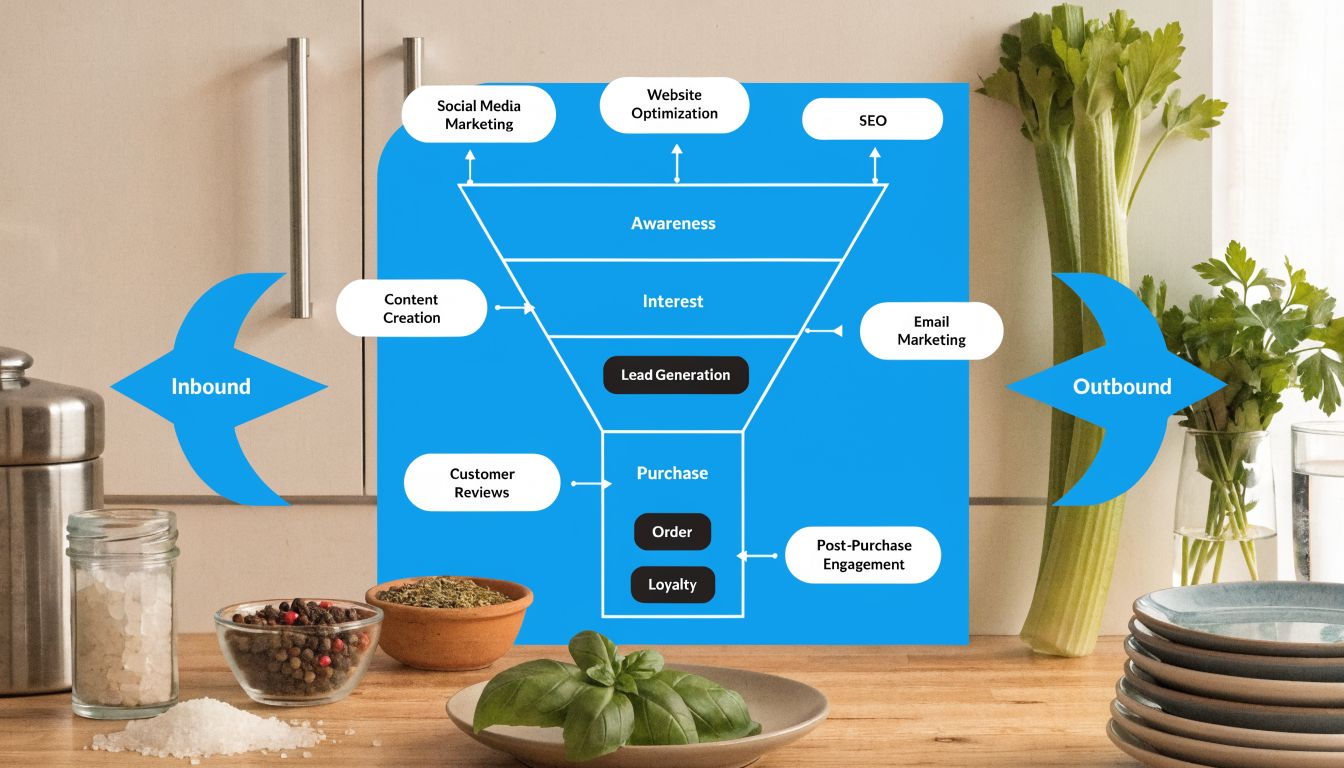
A new ice cream parlor in Yucatán needs visibility, but also a clear reason for people to walk in. The funnel might look like this:
Local discovery
Posts featuring visual products, precise location, and hours. A QR code at the counter or a flyer near the area also works.Simple capture
Instead of asking for too much data, simply invite them to sign up to receive a first-visit promotion.Incentive to enter
An easy-to-understand benefit. Not complex. Something like a reward for the first purchase or an extra when visiting on certain days.Short follow-up
If the person didn't go, they are reminded of the benefit. If they did go, they enter a different sequence for a second visit.
This type of funnel works because it doesn't force the customer to think too much. It gives them a concrete path from discovery to trial.
Template two to increase frequency in coffee shops
A coffee shop in Mexico City might have good flow in the morning but little traffic in the afternoons or on weekdays. There, a funnel focused on frequency, not acquisition, is helpful.
The journey might look more or less like this:
Already registered customer
Identification of visit pattern
Offer linked to consumption time
Reward for repeating
Follow-up message based on response
If someone usually goes on Fridays, you can try to move part of their consumption to Tuesdays or Wednesdays with a promotion or a visit dynamic. If someone buys a drink but almost never adds food, the incentive can aim to increase ticket size.
Sometimes you don't need more customers. You need more repeat visits from the right customers.
Template three to reactivate inactive customers
This is usually the most profitable for restaurants and coffee shops because it works with people who already know you. It also connects with a very common operational need: reclaiming customers who haven't purchased in a long time.
A clear example for a coffee shop in Nuevo León:
The system detects customers who stopped visiting.
They are sent a message with a warm tone.
The offer is not sent to the entire database, only to the inactive group.
If they return, they exit the sequence.
If they don't respond, they receive another message with a different angle.
Here, the language changes a lot. Saying "promotion available" doesn't sound the same as "we miss you, come back this week and activate your benefit." In physical businesses, the message must feel local and timely.
What these templates have in common
They are not built around the product. They are built around customer behavior. That shift is key.
A restaurant in Baja California and a coffee shop in Puebla may sell different things, but both need to answer the same questions:
Who already knows me and hasn't bought yet
Who already bought and can return
Who is cooling off
What offer makes sense for each group
When you think this way, marketing funnels stop being "campaigns" and become repeatable processes.
How to Design Your First Automated Funnel Step by Step
It's 4 in the afternoon at your coffee shop. The morning rush has passed, the tables are half-empty, and you know there are customers who used to come by often but haven't returned in weeks. Your first automated funnel serves that purpose: to bring real people back to a real branch, without anyone on the team having to review lists and send messages one by one.
A good starting point in restaurants and coffee shops is a reactivation funnel. It makes sense for a simple reason. You are already working with customers who have tried your service, recognize your brand, and have already given you a chance.
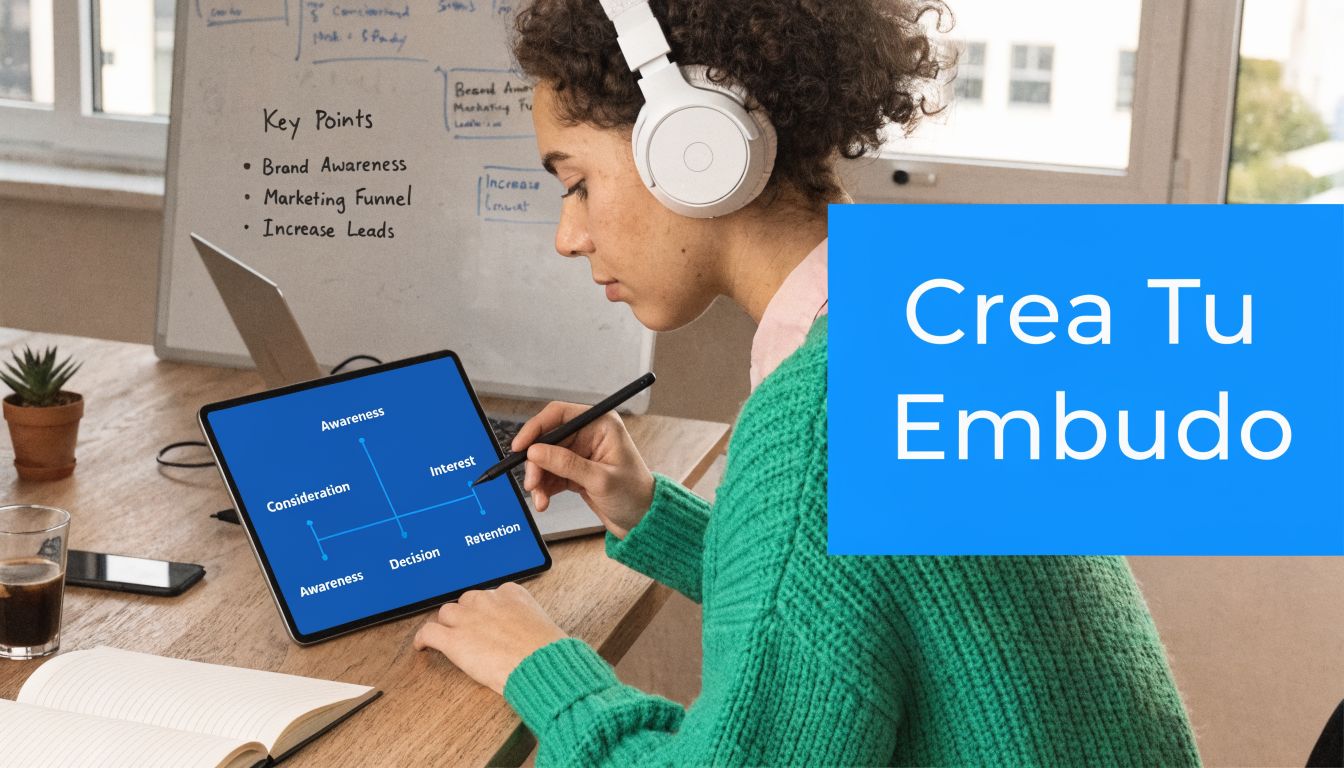
The logic is similar to that of a waiter who already knows their regulars. They don't treat someone who hasn't gone in three months the same as someone who was there yesterday. Automation does just that, but in an orderly fashion and at scale. According to this explanation on RFM segmentation and automation for physical businesses, segmenting by behavior helps reactivate customers and improve conversions in physical businesses.
Step one: define a single outcome
Start with a goal that you can observe at the register or in the system, not a general idea. "Selling more" doesn't help you decide anything. "Winning back customers who haven't returned in 45 days" does.
Some useful examples for a food business are these:
winning back inactive customers from your coffee shop
increasing second visits after the first purchase
driving traffic during slow weekday hours
raising the ticket size of customers who only buy drinks
A concrete goal works like a recipe. If you don't know what dish you want to prepare, you won't know what ingredients you need either.
Step two: separate your customers by behavior
This is where RFM comes in: recency, frequency, and monetary value. It sounds technical, but in a branch, it translates very easily.
Recency: how long ago was their last purchase
Frequency: how often do they return
Monetary Value: how much do they typically spend
With those three signals, you can form useful groups. For example, a customer who hasn't visited in 60 days but used to buy full breakfasts deserves a different message than someone who only stopped by once for an Americano.
This point often causes confusion. Segmenting is not about dividing your customer base into many pieces just for the sake of it. It's about separating customers so you don't send the same offer to everyone and waste messages.
Step three: create an offer that actually fits each group
Many restaurants resolve everything with a 2x1 or a discount. That sometimes drives visits, but it also trains the customer to expect promos. It is better to adjust the incentive to the reason for returning.
For example:
High-value inactive customer: return benefit with a short expiration date
New customer: incentive for a second purchase within the same week
Frequent customer: reward for visits or product upgrades
Customer who only buys coffee: combo with pastry, breakfast, or dessert
The goal is not to give away too much. The goal is to provide a clear reason to return.
Step four: design a short and easy-to-operate flow
Your first funnel doesn't need five channels or twenty messages. In a small restaurant, a simple flow through WhatsApp can be enough.
A practical example:
identify customers who haven't purchased in a certain period
send a message with an offer or return benefit
wait for a purchase, click, or response
send a reminder if there was no action
remove the customer from the flow if they have already returned
This already solves a very common operational problem in Mexico. The business does have a customer base, but nobody has the time to activate it consistently. If you are comparing options to set up this process, this guide on marketing automation tools to segment, activate, and measure campaigns helps you review what to look for in a platform.
Step five: define priority rules
Not all customers deserve the same effort at the same time. In a coffee shop with multiple branches, it is best to prioritize those who are most likely to return soon.
You can do this with simple rules:
higher priority if they purchased multiple times in recent months
higher priority if their ticket size is typically high
lower priority if they don't open messages or have been inactive for a long time
higher priority if they responded to a recent campaign
You don't need to start with a complicated model. First organize. Then automate. Then improve.
Step six: check if the flow really helps the business
Before creating another funnel, confirm three things:
how many customers returned
how much those returns spent
how much manual time the team saved
Here, it is useful to use a tool that connects marketing with operations, not just message broadcasting. Implementing this type of flow requires centralizing contacts, segmentation, campaigns, and result tracking in one place. For example, a platform like Swirvle is designed for physical businesses and helps coordinate CRM, loyalty, and automations via WhatsApp, push, or email without relying on multiple spreadsheets and separate systems.
If your first flow manages to reactivate customers consistently, you already have a useful foundation. From there, you can create funnels for second visits, slow hours, or increasing ticket sizes.
Measure Success with Swirvle: Sales Attribution and Real ROI
It's 6 in the evening at your restaurant. Several customers walk in, a couple of promotions are redeemed, and the register is moving. The problem appears later, when someone asks which campaign generated those sales and nobody can answer clearly. That is where many restaurants and coffee shops in Mexico fall short. They do marketing, but they fail to link the message to the actual purchase at the branch.
Measuring a funnel properly in a physical business is not like measuring an online store. In e-commerce, the purchase is linked to the click almost immediately. In a cafe or restaurant, the path is usually longer. A person sees a story on Instagram, writes via WhatsApp, saves the promo, stops by the branch two days later, and purchases. If you don't connect those dots, you end up evaluating campaigns based on assumptions.
What it means to attribute sales in a physical business
Attributing sales means tracking which action helped produce an actual purchase. For example, if a customer received a breakfast promotion via WhatsApp, went to the Roma neighborhood branch, and used that benefit at the register, the system must be able to link that sale to that campaign.
It's like naming each table during peak hours. If you don't know what each one ordered, you know there was activity, but you don't understand what worked or what is worth repeating.
In practice, this reading changes concrete decisions. There is no longer a debate over whether the promotion "seems" to have worked. You can check which segment responded, which channel brought in visits, and which type of campaign left a better ticket size or more second purchases.
Why this actually impacts ROI
Real ROI in a restaurant doesn't come from counting sent messages. It comes from comparing how much a campaign cost against how much money returned to the register thanks to that action.
This avoids common mistakes. Sometimes a promotion brings in few redemptions, but each customer spends more than expected. This happens a lot in coffee shops that sell combos, bakery items, or seasonal drinks. It also happens the other way around. There are campaigns with many responses and little value because they attract small purchases or customers who were already going to return without an incentive.
Therefore, it is best to measure with a simple logic: investment, attributable sales, average ticket, and subsequent frequency. With that foundation, the manager stops deciding based on intuition and can decide based on margin, frequency, and operational workload.
The team's time also counts
In physical businesses, the return is not only in selling more. It is also in saving repetitive work.
If the team has to review lists, search for inactive customers, send messages one by one, and then compare tickets by hand, the actual cost of the campaign goes up. On the other hand, when a tool like Swirvle connects campaigns, responses, and in-branch purchases, tracking becomes much more orderly, especially if you use channels like WhatsApp to bring back customers who already know you.
This point is often overlooked. In a restaurant with multiple branches, saving administrative time also improves operations. The manager can focus on service, inventory, and staff, instead of chasing scattered data across the register, spreadsheets, and chats.
If you cannot link message, visit, and sale, you still do not know which part of your funnel is actually generating money.
What a useful dashboard should display
A good dashboard for restaurants and coffee shops doesn't need to look complex. It needs to answer useful questions for day-to-day operations:
which campaign generated in-branch purchases
how much each automation sold
which channel brought in better customers, such as WhatsApp, email, or push
which branch responded best to the promotion
which segment purchased again
how much revenue each action produced against its cost
With that view, the funnel stops being a nice presentation idea and becomes a tool to operate better. You can identify if the mid-afternoon promo did fill slow hours, if the second-visit coupon worked in a specific area, or if a reactivation campaign only cannibalized sales that were already going to happen.
That is what makes attribution useful in food businesses in Mexico. It is not just about measuring marketing. It is about knowing which messages lead real people to real tables and which ones just generate noise.
Your Next Step: Turn Data Into Loyal Customers
Marketing funnels are not a concept reserved for e-commerce or large enterprises. In restaurants and coffee shops, they are a practical way to organize how people arrive, how they purchase, and how they return.
When the business operates without a funnel, each campaign seems isolated. When it does use one, every action has its place. One message attracts. Another converts. Another wins back. Another increases frequency. And all of them can be measured with more clarity.
The real advantage is not in sounding more technical. It is in selling with less improvisation. If you use your consumption data well, your messages stop being broadcasted to everyone and become relevant. That is where a customer base starts turning into loyal customers, and where repeat business stops depending purely on chance.
If you want to bring this to your daily operations, Swirvle allows you to centralize customers, segment by purchasing habits and branch, activate automated reactivation campaigns via WhatsApp, push, or email, and measure conversions with sales attribution for physical businesses like restaurants and coffee shops.
Related Blogs

Sep 18, 2026
Examples of coffee shop loyalty programs (physical and digital)

Sep 17, 2026
Pros and cons of the "free coffee for the first 100 customers" promotion

Sep 16, 2026
How to organize a private coffee tasting: a practical guide

Sep 14, 2026
How to optimize Google Business Profile for barber shops

Sep 13, 2026
The best customer retention software for coffee shops

Sep 12, 2026
Cómo optimizar Google Business Profile para restaurantes
Try Swirvle for free
No card required · 30 days free
Start your free trial