
Discover effective strategies for customer loyalty. How do I get my customers to return to my business? Learn proven tactics in this guide.
This has probably happened to you already: the cash register is moving, the store has people, sales are coming in, and yet the following week, silence returns. The problem usually isn't a lack of customers, but that they don't return. And when that happens, the business ends up paying twice: once to attract them, and another time to replace the person who had already decided to buy from you.
In Mexico, retention matters more than many owners want to admit. A 2025 study found that 91% of consumers actively participate in at least one loyalty program, but 82% are willing to switch brands if they receive the right incentive, making it clear that loyalty exists, but it is fragile and depends on a continuous value proposition (Comarch, research on the Mexican consumer). If a coffee shop, barbershop, or restaurant only focuses on attracting traffic, it is doing half the job.
Why your customers are no longer returning to your store
María, a coffee shop owner in Guadalajara, saw a pattern that would frustrate anyone. New customers would come in, return once, and then disappear without her understanding why. This is the blind spot for many physical businesses—they believe the problem lies in attraction, when in reality the leak occurs between the second and third visit.
The business loses due to silence, not just price
The physical store remains central to repeat purchases. In the Global Digital Shopping Index 2023, 71% of Mexican consumers reported that their most recent purchase was in a physical store, and that percentage was 36% higher than the average of the six countries compared in the study (The Wise Marketer, Customer Loyalty Insights Report).
Another regional analysis reported that Mexican consumers visit physical stores up to 17 times a month on average, which makes recurrence a real asset, not just a nice idea.
The most common mistake is thinking that people don't return because of a bad campaign. Often they don't return because nobody remembers them, nobody rewards them, and nobody gives them a concrete reason to come back. Inactivity is almost always detected too late, when the customer has already gone to another business.
Rule of thumb: if a customer has already bought from you once, the next sale doesn't depend on more advertising; it depends on a system that recognizes them before they cool off.
The real cost of not winning them back
The leak multiplies quickly. If a coffee shop receives 100 weekly customers with an average ticket of $120 MXN, losing 30% of repeat business means losing $187,200 MXN a year in revenue. This calculation is not theory; it is the price of lacking follow-up, segmentation, and reactivation.
Concept | Cost in MXN | Frequency |
|---|---|---|
Weekly customers received | 12,000 | Year |
Average ticket | 120 | Purchase |
Lost recurrence | 30% | Annual basis |
Unrecovered annual revenue | 187,200 | Year |
The solution is not to pour more ads into the same hole. The solution is a system that detects inactivity and sends the right message at the right time. If that doesn't exist, the business ends up buying new traffic to cover up for customers who should have returned on their own.
What the Mexican consumer is really telling you
The Mexican consumer is not disloyal by nature. They are practical. They shop where it is convenient, where they are recognized, and where they feel no friction. Loyalty doesn't vanish by magic; it breaks when the business stops feeling familiar or when the service makes them feel like just another transaction.
Preference exists, but it doesn't withstand bad service
There are three signals that owners should read without self-deception. First, the customer values the proximity of the store because convenience weighs more than a small price difference. Second, poor service is not easily forgiven. Third, when the business recognizes the customer by name, the experience stops feeling generic and becomes much harder to replace.
Independent coffee shops in Mexico City usually leverage this better than global chains because they memorize the usual order, greet customers by name, and make them feel like they belong there. It's not magic, it's well-executed repetition. That operational memory is worth more than a promotion trying to buy an isolated visit.
If customers feel they are known, they return more easily. If they feel they are treated like a receipt, they compare and leave.
The correct takeaway is not "the Mexican customer is not worth building loyalty with." The correct takeaway is that they do respond, but they demand consistency. The business that greets, remembers, and rewards wins repeat visits. The one that sends generic promotions ends up competing solely on price.
Design a loyalty program that your customer actually wants to use
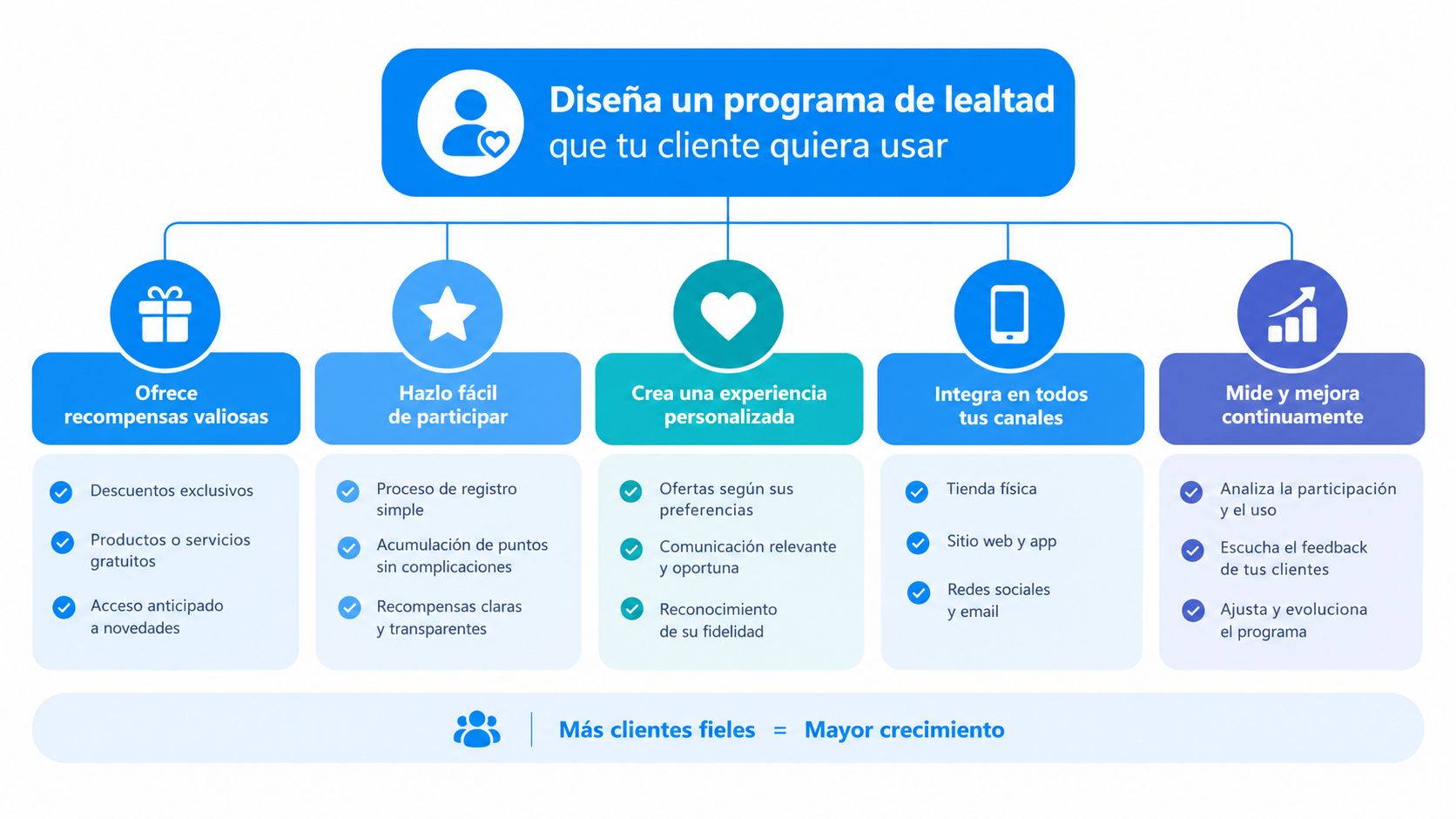
A useful loyalty program doesn't look complicated from the register. It feels obvious. The customer understands what they win, how much they have left, and when they can use it. If you have to explain the mechanism twice, the system is already poorly designed.
Fewer rules, more clarity
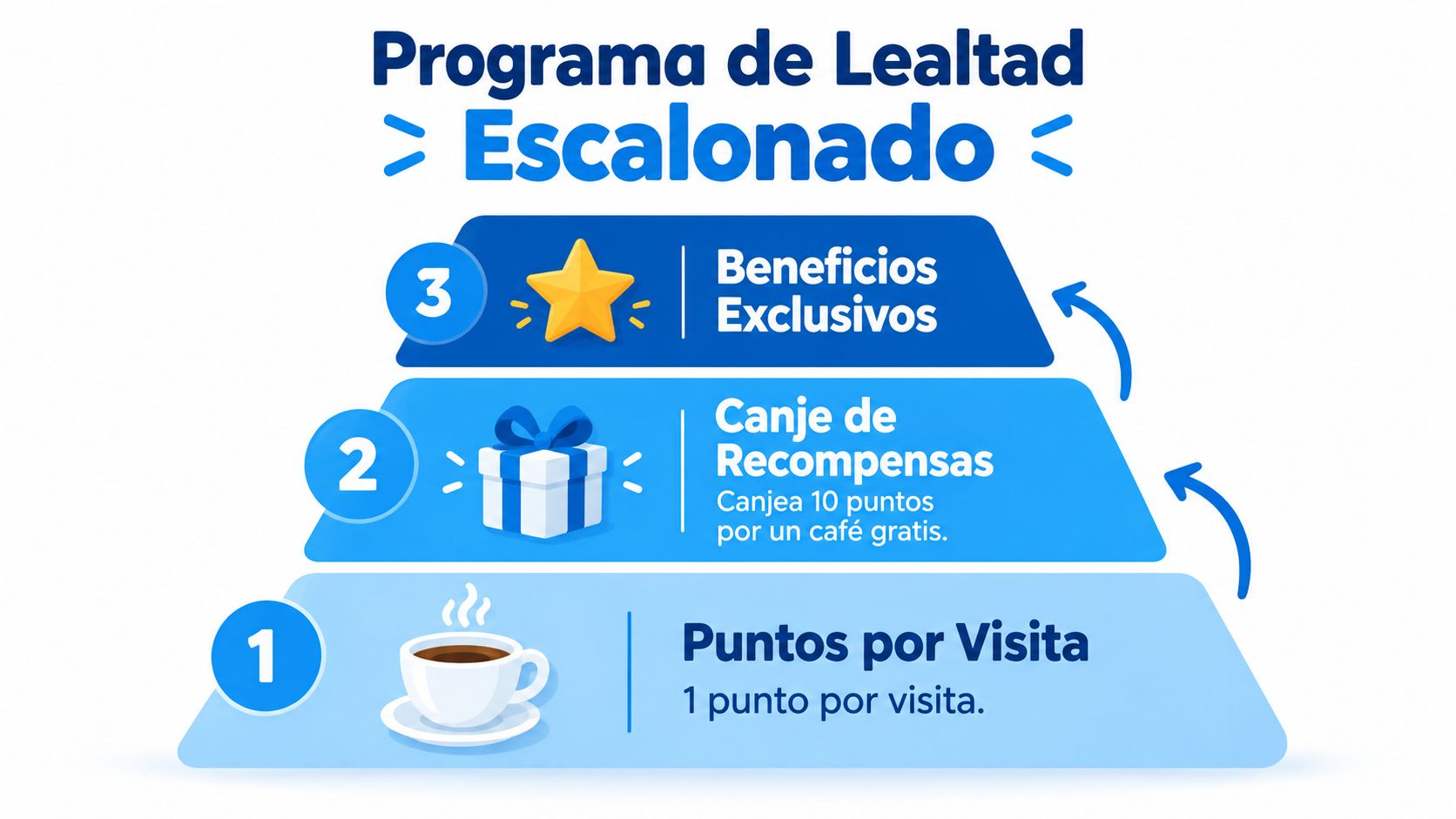
For a coffee shop, the easiest logic is 1 point per visit and 10 points for a free coffee. For a barbershop, a progressive discount starting from the fourth visit of the month works better. For a salon, a monthly membership with a premium service included can sustain recurrence without always relying on discounts.
It also helps to separate the program into simple tiers. A bronze, silver, and gold structure gives direction without turning it into a soup of conditions. The bronze level can offer basic accumulation, silver can unlock faster redemption, and gold can include exclusive benefits like booking priority or a complimentary product.
Tier | Threshold | Tangible Benefit |
|---|---|---|
Bronze | First visit | Earns points per purchase or visit |
Silver | Repeat visits | Faster redemption and occasional bonus |
Gold | Higher frequency or spend | Exclusive benefits and preferential treatment |
What to include and what to leave out
Points based on spend work if the business sells different categories and wants to push higher average tickets. Birthday bonuses work because the customer perceives them as personal. And referral rewards help happy customers do part of the reactivation work.
But it is not wise to hide everything behind obscure rules. A convoluted system punishes the business twice: first, because the customer doesn't understand it, and then because the team doesn't explain it the same way every time. The reward should feel immediate and visible, not like something that accumulates for months without feedback.
For those who want to dive deeper into retention logic applied to recurring revenue, this resource on how to improve NRR for B2B teams helps to understand how recurrence is thought of from customer value, even if the context is different. And in physical businesses, an organized implementation can live inside a system like Swirvle, as long as the owner keeps the rules simple and visible.
Segment by spending habits and location before sending messages
Sending the same promotion to the entire database is the fastest way to waste messages and annoy customers. A customer who buys coffee in the morning doesn't deserve the same stimulus as someone who arrives in the afternoon. Nor is it wise to treat someone who buys every week the same as someone who hasn't shown up in months.
Divide by behavior, not by intuition
Useful segmentation is born from the data you already have in the point of sale or CRM. Visit frequency, average ticket, store location, purchased category, and customer lifespan are enough to stop sending random messages. If you want to organize this logic from scratch, check out this guide on customer segmentation and use it to separate groups that actually respond differently.
Segment | Frequency and Ticket | Recommended Message | Preferred Channel |
|---|---|---|---|
Morning frequent | Multiple visits, medium ticket | Breakfast or combo before 10 AM | |
Afternoon frequent | Multiple visits, variable ticket | Add-on or dessert after lunch | WhatsApp or email |
Recently inactive | Low frequency, medium ticket | Reactivation with concrete benefit | |
High value | Fewer visits, high ticket | Early access or VIP benefit | Email or WhatsApp |
New visit | First or second purchase | Follow-up and reason to return |
A coffee shop in Mexico City with an average ticket of $80 and customers who go three times a week cannot speak to them the same way as a monthly customer. The frequent group responds to reminders and small benefits. The occasional customer needs a clear reason to return before forgetting about the place.
What message belongs to whom
Those who buy coffee between 7 and 9 AM should receive a breakfast promotion. Those who show up in the afternoon need another offer, aligned with their consumption moment. The same happens in a barbershop: a recurring customer can receive an invitation for a touch-up or complementary product, while in a restaurant, it is best to push a visit with a dish they already tried and liked.
Location also matters. A well-done customer segmentation separates by point of sale, because the best campaign is the one that invites them to return to the location where they already had a good experience.
If a message is meant for everyone, it is meant for no one.
Automated campaigns that reactivate without spamming
Automation doesn't replace human touch; it organizes it. The owner stops relying on remembering every customer, and the system starts doing the follow-up with discipline. The difference is that the message is triggered by behavior, not by a sudden urge to sell.
Three flows that actually move the needle
The first flow is WhatsApp Business with triggers based on days since the last visit. The second is email with a coupon for the purchased category. The third is push notifications for promotions at the nearest location. The key is not to send more, but to send less and better.
A message after 14 days without a visit can look like this, short and direct:
Hi, Luis. We have your favorite coffee ready and a benefit for your next visit. If you come back this week, an extra treat awaits you with your purchase.
Another useful flow occurs when it is the customer's birthday or they buy a complementary product. Here, the business shouldn't force a big sale, just remind them of a concrete advantage. For restaurants, coffee shops, and barbershops, that timely nudge is usually enough to bring back someone who already knew the place.
How to avoid spamming
The operating rule is clear. Maximum 2 messages per month per customer. If you exceed that frequency, the channel stops feeling useful and starts looking like noise. The most expensive mistake is sending the same promotion to the entire database, because that burns the attention of the customers who were actually worth it.
In Mexico, an academic study on WhatsApp Business found that 29% of Mexican companies offer contact via WhatsApp, but only 51.72% of those that already have WhatsApp use WhatsApp Business (Crónica, summary of the study on WhatsApp Business in Mexico). This makes it clear that there is room to automate post-purchase follow-up, reminders, and reactivation with traceability.
Measure the return on each campaign and attribute sales
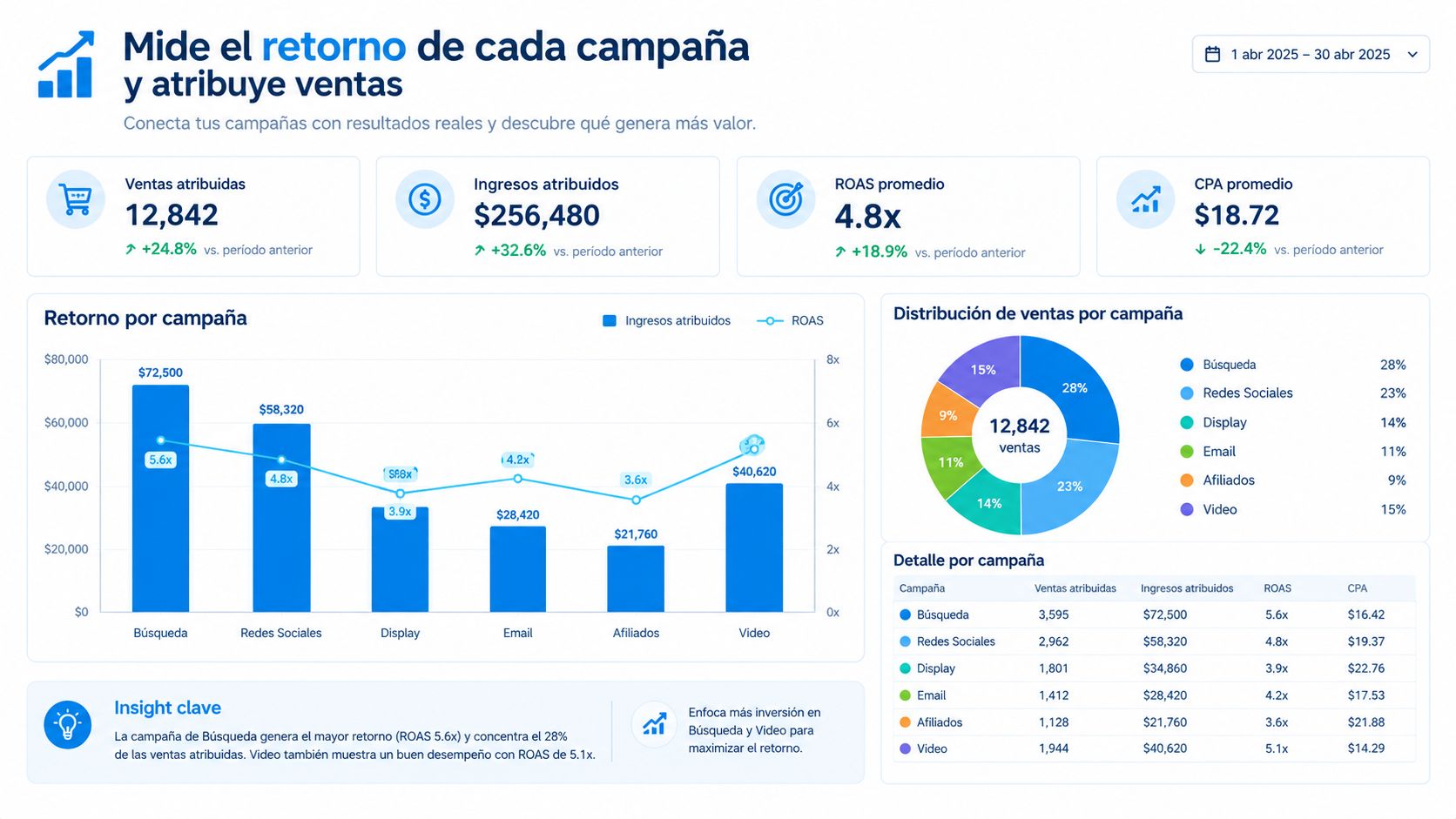
If it isn't measured, everything seems to work. That is the most expensive trap in retention. An owner sees movement at the register but doesn't know which message brought the customer back, which one just gave away margin, and which one did nothing.
The metrics that actually matter
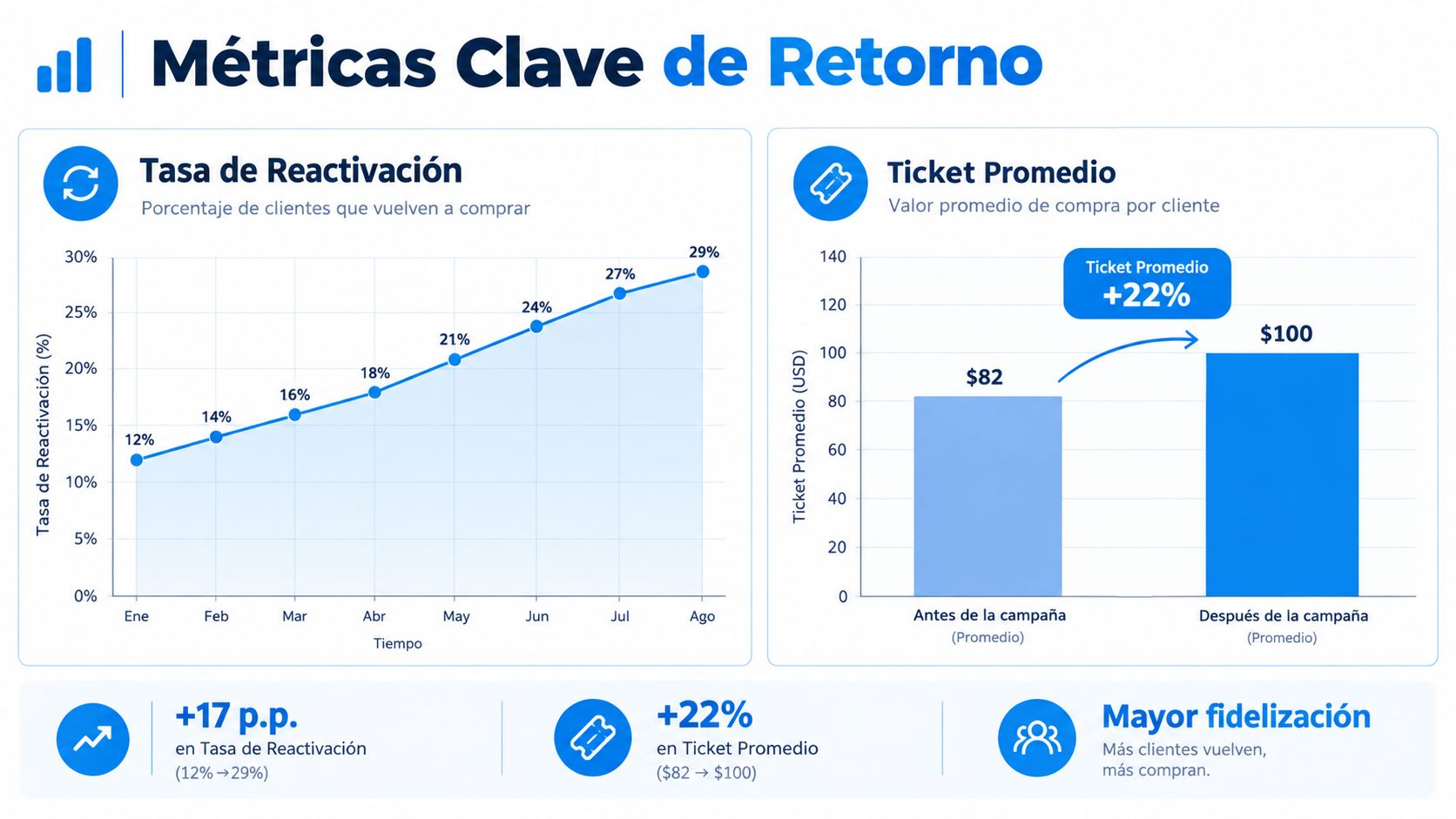
The first metric is the reactivation rate, that is, what percentage of inactive customers returned after the campaign. The second is the average ticket per segment before and after. The third is the ROI per channel, and the fourth is the cost per reactivated customer.
A simple case helps ground this. If a WhatsApp campaign cost $2,000 and brought in 25 customers with an average ticket of $250, the generated revenue was $6,250. With this data, the owner can decide whether to repeat the campaign, adjust it, or cut it.
How to attribute without guessing
Attribution improves when each campaign uses a unique coupon, a location-specific code, or a link with UTMs. This way, the business stops "feeling" that something worked and starts seeing which message produced which sale. A simple sheet in Google Sheets or a CRM dashboard is enough to start.
Mandatory weekly review: check which segment returned, which location responded, which offer increased the ticket, and which one only attracted opportunistic discounts.
To organize the return calculation, this resource on how to calculate ROI can serve as a practical reference, as long as the business grounds it in its own ticket, frequency, and margin. In a Guadalajara barbershop, for example, comparing different promotions can reveal that a half-price beard trim with a haircut reactivates better than a generic discount, but that is only discovered if each campaign has its own tracking.
30-day plan and mistakes that sabotage repeat business
Repeat business is not fixed with inspiration. It is fixed with order. An owner who wants customers to return needs a short, visible, and manageable path from the very first month.
A simple plan to start right now
Week 1. Clean the database, remove duplicates, and record missing contacts. Deliverable: a single customer list with name, channel, and last visit. Estimated time: 2 to 4 hours.
Week 2. Define segments by habit, ticket, and location. Deliverable: three to five groups ready for messaging. Estimated time: 2 to 3 hours.
Week 3. Launch the loyalty program and the first automated WhatsApp campaign. Deliverable: visible rules, active message, and clear redemption. Estimated time: 3 to 5 hours.
Week 4. Measure reactivation and adjust promotions based on average ticket. Deliverable: basic dashboard with results by segment. Estimated time: 2 to 4 hours.
The mistakes that destroy repeat business the most
Sending the same thing to everyone. The frequent customer gets bored, and the inactive one doesn't feel addressed.
Rewarding only those who already buy a lot. The program should drive habits, not just reward volume.
Spamming with daily messages. Frequency without criteria turns reactivation into an annoyance.
Ignoring new customers over repeat ones. Each needs different treatment, because they are not at the same stage of the relationship.
Not measuring reactivation. Without this, every promotion seems useful even if it doesn't drive sales.
Offering rewards that nobody wants. Some customers prefer free products over discounts.
Relying only on price. Experience, recognition, and consistency sustain more visits than an isolated discount.
The owner who starts today doesn't need a perfect system. They need one that actually gets used. If the business stops treating each visit as an isolated event and starts managing the relationship, customers stop disappearing so easily.
If your physical business continues to lose customers between one visit and the next, Swirvle helps organize data, segment by habits, and launch reactivations via WhatsApp, email, and loyalty programs all from one place. If you want to see how that fits into an SMB with multiple locations, visit Swirvle and check out how to convert single visits into real repeat business.
Related Blogs

Oct 22, 2026
How to prevent employee petty theft in my business?

Oct 21, 2026
How to Control Food Waste in a Restaurant: 2026 Guide

Oct 20, 2026
What is the global invoice for the general public and when is it issued? SAT Guide

Oct 19, 2026
How to take restaurant orders on WhatsApp without losing any?

Oct 18, 2026
How to Create a WhatsApp Business Catalog to Sell More: 2026 Guide

Oct 17, 2026
How to set up quick replies in WhatsApp Business?