inventory control examples for SMEs: 8 useful methods, when to use Excel, and at what point it is best to switch to a POS or integrated software.
Is your warehouse a mess? Get organized and make more money. An uncontrolled inventory is leaking money: expiring products, duplicate purchases, empty shelves just when a customer actually wanted to buy, and cash locked up in slow-moving merchandise. In Mexican SMBs this happens every day, from a taco shop in CDMX that runs out of tortillas during rush hour, to a barbershop in Nuevo León that buys too many styling products because “they will definitely sell.”
The good news is that getting organized does not require turning your business into a massive chain. It requires method, discipline, and a system that registers entries, exits, and purchasing decisions logically. When inventory is connected to real sales by branch, you swap intuition for control. That shift is reflected in your cash drawer, your operations, and your customer experience.
If you are currently managing things with Excel, WhatsApp messages, and improvised counts, it is worth reviewing how a good warehouse inventory control works. From there, the key is to tailor it to your specific industry.
Here are 8 practical inventory control examples for SMBs, with real-world scenarios from pharmacies, coffee shops, restaurants, barbershops, and retail across different Mexican states. The idea is not to adopt everything all at once. The idea is to identify which method works for you today, which mistake you should stop making this week, and how to connect inventory with customers to sell better.
1. ABC Inventory Control System
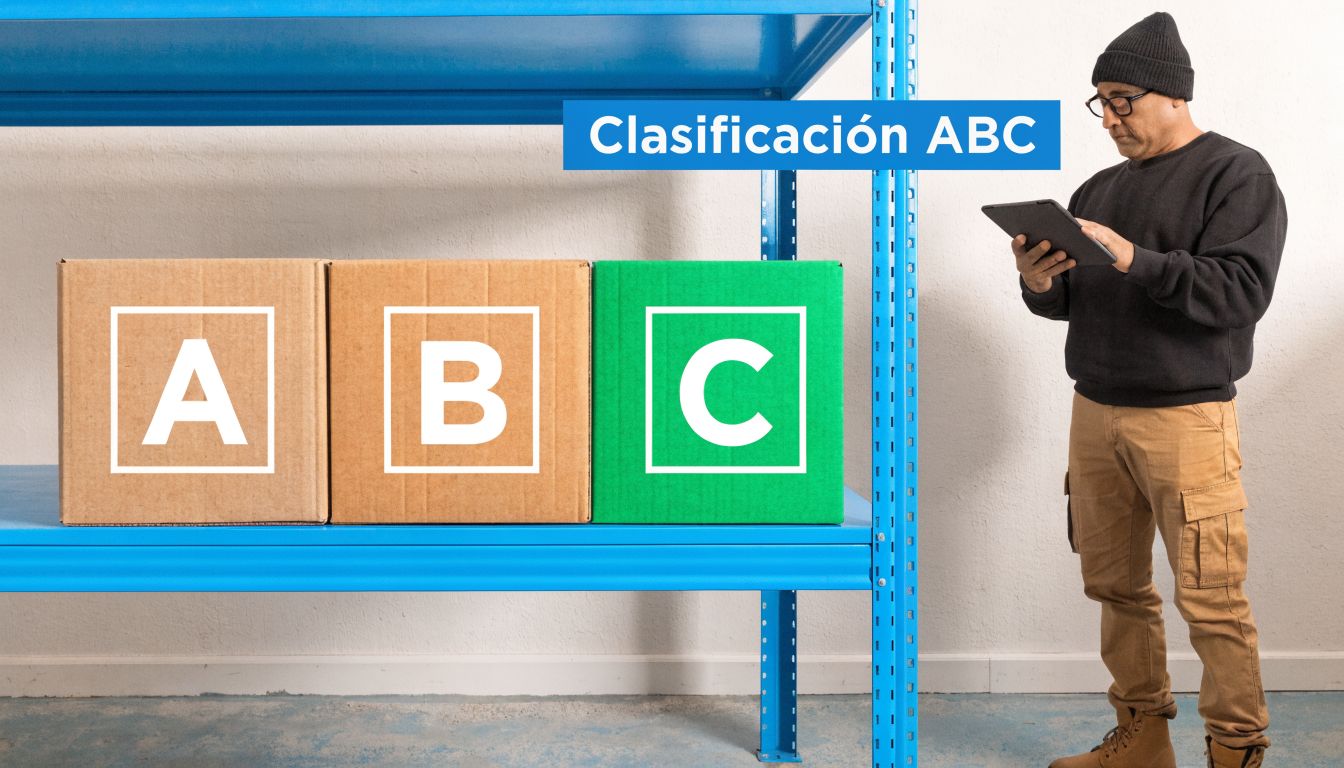
The ABC method still works because it forces you to stop treating all products equally. This is a very common mistake among SMBs. You cannot dedicate the same level of review to a box of bandages as to an expensive medication, nor to parsley as to a premium cut of meat.
In a pharmacy in Puebla, for example, it is beneficial to separate high-value and high-revenue commercial items from those that just take up space. In a restaurant, Class A items are usually expensive proteins, seafood, wines, or high-spoilage ingredients. Class C items are usually cheap consumables or simple replenishments.
How to apply it to an SMB
If you have multiple branches, classify by location, not just by a general catalog. A syrup might be Class A in one branch and Class B in another. An imported wine might rotate quickly in Polanco but slowly in another area.
The practical approach is to cross-reference three things: product value, rotation, and stockout risk. If you sell groceries, it is not enough to know which items leave a high margin. You also need to know which items can never run out because they drive complementary purchases.
Class A Products: review them more frequently, purchase with control, and activate reorder alerts.
Class B Products: keep them monitored, but without over-managing them.
Class C Products: simplify. If you spend too much time counting them, you are already losing money.
Operational rule: if an expensive product goes out of stock or is over-purchased, the error hits twice. You lose a sale or tie up capital.
Swirvle can help you identify which SKU actually deserves attention by linking sales, ticket size, and behavior by branch. If you also want to better organize your margin and replenishment analysis, it is worth reviewing how this connects to the cost of purchases.
What works and what does not
It works to review the classification periodically, because inventory changes with seasons, promotions, and consumer habits. It does not work to leave a classification fixed for months and assume it remains valid.
It also does not work to do ABC classification "by eye." If you are going to classify, use real sales from the POS. Therein lies the difference between a useful system and a pretty label stuck to the shelf.
2. Just-in-Time (JIT)
JIT is useful when a product loses value if it stays in storage too long. In food and beverages, that happens daily. In a taco shop in CDMX, meat, tortillas, cilantro, and salsa should not be managed with the same logic as disposables or soft drinks.
Think of a specialty coffee shop in Monterrey. Roasted coffee, milk, and pastries need frequent replenishment. If you buy too much, quality deteriorates or it turns into waste. If you buy too little, you disrupt the customer experience.

When it makes sense to apply it
JIT works well when you have relatively predictable demand, reliable suppliers, and disciplined operations. Walmart implemented a continuous replenishment system that monitors sales in real-time and triggers automatic orders when stock falls, resulting in a significant reduction in inventory without affecting availability, according to this analysis on successful companies in inventory management.
That same approach, scaled down to an SMB, can reduce storage costs by 20% to 30% when real-time demand forecasting is combined with automated ordering, according to the same reference. In businesses with multiple branches, centralized visibility by location allows for adjustments to replenishment based on local consumption habits.
Negotiate frequency, not just price: a supplier who delivers more frequently can be worth more than a "cheap" one who forces you to over-purchase.
Create backup suppliers: if you depend on just one, your JIT breaks down the moment a delivery fails.
Separate critical supplies: tortillas, milk, bread, or main proteins cannot be managed the same way as napkins.
A poorly executed JIT does not reduce inventory. It only multiplies emergencies.
The most common mistake
Many business owners try to do JIT without precise data. They order "the usual," even though customer behavior has already changed by branch, weather, payday, or promotion. That is where a CRM connected to inventory stops being marketing and becomes pure operations.
3. Reorder Point (ROP) Method
The reorder point solves a very simple question: at what exact moment should you buy again before running out of a product? Its value lies in preventing late ordering and also preventing panic buying.
An ice cream parlor in Yucatán needs this more than it seems. There are bases, toppings, and containers that move differently depending on the day, time, and season. If you wait until "there is almost none left," you are usually already too late.
How to define a useful ROP
Do not copy the same minimum for all branches. A store in a tourist area and one in a residential neighborhood do not consume the same way. The ROP must be built with real consumption, supplier lead times, and a small buffer for variations.
In a pharmacy, this is especially clear. There are products with constant rotation that can never be missing, but you should not fill the warehouse out of fear either. In clothing, the same goes for basics like white t-shirts, socks, or medium sizes.
Calculate by branch: do not use a global average if local behavior varies significantly.
Adjust by supplier: an item with a slow delivery time requires a higher reorder point.
Review after promotions: a campaign can alter your normal consumption pattern.
Where it usually fails
The ROP fails when it is fed dirty data. If entries are not recorded correctly, if spoilage is not captured, or if staff sell without scanning, the system will give you bad recommendations. It is not the method's fault. It is the record-keeping's fault.
If your theoretical inventory does not match your physical inventory, do not automate purchases yet. First correct operational discipline.
In SMBs with multiple locations, having visibility per point of sale means the ROP stops being a guessing game. That is where automation really starts to pay off.
4. Barcode Management and Cycle Counting
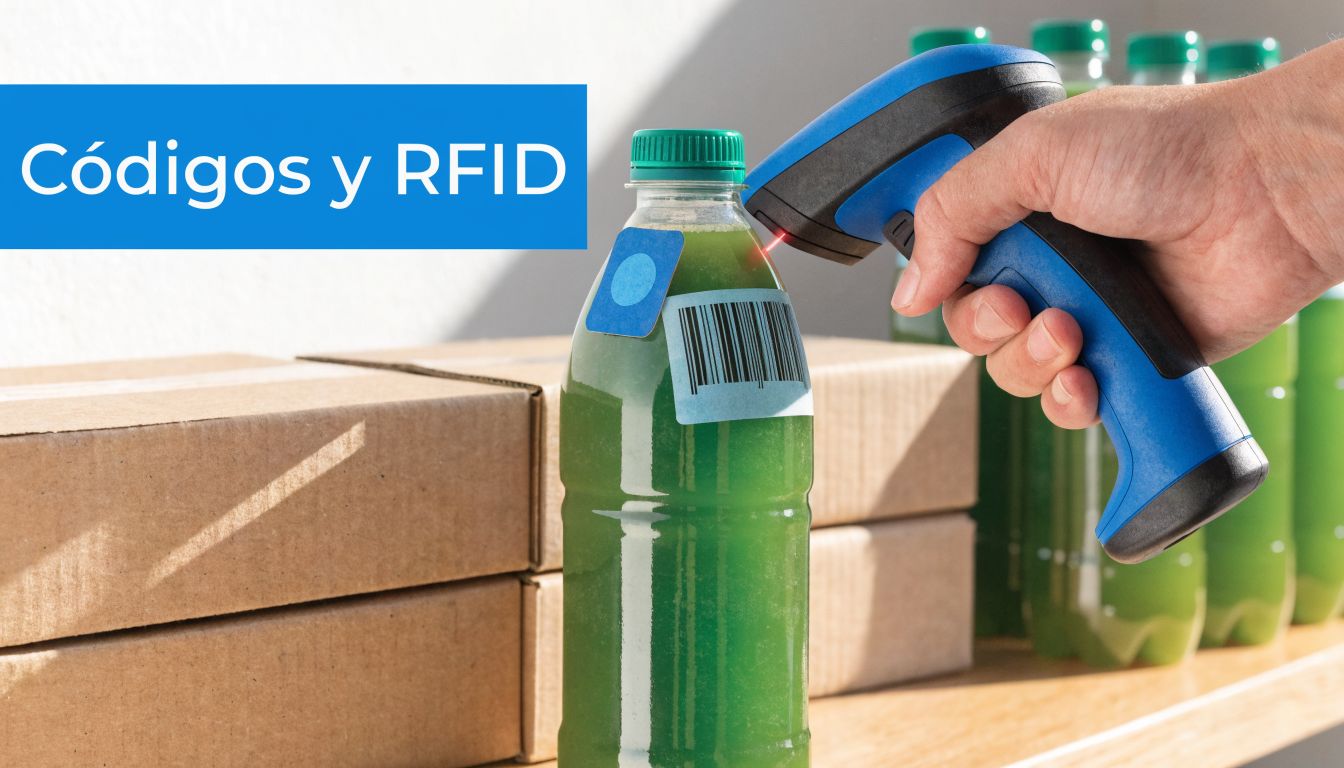
This is one of the most rewarding methods because it improves accuracy without halting operations. Instead of closing for half a day to count everything, you count a portion of the inventory frequently and record movements via scanning.
A barbershop chain in Nuevo León can use it to control waxes, shampoos, tonics, and beard oils. It does not seem like a complex inventory, until you add up multiple branches, over-the-counter sales, internal consumption, and open products used during services.
The practical case study worth looking at
Conservas Márquez transformed its operation by automating a 4,000-pallet warehouse and achieving permanent real-time inventory through WMS integration with automatic barcode reading, replacing monthly manual counts on paper and Excel with immediate ERP synchronization, according to this example of automated inventory with integration and barcode reading.
For a Mexican SMB, there is no need to replicate that entire infrastructure to learn the core lesson. The lesson is this: when reception, sales, and exits are recorded at the right time, much of the gap between physical and digital inventory disappears.
How to apply it without getting complicated
Start with your most important products. If you try to label and clean up everything at once, the team will get overwhelmed. Better to start with what sells the most, costs the most, or gets lost the most.
Scan upon receipt: every entry must be recorded before heading to the shelf.
Scan upon sale: if the exit is not deducted, your stock data is incorrect from the start.
Scheduled cycle counting: counting one section per day or per week is better than a sporadic mega-count.
Reviewing discrepancies: counting is not enough. You must correct the root cause.
In franchises or small chains, the lack of synchronization between physical inventory and digital records can lead to losses of 5% to 15% in potential sales due to decisions made with inaccurate data, according to the same case cited above. That figure explains why this method is not a luxury.
5. Example in a coffee shop in Edomex
In a coffee shop with multiple branches in the State of Mexico, the problem is almost never just a "lack of inventory." The real problem is usually a mix of variable recipes, inconsistent portions between shifts, and preparation that does not align with hourly demand.
I have seen this many times: in the morning there are too many pastries, at noon there is a lack of milk, in the afternoon there is food waste, and at closing time nobody knows if the problem was purchasing, production, or execution. Without standard, there is no control.
What I would do in such an operation
First, standardize recipes. A latte cannot have a different amount of milk depending on who is at the bar. A panini cannot have "whatever looks good." Every variation turns into invisible waste.
Second, separate sales inventory from production inventory. Coffee beans, milk, syrups, and pastries should be measured differently than cups, lids, or napkins. Third, analyze demand by hourly blocks and by branch.
In a coffee shop, controlling inventory without controlling the recipe is a waste of time.
A simple way to operate it
Document every recipe: with photos, portion sizes, and clear units of measure.
Record actual waste: spilled milk, day-old bread, open products.
Cross-reference sales with times: do not prepare the same way at 8 a.m. as you do at 4 p.m.
Review by branch: sales of cold and hot drinks vary greatly by area.
Here comes the angle that almost no one handles well: integrating inventory with CRM and loyalty programs. When you know which customers buy cappuccinos, frappes, or pastry + coffee combos and at which branch, you can adjust production and campaigns with more precision. Swirvle helps precisely with that bridge between consumption, rewards, and replenishment, especially in physical businesses with repeat purchases.
What does not work is launching promotions to move product without checking if there is actually enough stock or if the recipe is costing more than it earns.
6. Perpetual vs. Periodic Inventory Method
There is not much room for romanticization here. If your business wants to grow, periodic inventory alone falls short. It is useful for very small businesses with a limited catalog and simple operations. As soon as you have multiple categories, multiple people handling merchandise, or more than one branch, you need perpetual inventory.
Perpetual inventory updates stock with every sale, purchase, or adjustment. Periodic inventory relies on counts at fixed dates. On paper, it sounds simpler. In practice, it leaves information gaps for days or weeks.
How to choose without getting complicated
A small craft stall in Puebla can survive with a count at the end of the day. A clothing store with multiple sizes and colors cannot. A restaurant or pharmacy, even less so.
The most sensible option for many SMBs is a hybrid: a perpetual system as a base and cycle counts to validate. This way you have daily visibility and, at the same time, detect discrepancies before they turn into a bigger problem.
Perpetual: best for retail, food, pharmacies, and multi-branch businesses.
Periodic: useful only when the catalog and volume remain highly manageable.
Hybrid: the best path to grow with control.
The fine point that many overlook
It is not enough to "have a system." If nobody records returns, internal consumption, waste, and transfers, your perpetual inventory degrades quickly. Software does not correct disorderly habits.
If you are evaluating the right model, it is also useful to check the types of inventories that exist to choose an operational structure that actually fits your industry. That is usually where it is decided whether you will manage with clarity or just with nice reports.
7. Inventory Planning by Seasonal Demand
Seasonality punishes those who buy with a short memory. A pharmacy in winter, an ice cream shop during vacations, a gift shop in February, or a store near tourist areas in Baja California experience clear peaks and valleys. If you do not anticipate, you buy late or get stuck with out-of-season stock.
A souvenir shop near cruise routes does not sell the same all year round. A restaurant in an office district also does not consume the same in December as in a normal month. The problem is not seasonality. The problem is treating it like a surprise.
What data is actually worth looking at
Review historical data by product, branch, and period. Do not just settle for "it sells more in summer." You need to know which category goes up, which presentation goes down, and which item requires advance purchase because the supplier also gets backed up.
In addition, there is an overlooked angle that can give you an edge: integrating real-time inventory with loyalty programs. According to an analysis published by Upseller, 68% of the 4.5 million Mexican retail SMBs face annual stockouts of 25% due to a lack of multi-branch visibility, which reduces customer retention by 15%, and only 12% of SMBs use RFID connected with loyalty programs despite a 40% adoption growth in 2025 in Mexico analysis on inventory, loyalty, and Mexican SMBs.
How to use that idea in a real business
If you detect seasonal overstock, you can move it with targeted campaigns before it loses commercial value. It is not the same to send a mass promo as it is to offer a specific coupon to customers who actually buy that category and live near the branch with the excess stock.
Seasonal inventory is planned through purchasing, but it is corrected through well-segmented marketing.
Talk to suppliers early: if everyone buys at the same time, you will arrive late.
Plan exit, not just entry: define from the start how you will move stock if demand drops.
Adjust by branch: a promotion that is useful in CDMX might not work in Yucatán.
8. Management Software and POS Integration with CRM
This is the point where many businesses make the real leap. Controlling inventory without connecting customers and sales leaves decisions half-made. You know what you have, but you do not know who is buying it, how often, at which branch, and what offer could accelerate its sale.
When you integrate POS with CRM, inventory stops being a static list. It becomes a commercial tool. You can detect excess stock, identify repurchase products, see habits by branch, and execute smarter campaigns.
What changes in daily operations
If you have three branches, you need a single view of inventory to decide on transfers, replenishment, and promotions. You also need minimum stock alerts and real-time updates with each sale to stop operating with a delay.
In retail, food, and small franchises, this integration helps avoid a common failure: launching campaigns without checking actual availability. Promoting an out-of-stock product creates friction. Promoting one with well-segmented overstock can help you clear inventory without eroding the margin of the entire line.
First master the core inventory: entries, exits, waste, and transfers.
Then connect CRM: to segment by buying habits and branch.
Define alerts and reports from the start: rotation, low stock, slow-moving items, and campaign responses.
Where Swirvle fits in
For SMBs with brick-and-mortar stores, an integrated tool simplifies much more than having separate apps that "sort of talk to each other." If you want to evaluate that path, it is worth reviewing how a point of sale with inventory works and how it connects with loyalty actions and campaigns.
In practice, the valuable part is not just counting pieces. The valuable part is using that data to decide what to buy, what to transfer, what to promote, and which customer to offer which product based on actual availability.
Comparison: 8 Examples of Inventory Control
Method / Case | Implementation Complexity 🔄 | Resource Requirements ⚡ | Expected Results 📊 | Ideal Use Cases 💡 | Key Advantages ⭐ |
|---|---|---|---|---|---|
ABC Inventory Control System | Moderate (historical analysis and periodic reviews) | Historical sales data and link with POS/CRM | Prioritizes highest impact inventory; less tied-up capital | Multi-SKU retail, pharmacies, grocery stores | Focuses capital on profitable SKUs; reduces obsolescence |
Just-in-Time (JIT) Delivery | High (logistical coordination and reliable suppliers) | Nearby suppliers, precise forecasting, and frequent logistics | Drastic inventory reduction and improved cash flow; higher stockout risk | Perishables: restaurants, coffee shops, high-rotation stores | Minimizes storage costs and obsolescence |
Reorder Point (ROP) Method | Low-Moderate (simple formula but requires accurate data) | Daily consumption, supplier lead time; easy to automate | Prevents shortages and optimizes ordering frequency | Stable demand products (ice cream shops, medicines) | Easy to implement and automate; reduces stockouts |
Barcode Management and Cycle Counting | Moderate (hardware/software investment and operational discipline) | Scanners, integrated POS software, and continuous training | High accuracy (+99%) and real-time visibility | Multi-branch chains, high-volume transaction retail | Inventory accuracy and early detection of discrepancies |
Case Study: Optimization in an Edomex Coffee Shop | Moderate (standardization and hourly analysis) | POS with hourly reports, training, and portioning tools | Less waste (30%) and margin improvement (7%) in 6 months | Coffee shops and restaurants with hourly sales | Reduces waste; greater consistency and margin |
Perpetual vs. Periodic Inventory Method | Variable (Perpetual: high; Periodic: low) | Perpetual: POS/tech investment. Periodic: time and staff for counting | Perpetual: real-time visibility. Periodic: potential inaccuracy until count | Perpetual for e-commerce and multi-branch; Periodic for micro-businesses | Perpetual: control and scalability. Periodic: low initial cost |
Inventory Planning by Seasonal Demand | High (historical analysis and early coordination) | Sales history, forecasting, supplier planning, and budget | Maximizes sales during peaks and reduces need for liquidations | Businesses with marked seasonality (holidays, tourism) | Improves seasonal availability and optimizes capital |
Management Software: POS + CRM Integration | High (implementation, integration, and learning curve) | Software/hardware investment, multi-branch integration, and training | 360° visibility, automated replenishment, and personalized marketing | SMBs looking to scale and personalize campaigns | Comprehensive control, error reduction, and data-driven marketing |
Your next step: From inventory data to profitability
These 8 inventory control examples show something very clear. The best system is not the most sophisticated. It is the one your team can execute with discipline and that gives you enough visibility to buy better, sell better, and correct quickly.
If you have a single branch and small operations, it might be best to start with ABC, reorder points, and cycle counts. If you handle perishables, JIT and recipe standardization will give you more impact. If you already operate multiple branches, perpetual inventory and integration with POS and CRM stop being optional upgrades. They become basic infrastructure.
It must also be said clearly: not everything is fixed by buying software. First, you need minimal processes: recording entries, deducting exits, capturing waste, reviewing differences, and assigning responsibilities. When that exists, technology indeed multiplies control. When it does not exist, it only digitalizes the mess.
The operational evidence points in the same direction. Walmart managed to significantly reduce inventory levels without affecting availability using real-time monitoring, automated orders, and supplier collaboration, according to the analysis cited above. Conservas Márquez resolved delays and errors by replacing manual counts and duplicate data entry with automated reading and system integration. They are different scales, but the logic remains the same for an SMB: visibility plus discipline produces better decisions.
In multi-branch businesses, there is an additional advantage that many underestimate. When inventory is connected to customer data, you can stop doing generic promotions. You no longer push any product to anyone. You move the right stock, from the right branch, to the right segment. That is where inventory and marketing finally work together.
Swirvle fits well into that conversation because it combines CRM, loyalty, and operations for physical businesses. If your challenge is not just counting stock, but understanding who buys, what they repurchase, and how to trigger campaigns based on actual availability, a platform like this can help you turn scattered information into more useful decisions.
Start with one area. Just one. Classify your products. Define minimums. Schedule counts. Correct differences. Then connect sales, branches, and customers. Ordered inventory does not just reduce errors. It gives you back your margin, time, and control.
If you want to connect inventory, branches, and purchasing behavior into a single flow, check out Swirvle. It can be a useful option for SMBs with brick-and-mortar stores that need to view stock, segment customers, and run campaigns based on real operational data.
Related Blogs

Aug 24, 2026
Step-by-step sales budget example for SMEs

Aug 23, 2026
How to organize your bar and kitchen to serve faster

Aug 22, 2026
Create a loyalty program that actually works and isn't just generic discounts

Aug 21, 2026
Customer retention: Customer retention

Aug 19, 2026
Design of promotions and offers that increase average ticket value

Aug 18, 2026
Swirvle + Meta Conversions API: Integration Guide
Try Swirvle for free
No card required · 30 days free
Start your free trial