Discover how to implement and promote healthy food in restaurants. A guide for SMEs in Mexico: menus, costs, marketing, and loyalty. Increase your sales!
In Mexico, 76.6% of adults live with overweight or obesity, and in Nuevo León that figure rises to 78.4%. At the same time, searches for "healthy food Monterrey" show a projected growth of +45% annually by 2025, but in the top results, barely 2 to 3 mentions appear, compared to more than 20 in CDMX according to this reference on healthy restaurants in Mexico. This gap changes the conversation: healthy restaurant food is no longer just a trend for premium areas. It is an operational opportunity for SMEs in Monterrey, Puebla, Estado de México, Yucatán, and other markets where demand already exists but supply remains short.
Many restaurant owners are held back by a misconception. They believe that selling healthy options means low tickets, unappealing portions, and hard-to-retain customers. In practice, the problem is almost never "healthy food." The problem is usually a poorly designed menu, miscalculated costs, staff who do not know how to make recommendations, and communication that does not make it clear why a dish is worth what it costs.
The opportunity lies outside the most obvious corridors. A coffee shop in Toluca, a family restaurant in Puebla, a convenience store with a kitchen inside a highway gas station, or even a car wash with a food bar can turn a healthy offering into a profitable line if they understand one basic thing: the customer does not buy "nutrition" in the abstract. They buy convenience, flavor, trust, and a clear reason to return.
Table of Contents
Why Healthy Food is a Profitable Business in Mexico
The opportunity lies in markets with low, unorganized supply
Profitability comes from execution, not the label
The market rewards the business that arrives first and operates better
Creating an Irresistible and Profitable Healthy Menu
The winning menu starts with real operation
What actually works in dish design
How to adapt the offering based on the type of business
Menu engineering made simple
Supplier Optimization and Price Control
Buying local is not always cheaper, but it can be more controllable
The right price does not mean a low price
Costing example for a healthy dish
Three mistakes that erode margins
Your Team: The Best Ambassador for the Healthy Brand
Training the team sells more than printing a pretty menu
Transparency that builds trust
What floor staff should practice
What is best to avoid
Digital Marketing Strategies to Fill Your Restaurant
An example that successfully grounds the strategy
Segment before promoting
How to set up campaigns that actually turn into visits
What content works best
Common mistakes in promotion
Measure Your ROI and Turn Customers into Loyal Fans
What to measure in a healthy menu
From campaign to recurrence
Lifetime value matters more than an isolated sale
Loyalty that actually feels valuable
How to use results to improve the offering
Why Healthy Food is a Profitable Business in Mexico
Searches for healthier options are no longer concentrated just in CDMX. In cities like Monterrey, Puebla, and several mid-sized markets, purchasing intent is growing faster than formal supply. For a restaurant SME, this combination is often more attractive than entering a saturated market.
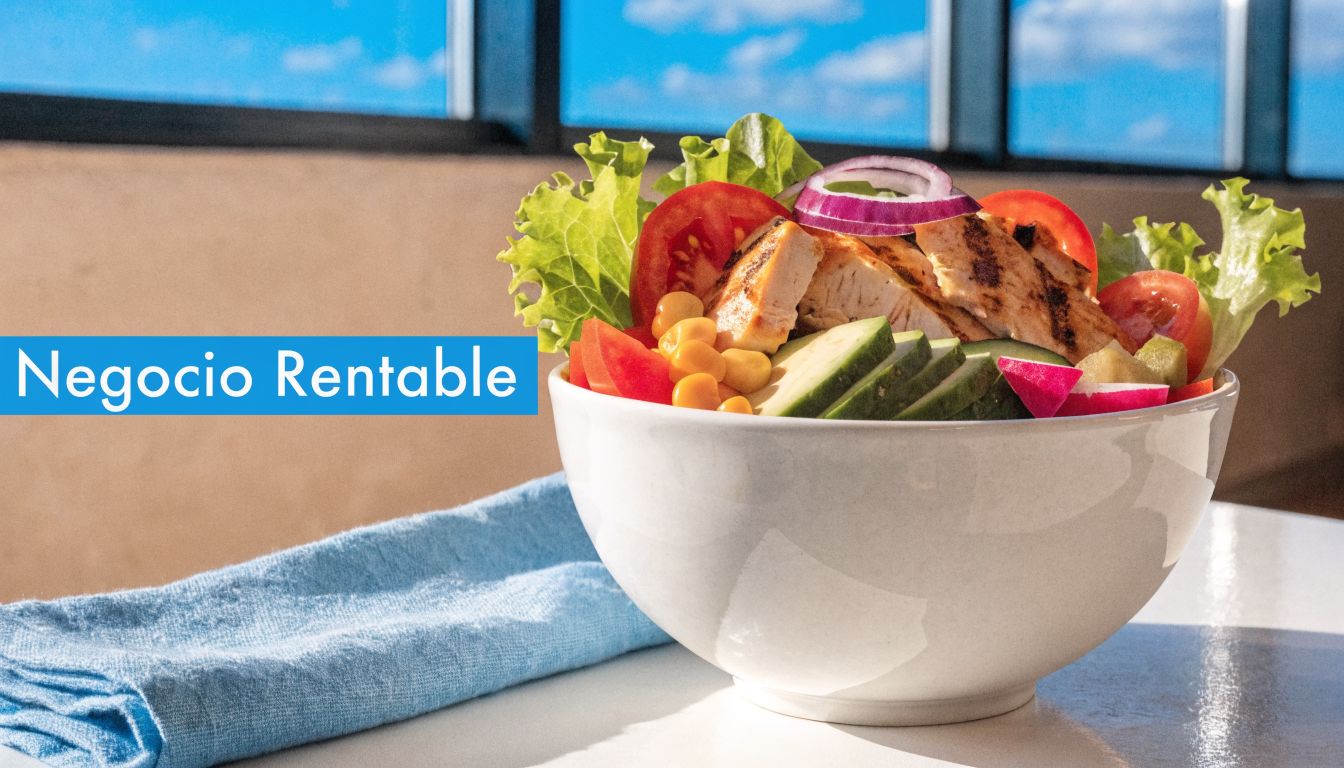
That is where the real opportunity lies.
In practice, many owners still view healthy food as a small niche or a low-ticket trend. On the ground, something else is happening. In cities outside the major hubs, customers are already asking for lighter breakfasts, quick lunches with better nutritional profiles, and grab-and-go options that do not leave them feeling like they ate poorly. The problem is that, in many neighborhoods and commercial corridors, this demand remains underserved.
The opportunity lies in markets with low, unorganized supply
CDMX forces you to compete with more polished concepts, high rents, and customers who compare heavily. Monterrey, Puebla, and other cities with business growth offer a different window. There are consumers with purchasing power, office routines, and a willingness to pay for convenience if the product solves a clear need.
This favors several formats that already exist and only need to adjust their proposal, not reinvent themselves:
Neighborhood coffee shops with functional breakfasts, bowls, wraps, and fast-moving beverages.
Family restaurants that adapt part of their menu to offer lighter versions of familiar dishes.
Hybrid businesses within high-traffic areas, offices, gyms, or service centers, where buying for practicality carries more weight than gastronomic exploration.
The advantage is not in selling "healthy" as a pitch. It is in meeting a daily need with an operation that actually leaves a margin.
Profitability comes from execution, not the label
A profitable healthy dish does not depend on expensive ingredients or an aspirational narrative. It depends on three things: controlled cost, repeatable preparation, and frequent demand. If a bowl shares ingredients with a wrap, a warm salad, and a protein breakfast, the business buys better, wastes less, and moves inventory faster. That is where the margin begins.
That is why it is best to review the real cost of each healthy dish on the menu from the start. Many businesses lose money not because of a lack of customers, but because they sell a healthy offering with poorly defined portions, high waste, or prices set "by guesswork."
There is also a commercial effect that carries weight. When the healthy offering looks professional, the customer assumes that the business cares about ingredients, handling, and consistency. This perception improves repeat purchases and average tickets, especially in areas where there are still few reliable alternatives. For projects that are also fitting out or renovating a venue, it is wise to review compliance and operational references from the get-go. Even referring to international best practices resources, such as comply with IVACE regulations with us, can help avoid improvised decisions that cost more later.
The market rewards the business that arrives first and operates better
I have seen this pattern repeat in mid-sized SMEs. The first business to offer a clear, tasty, and easy-to-order healthy option usually captures the regular customer before a wave of competitors arrives. It does not need a massive menu. It needs consistency, speed, and a proposal that fits the local routine.
In Mexico, the opportunity for healthy restaurant food is not limited to trendy neighborhoods. Many of the best potential openings are where almost no one is building a serious offering yet. That is where a small restaurant can gain ground with less noise and better margins.
Creating an Irresistible and Profitable Healthy Menu
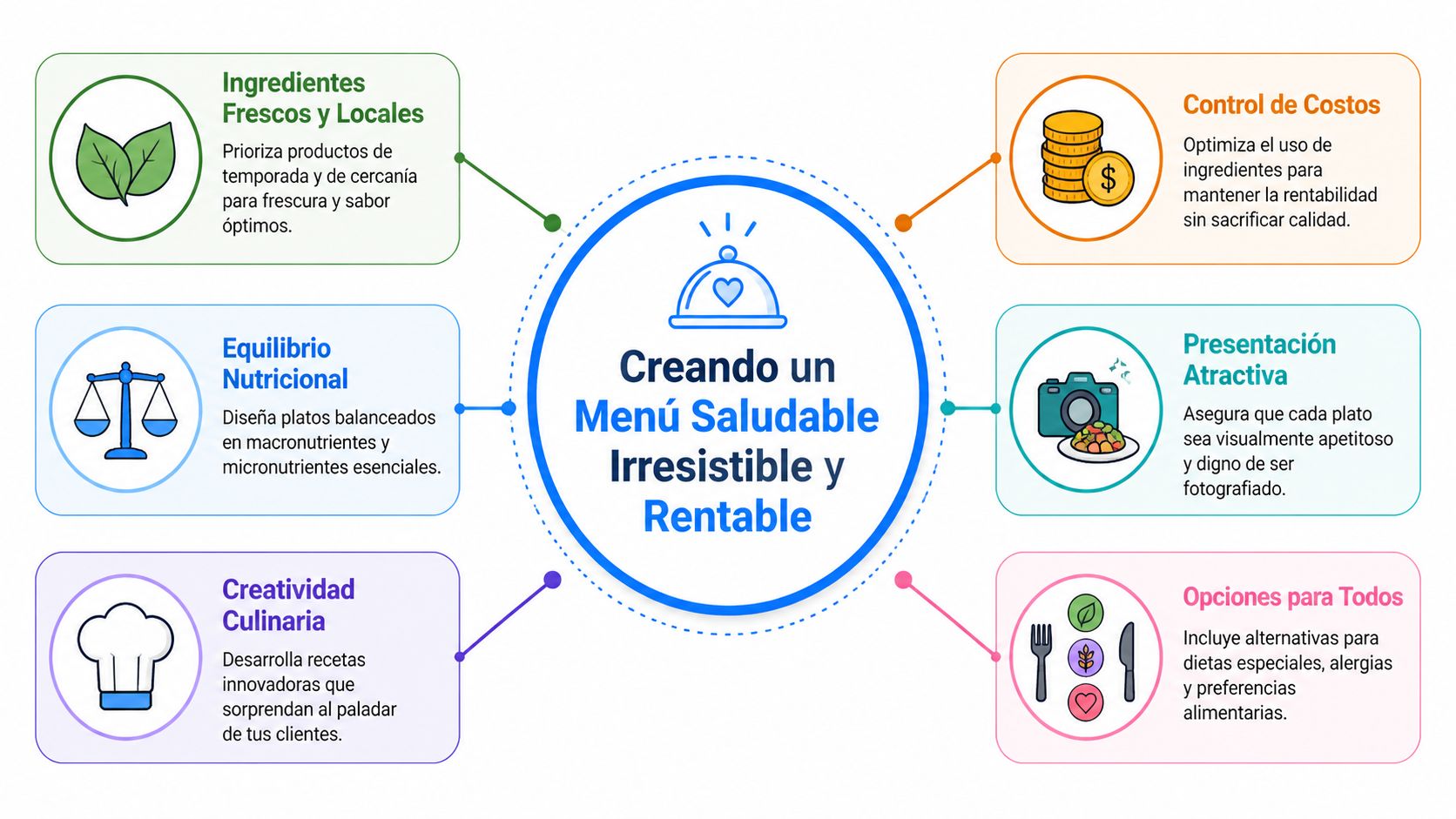
A healthy menu fails when it tries to be perfect on paper and ends up being irrelevant in the kitchen. The priority is not to impress a nutritionist. The priority is to sell dishes that the customer wants to order again and that the business can produce without friction.
The winning menu starts with real operation
A small restaurant does not need to launch an entire menu of healthy restaurant food. It needs to start with a few well-thought-out products. It is recommended to build a foundation with three types of dishes:
A signature dish that represents the business's healthy proposal.
An accessible entry option for the curious customer who is not yet convinced.
A customizable alternative that allows adjustments without complicating the kitchen.
In a coffee shop in the State of Mexico, this can translate to a protein bowl, a smoothie with good texture, and a whole-wheat sandwich with options to change the protein or dressing. In a family restaurant in Puebla, it can be a lighter version of a traditional dish, without stripping away its flavor or identity.
What actually works in dish design
Customers usually respond better when the healthy menu feels familiar, not preachy. These criteria help more than any trendy label:
Flavor first: a bowl with marinated chicken, crisp vegetables, and a well-balanced dressing sells more than a "very healthy" but bland mix.
Mixed textures: creamy, crunchy, fresh, and warm elements in the same dish elevate the perception.
Clear name: "grilled chicken bowl with rice and vegetables" communicates better than a convoluted name.
Real photogenicity: if the dish looks good leaving the kitchen, it also helps with social media and word-of-mouth recommendations.
A profitable healthy menu is not built by removing ingredients. It is built by combining them better.
How to adapt the offering based on the type of business
Not all businesses should sell the same thing. The key is to respect the customer's purchasing rhythm.
Type of Business | What Usually Works | What Usually Fails |
|---|---|---|
Coffee Shop | bowls, toast, smoothies, light combos | complex dishes with too many steps |
Family Restaurant | balanced versions of classics, fresh sides, grilled proteins | copying gym menus with no connection to the clientele |
Gas Station with Kitchen | wraps, whole-wheat sandwiches, ready fruit, practical salads | delicate preparations that deteriorate quickly |
Car Wash with Coffee Shop | high-protein snacks, drinks without excess sugar, quick breakfasts | extensive menus that overwhelm a small operation |
Menu engineering made simple
A common mistake is putting healthy dishes in a corner of the menu, almost as an apology. This kills visibility. It is better to integrate them into high-focus visual zones and describe them with appetizing, not clinical, language.
It is also wise to check costs and margins before falling in love with a dish. To do this part methodically, it is helpful to consult a practical guide on how to calculate the cost of a dish. The point is not to fill out spreadsheets for sport. The point is to know from the start which dishes can scale and which only look good in trials.
Signs that a dish deserves to stay
It is produced quickly: the kitchen does not slow down during peak hours.
It shares ingredients: inventory rotates and is put to good use.
It tolerates variations: it works with another protein or as a vegetarian option.
It can be sold in a combo: a drink, snack, or dessert increases value without adding too much complexity.
When a healthy menu is well executed, the customer does not feel like they chose "the correct option." They feel like they chose the best option on the menu. That difference completely changes the sale.
Supplier Optimization and Price Control
The profitability of healthy restaurant food is decided more in purchasing and production than in advertising. A dish can look flawless on the menu and still lose money if it depends on unstable ingredients, poorly controlled portions, or suppliers who change quality every week.
Buying local is not always cheaper, but it can be more controllable
For many SMEs, working with nearby suppliers provides a concrete advantage: less variation, more predictable deliveries, and better adjustment capabilities. A business in Yucatán can take advantage of seasonal fruit with a more natural rotation. A restaurant in Baja California can build a fresh line around locally available fish. The key is not to buy "artisanal" for the sake of a trend. The key is to reduce surprises.
It is best to evaluate each supplier with simple criteria:
Product consistency: same sizing, freshness, and yield.
Ease of replenishment: how quickly they respond to shortages.
Real flexibility: whether they accept seasonal or volume adjustments.
Operational waste: a cheap ingredient is expensive if it arrives with too much waste.
The right price does not mean a low price
In markets like Spain, 55.4% of customers are willing to pay more for healthy options, according to this gastronomy sector article. This figure should not be automatically applied to Mexico, but it does clarify a useful idea: when the business communicates value well, the customer accepts a higher price better.
This communication does not depend on fancy words. It depends on visibly explaining what makes the dish different. Fresh ingredients, defined protein, better cooking methods, full portions, and careful presentation. If the menu just says "salad," the customer compares price. If it says exactly what they receive and why it tastes good, they compare value.
The customer does not pay extra for the word "healthy." They pay extra when they understand what they are buying.
Costing example for a healthy dish
Grounding the price helps avoid dangerous intuitions. This example is not meant to be a universal rate. It serves to show how to structure the decision.
Ingredient | Cost per Portion (MXN) | Suggested Selling Price (MXN) |
|---|---|---|
Quinoa | 12 | |
Grilled chicken | 24 | |
Mixed greens | 10 | |
Fresh vegetables | 14 | |
Dressing | 6 | |
Packaging or plating | 8 | |
Estimated Total | 74 | 159 |
In practice, this suggested price must be validated against the area, local competition, type of customer, and the venue's dining experience. The same bowl will not sell the same in Polanco as it does in a commercial plaza in Puebla or at a highway location.
Three mistakes that erode margins
First, including too many "superfoods" just to justify a high price. If the customer does not perceive a difference in flavor, they will not return.
Second, depending on ingredients that only serve a single dish. This ties up inventory and increases waste.
Third, failing to portion. In many restaurants, healthy dishes are served "by eye," as if it were a flexible category. This lack of discipline makes it impossible to know which product is winning and which is just taking up space.
Your Team: The Best Ambassador for the Healthy Brand
Many restaurants believe that selling healthy restaurant food depends on the chef or the menu design. On the floor, the reality is different. The sale is usually defined in a brief interaction: a server's recommendation, a clear answer to a question, or the confidence with which staff describe the dish.

Training the team sells more than printing a pretty menu
If the server does not understand the difference between a complete bowl and a light salad, they will recommend their usual favorites out of habit. If the kitchen does not know the correct presentation, every table will see a different dish. Commercial consistency starts with basic training, not long speeches.
Useful training must cover three things:
What is in each dish: ingredients, portion size, and potential modifications.
Who it benefits: customers looking for something light, high in protein, or free of certain ingredients.
How to describe it: simple and appetizing language.
A clear example: In a restaurant in Puebla, staff do not need to say "this dish has a balanced nutritional profile." It is better for them to say "it features grilled chicken, rice, fresh vegetables, and a light dressing; it is filling without feeling heavy." That actually sells.
Transparency that builds trust
In Europe, 66% of restaurants already notice an increase in demand for healthy food, and although there is less centralized data in Mexico, the trend is similar. This lack of local information makes proactive transparency carry more weight as a differentiator, as noted in this reference on healthy offerings in restaurants.
Labeling the menu well helps a lot. There is no need to turn the menu into a technical document. It is enough to use clear cues:
Simple icons: vegan, vegetarian, high protein, gluten-free when applicable and operationally supported.
Honest descriptions: avoid exaggerations like "guilt-free" or "fit" if the dish does not back up that promise.
Modification options: what can be changed without impacting the kitchen or ticket times.
A customer trusts a clear menu more than an exaggerated speech about wellness.
What floor staff should practice
Good training includes handling real objections, not just memorizing ingredients. The team should practice responses to questions like:
Customer Doubt | Useful Response |
|---|---|
“Is it filling?” | “Yes, it comes with protein, a base, and vegetables; it works great as a full meal.” |
“Is it too bland?” | “It has dressing, contrasting textures, and a preparation designed to be flavorful, not just light.” |
“Can I swap an ingredient?” | “Yes, these are the options the kitchen can adjust without delaying service.” |
What is best to avoid
Forcing staff to push healthy items as if it were a moral obligation. This makes customers uncomfortable. It also fails to use terms that the team itself does not fully understand. If the explanation sounds fake, the table will sense it in seconds.
When the team masters the offering, the sale becomes natural. The customer stops feeling like they are trying something unusual and starts seeing it as an easy decision.
Digital Marketing Strategies to Fill Your Restaurant
A good menu does not promote itself. Many businesses launch healthy options, post a photo on day one, and wait for customers to arrive by inertia. It does not happen. It is necessary to identify who already has an affinity for that purchase and speak to them directly.
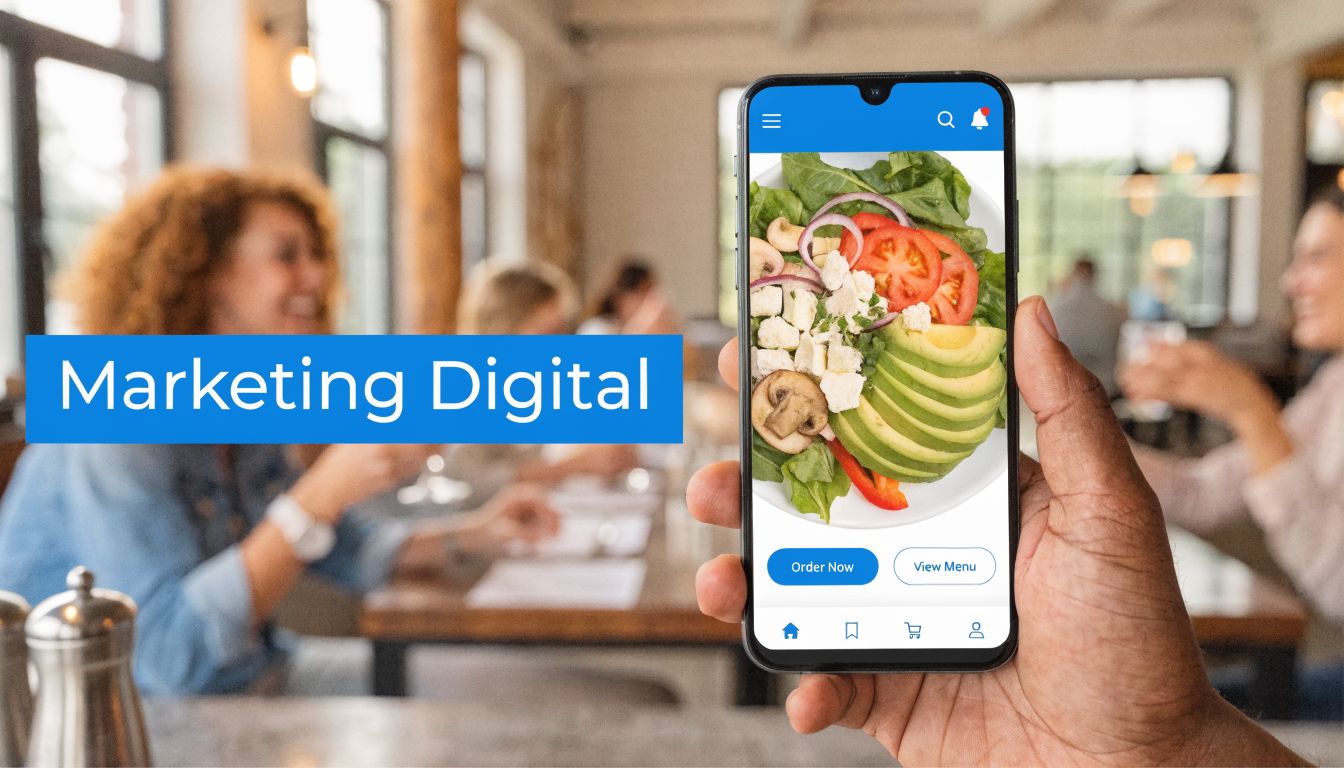
An example that successfully grounds the strategy
Consider a car wash chain in Nuevo León that already has a small coffee shop at its locations. For months, the business has sold coffee, sweet bread, and some snacks. It then decides to add whole-wheat wraps, yogurt with fruit, and a turkey sandwich.
The first impulse is usually to post "new healthy menu" on social media. This does little if the message reaches everyone equally. The business gets more traction when it identifies specific patterns—for example, customers who already buy water, black coffee, fruit, or light products while waiting for their car.
Segment before promoting
Sales improve when the business stops talking to "the public" and starts talking to specific groups. For an SME, the most useful segments are usually:
Quick convenience customers: they want something practical and portable.
Morning routine customers: they buy before work or after the gym.
Waiting customers: they spend time inside the business and are open to an additional purchase.
Customers who already choose light products: they are the closest to trying the new menu.
Using this logic, a gas station on the highway to Querétaro could detect those who buy water and lighter snacks. It can then send them a WhatsApp message with a trial promotion for a whole-wheat sandwich or a ready-to-go salad. The point is not to spam; the point is to reach them with an incentive that makes sense for that habit.
How to set up campaigns that actually turn into visits
A simple funnel works better than an isolated promotion. To structure this contact and follow-up logic, a read on marketing funnels applied to brick-and-mortar businesses can be helpful. The practical idea is this:
Capture attention with real photos of the dish.
Spark interest with a concrete promise, such as speed, satiety, or freshness.
Prompt a trial with a first-purchase offer or combo.
Encourage repeat visits with a follow-up message if they already consumed.
Most healthy menus do not fail from a lack of demand. They fail because no one designed a clear path from curiosity to the first purchase.
What content works best
Sophisticated production is not required. Consistency and clarity are.
Real photos of the served dish: no renders, no generic images.
Short video of the plating process: helps convey freshness.
Occasion-based messaging: quick breakfast, office lunch, light highway option.
Time or location-based promos: useful in chains with variable traffic.
Common mistakes in promotion
One of the worst is promoting healthy options with a lecturing tone. The customer does not want to feel like they are being corrected. Another mistake is hiding the price until the end, as if it were an awkward topic. Launching too many products at once also fails, as it scatters focus and complicates operations.
The best campaign for healthy restaurant food is usually the most grounded: show the dish, say who it is for, make it clear how much it costs, and give a simple reason to visit today.
Measure Your ROI and Turn Customers into Loyal Fans
Many businesses stop halfway. They launch the menu, run promotions, make some sales, and then move on to the next task. This is where money is lost. The real advantage appears when the restaurant measures which action generated the sale and then turns that trial into a habit.
What to measure in a healthy menu
Analysis does not need to be complicated. An SME owner can start with specific questions:
Which promotion led to the most first-time purchases
Which dish had the best repeat purchase rate
Which location performed best
Which combo increased the average ticket
Which customer tried it once and never returned
When this information is reviewed with discipline, the menu stops being about intuition. It becomes a business unit adjusted with evidence.
From campaign to recurrence
A restaurant in Monterrey can launch a promotion to try a bowl. This only has full value if it then identifies who bought it and gives them a reasonable next step—perhaps a reward for a second visit, a weekday lunch combo, or an accumulation scheme.
The important thing is that loyalty is not built through permanent discounts. It is built with a well-thought-out sequence:
Customer Stage | Useful Action |
|---|---|
First purchase | clear trial incentive |
Second visit | timely reminder with a related product |
Third purchase | simple loyalty reward |
Frequent purchase | special benefit for sustained preference |
Lifetime value matters more than an isolated sale
A healthy menu might seem modest in a single transaction. The picture changes when the business calculates how much that customer is worth over time. To ground this concept, it is worth reviewing a guide on how to calculate customer lifetime value.
This focus prevents short-sighted decisions. For example, dropping prices too low just to "move" a product might bring in one-time visits and hurt margins. Instead, an introductory offer followed by a great experience and a repeat purchase dynamic usually yields more profit.
The useful question is not "how much did this bowl sell today." The useful question is "how many future visits did this first purchase generate."
Loyalty that actually feels valuable
Loyalty programs for healthy restaurant food work best when they reward consistency, not just volume. A simple system can be more effective than one loaded with rules.
Some practical mechanics:
Accumulated visits: after several purchases in a certain category, the customer receives a clear reward.
Points for recurring purchases: useful for chains or businesses with multiple locations.
Off-peak hour benefits: helps shift demand away from peak times.
Menu exploration rewards: drives trials of new healthy options.
How to use results to improve the offering
Measuring is not just about knowing if a campaign "went well." It is about deciding what stays on the menu, what needs adjustments, and what is not worth further investment. If a wrap is highly ordered but rarely reordered, the issue is likely flavor, portion, or expectations. If a salad performs well in one location but not another, there may be a difference in execution, customer profile, or even staff training.
When the business connects product, operation, team, marketing, and measurement, the healthy offering stops being a secondary line. It becomes a core reason to visit and a hard-to-copy competitive edge.
Swirvle helps restaurants, coffee shops, and brick-and-mortar businesses convert purchasing data into recurring sales. With CRM, habit-based segmentation, WhatsApp campaigns, automations, and loyalty programs, it lets you measure which promotions actually generate visits and which customers have the highest repeat potential. To see how Swirvle can help grow a healthy offering with more control and less guesswork, it is worth checking out their platform.
Related Blogs

Sep 19, 2026
Effective promotions to increase sales during low-traffic hours: 2026 guide

Sep 18, 2026
Examples of coffee shop loyalty programs (physical and digital)

Sep 17, 2026
Pros and cons of the "free coffee for the first 100 customers" promotion

Sep 16, 2026
How to organize a private coffee tasting: a practical guide

Sep 14, 2026
How to optimize Google Business Profile for barber shops

Sep 13, 2026
The best customer retention software for coffee shops
Try Swirvle for free
No card required · 30 days free
Start your free trial