
Find the best CRMs for SMBs in LATAM 2026. Compare price, omnichannel features, and use cases for your business: shops, restaurants, and franchises.
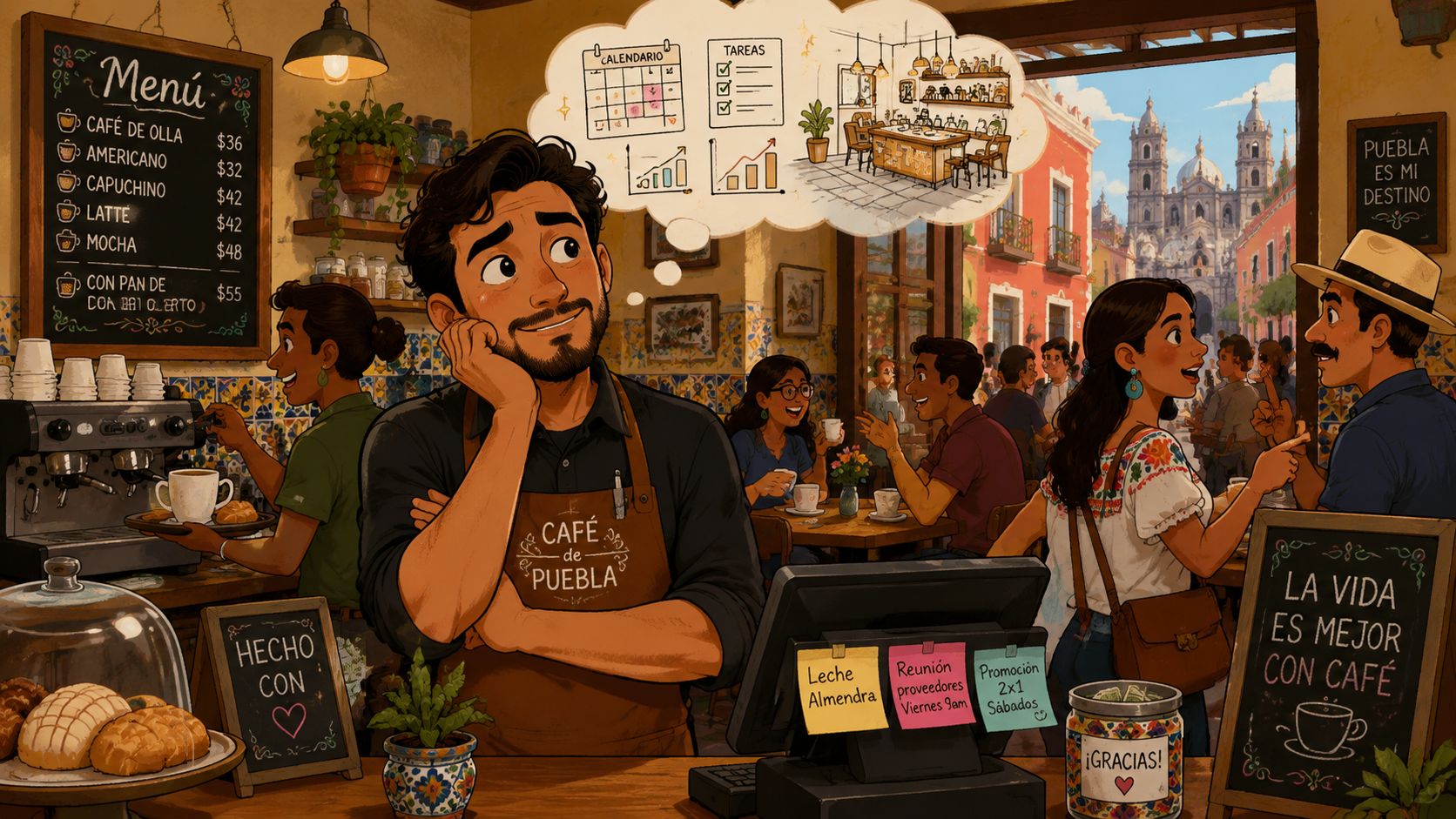
A brick-and-mortar SME usually experiences the same problem every day: people come in, buy, leave, and no one knows if they will return. It happens in a coffee shop in Puebla, in a taquería in Mexico City, in a car wash in Nuevo León, or in a gas station in the State of Mexico. There is traffic, there is transaction, there is payment. But there is no commercial memory.
This gap costs more than it seems. If the business does not identify who is buying, how often they return, which branch they visit, and which promotion actually moves the needle, it ends up selling blindly. A lot of effort is put into attracting customers and very little into retaining them. That is where a CRM stops being "software" and becomes a practical sales tool.
In Mexico, this need is not marginal. The business ecosystem is primarily made up of small businesses. INEGI reported 4,924,201 economic units in 2019, of which 99.8% were MSMEs and only 0.2% were large companies. Furthermore, those MSMEs accounted for 72.8% of the total employed personnel and 52.7% of the gross census value added, according to this analysis of CRM for SMEs in LATAM. Therefore, when an SME looks for technology, it does not need complexity. It needs control, follow-up, and simple execution.
There are also businesses that sell to companies, distributors, or local accounts. In those cases, in addition to the CRM, it is worth reviewing resources on B2B lead generators, especially if the challenge is not only to retain current customers, but to open new commercial opportunities without relying entirely on the door-to-door salesperson.
Table of Contents
Introduction: Why Your Physical SME Needs a CRM Now
A physical business does not lose customers all at once. It loses them drop by drop. The customer who went twice for coffee and was never contacted again. The driver who washed their car once and received no reminder. The family that dined at a branch and then disappeared from the radar because the operation only registered a sale, not a relationship.
The real problem is not selling once
Many guides talk about the CRM as if it were just a more organized notebook. In practice, for a Mexican SME, it works better to understand it as the place where sales, customer service, campaigns, and recurrence connect. If a coffee shop chain in Puebla knows who bought, what they bought, and how long it has been since they last returned, they can take action. If they do not know, they just wait.
Rule of thumb: a useful CRM for a physical SME does not just save contacts. It also helps decide who to contact, when to do it, and with what message.
The point is not to have more data. The point is to use simple data to drive real behaviors. A message via WhatsApp to recover visits. A coupon for a branch with slow foot traffic. A campaign for frequent customers who already deserve preferential treatment.
CRMs are no longer just for corporations
There are still business owners who believe this is for huge chains with IT teams. That idea no longer fits the reality of the Mexican market. SMEs operate with little margin for error, so they need tools that centralize without slowing down the operation.
In small businesses, what works is usually the most grounded. Seeing purchase history, segmenting by branch, launching campaigns, and measuring if the action brought the customer back. That is actually felt in the cash register. Everything else usually remains as pretty features that nobody uses.
Key Criteria for Choosing a CRM in LATAM
When someone looks for the best CRMs for SMEs, they almost always find lists full of general features. The problem is that an SME with a physical store does not buy "features." It buys the ability to sell more often, retain better, and operate without getting tangled up.
Most comparisons do not answer something basic: how the CRM connects with in-store visits, WhatsApp campaigns, purchase recurrence, and offline sales attribution. This gap is described in this review on the real value of CRM for businesses with multi-channel physical stores. To better understand this point, it also helps to review the different types of CRM for companies according to their use.
What actually matters in a physical SME
There are criteria that, on paper, seem obvious. On the sales floor, they become decisive.
Ease of adoption: if the branch manager or cashier staff needs too much training, the tool is abandoned. In a coffee shop in Puebla or a bakery in Yucatán, operations cannot halt to "learn the system."
Segmentation by branch: an SME with two or more points of sale needs to distinguish behaviors. A customer from San Pedro does not shop the same way as one from Apodaca. Neither does a customer from Polanco respond the same way as one from Ecatepec.
WhatsApp as an operational channel: in LATAM, commercial communication relies heavily on messaging. If the CRM does not help organize campaigns, follow-ups, and reactivations through that channel, it falls short.
Relationship with offline sales: many systems understand digital leads well, but not the customer who walks in, buys at the counter, and returns out of habit. For retail, food, and in-person services, that changes the entire evaluation.
Loyalty and recurrence: points, visits, rewards, or coupons are not "extras." In many sectors, they are the most direct way to drive a second and third purchase.
What usually gets in the way more than it helps
There are also red flags that are worth detecting before purchasing.
A CRM that takes too many steps to launch a simple campaign usually ends up being an expensive file.
A platform can look powerful in the demo and still be a bad decision for an SME. This happens when it requires too much initial setup, when the dashboard is made for large teams, or when it separates sales, marketing, and customer service so much that no one manages to work smoothly.
What is useful in Mexico is usually this: capturing data without friction, segmenting with real business logic, and activating campaigns without depending on an external consultant every week.
Comparative Table of the Best CRMs for SMEs
For a quick read, it is helpful to look at the options from the operational perspective of the physical business. The difference is not just in "how much" each platform does, but in how easily it makes daily execution for an SME.
Quick comparison of CRMs for SMEs in LATAM
Platform | Ideal for | Ease of use | Physical store focus | Omnichannel (WhatsApp) | Starting price (approx.) |
|---|---|---|---|---|---|
Swirvle | Businesses with branches, loyalty, and repurchase campaigns | Good | Excellent | Excellent | Variable based on operation |
HubSpot | Teams that prioritize acquisition and sales follow-up | Good | Basic | Good | Free plan available |
Zoho CRM | SMEs looking for flexibility and cost control | Good | Good | Good | From affordable entry |
Pipedrive | Simple sales teams and pipeline tracking | Excellent | Basic | Basic to good | Pay per user |
How to read this table
Not all SMEs need the same thing. A car wash chain in the State of Mexico needs branch segmentation and reactivation campaigns. A commercial firm in Monterrey might value pipeline control more. A boutique in Baja California might need both, but with a strong emphasis on recurrence.
The best decision is usually not the platform with the most modules. It is usually the one that the team actually uses from Monday to Saturday.
Therefore, when evaluating the best CRMs for SMEs, it is best to first look at the type of operation. Then, the main channel of contact. Finally, the team's actual capacity to adopt it.
Detailed Analysis of the Best CRM Platforms
This is where we separate the useful from the bulky. There are platforms that are good for marketing, others for sales follow-up, and others for businesses that thrive on recurring visits, repurchases, and branches. It is not wise to put them all in the same bucket.
According to this analysis on CRM adoption in SMEs, in Mexico, one platform stands out with an 81% share in SMEs with sales teams of fewer than 20 people thanks to its free plan. The same analysis places two alternatives behind, with one of them standing out for a 92% satisfaction rate and another for reducing adaptation time by 35% compared to the first in businesses without digital marketing. This data helps, but the correct criterion remains the fit with the actual operation.
It is also worth checking how practical automation features are advancing in an AI-powered CRM for business, especially when the goal is to save time on follow-ups and repetitive campaigns.
Option focused on physical store operation
When the business relies on branches, repurchases, and campaigns triggered by customer behavior, a specialized platform usually has the upper hand. That is where cases that require the following fit best:
Segmenting by branch
Triggering campaigns based on visits, spend, or inactivity
Linking promotions with in-person sales
Running loyalty programs without setting up separate tools
Swirvle fits into that logic because it combines CRM, loyalty, automation, and measurement for physical businesses. It is not designed solely as a prospect notebook, but as a commercial layer on top of daily operations.
Its greatest value appears in sectors like coffee shops, restaurants, car washes, gas stations, and small retail chains. There, the challenge is usually not to "close complex deals," but to get the customer to return and spend more.
Option oriented toward marketing and acquisition
There are platforms that stand out when the business needs to organize forms, incoming contacts, sales follow-up, and digital campaigns in a single environment. For SMEs with a more commercial than operational focus, that can be enough.
Their main advantage is breadth. They help organize databases, automate some acquisition processes, and give structure to the team. Where friction begins is in physical businesses that want to connect what happens at the register with recurrence campaigns without adding too many extra pieces.
Ideal use case: a service company in Monterrey with a small sales team, defined processes, and a strong need to capture new opportunities.
Option balancing cost and customization
Another category works well for SMEs that want to configure fields, flows, and views without overpaying from the start. It is usually attractive for businesses that value flexibility and control.
The fine point lies in who will do that customization. If the SME has time to adjust processes, they can benefit. If the team is already pushed to the limit between operations, cash register, inventory, and service, a highly moldable platform can also turn into an eternal pending task.
Ideal use case: a distributor in Puebla or a small service chain that wants to adapt the system to its way of working and has someone to follow up on it.
Option for simple commercial processes
There is also the option that prioritizes visual clarity and opportunity progress. It is useful when the main process of the business resembles a classic sales funnel. Contact, follow-up, proposal, close.
This works well for consultative sales or one-on-one business relationships. It works less when the business depends on frequent traffic, WhatsApp campaigns, and rewards based on buying behavior. In a coffee shop, a taquería, or a convenience store, the bottleneck is not always moving a deal through stages. It is in reactivating the right customer with the right offer.
What usually works best by type of operation
Type of operation | What to prioritize |
|---|---|
Restaurant or coffee shop | Loyalty, visits, campaigns for inactivity |
Car wash or recurring service | Reminders, repurchase, segmentation by frequency |
Retail with branches | Segmentation by point of sale, local campaigns |
B2B sales team | Pipeline, tracking opportunities, traceability |
Use Cases by Business Type
CRM adoption is not fully understood until it hits the floor. In Mexico, this matters even more because customers move between physical stores, messaging, and digital purchases. AMVO estimated that in 2024, retail e-commerce in Mexico reached 789.7 billion pesos, with an annual growth of 20%, according to this analysis on CRM for SMEs and the changing point of sale. The point no longer ends at the register. It ends when the business knows who bought, why they returned, and what channel activated them.
Taquerías and restaurants with high-frequency tickets
A taquería chain in Mexico City can use a CRM to detect customers who stopped visiting a specific branch. Instead of launching an open promotion to everyone, it is better to send a targeted WhatsApp campaign to those who did buy there and have not returned in a while.
This avoids wasting discounts. It also helps to better measure which action drives actual traffic and which one just generates noise. In food businesses, frequency carries more weight than a single high ticket.
Car washes, gas stations, and recurring visit businesses
A car wash in Baja California needs another logic. Its sales do not depend so much on the season, but on habit. If the system identifies how much time passes between visits, it can trigger reminders, coupons, or rewards based on customer behavior.
Anyone who wants to land that case in more detail can review these benefits of having a CRM in a car wash. There you can clearly see why a frequent service SME needs less sales talk and more useful automation.
When the customer buys out of habit, the CRM should not chase leads. It must protect recurrence.
Retail with several branches
A clothing boutique in Yucatán or a small chain in Nuevo León usually has a different pain point. They have active customers, but not a clear view of which branch generates the most repurchases, which profiles respond to product launches, and which ones only react to promotions.
In this context, a CRM helps when it allows segmenting campaigns by branch, creating segments based on consumption habits, and tracking customers with the highest potential for repurchase. That actually changes decisions. It allows stopping sending the same message to the entire database and starting to work with commercial intent.
Recommendation: Why Swirvle is the Best CRM for Physical SMEs
For a physical SME, the question should not be which system has the most modules. It should be which system helps sell better without creating new friction. That point is often lost in many comparisons.
There is a key observation in this review on hidden costs and CRM adoption in SMEs: the problem is not just "which CRM is better," but "which CRM is actually used and can be sustained." In small businesses, operational friction weighs heavily. If the tool takes too long to adopt, the operation will reject it.
Where a specialized platform wins
Swirvle turns out to be the most logical option for SMEs with physical stores because it addresses the right problem. It does not focus solely on leads or pipelines. It focuses on retention, behavior-based campaigns, branch segmentation, loyalty programs, and ROI measurement in in-person operations.
This is especially useful in sectors like:
Coffee shops and restaurants: where the second, third, and fourth visits matter more than a single purchase.
Car washes and recurring services: where the business thrives on habit and reminders.
Retail with several branches: where a generic campaign rarely works the same way across all locations.
Gas stations and convenience formats: where frequency and average ticket are worked on using simple data, not complex reports.
Additionally, its approach fits with small teams. Fewer steps to launch campaigns. Less reliance on endless configurations. Closer connection to a common operational reality in Monterrey, CDMX, Puebla, or the State of Mexico.
When another class of CRM is better
Not all SMEs need the same approach. If the business is more commercial than physical, or if it relies on prospects and one-on-one closing, a CRM more oriented toward pipelines and opportunity tracking might be more suitable.
But for those looking for the best CRMs for SMEs with physical stores, branches, WhatsApp, and loyalty programs, the scale tips. In that arena, specialization weighs more than breadth. What matters is not having more screens. What matters is turning visits into recurrence and campaigns into measurable sales.
Frequently Asked Questions about CRMs for SMEs
Is a CRM worth it if there is only one branch?
Yes, if the business wants to stop relying on memory, notebooks, or scattered messages. A single branch also needs to identify frequent customers, reactivate inactive ones, and measure which promotion actually works.
How long does it take to see real utility?
It depends on how organized the operation is and if the business is already capturing customer data. Practical utility usually appears first in tracking, segmenting, and simple campaigns. The important thing is to start with a few well-defined flows.
Does a CRM help even if the business sells almost entirely in-person?
Yes. In fact, that is where it can be most valuable. It helps connect visits, frequency, purchase history, and subsequent communication.
What is the most common mistake SMEs make when purchasing one?
Buying based on a feature list rather than the use case. If the system feels too heavy for the register, branch, or local marketing, it ends up underutilized.
What should be resolved first?
Three things: capturing data well, segmenting with business logic, and activating campaigns that the team can actually sustain week after week.
If the goal is to retain more customers, increase recurrence, and connect campaigns with real in-store sales, Swirvle deserves a serious look. It is designed for physical SMEs in LATAM that need to run CRM, loyalty, and automation without complicating their day-to-day operations.
Related Blogs

Sep 19, 2026
Effective promotions to increase sales during low-traffic hours: 2026 guide

Sep 18, 2026
Examples of coffee shop loyalty programs (physical and digital)

Sep 17, 2026
Pros and cons of the "free coffee for the first 100 customers" promotion

Sep 16, 2026
How to organize a private coffee tasting: a practical guide

Sep 14, 2026
How to optimize Google Business Profile for barber shops

Sep 13, 2026
The best customer retention software for coffee shops
Try Swirvle for free
No card required · 30 days free
Start your free trial