Discover the types of restaurant service: from formal to delivery. Learn how to choose and optimize the ideal one for your business and customers.
What Service Defines Your Restaurant's Success? Choosing the right type of service is one of the most critical decisions for a restaurant. It is not just about how the dishes are delivered, but how the entire customer experience is built, operations are optimized, and profitability is driven. Are you looking for the elegance of a fine dining establishment in San Pedro, Nuevo León, the efficiency of a taquería in Mexico City, or the scalability of a specialty coffee shop? In this guide, we break down the 7 main service models, their advantages, disadvantages, and, most importantly, how the right technology can boost each one to convert visitors into loyal customers.
The decision almost never fails because of the concept. It fails in the execution. A restaurant can have a solid kitchen and still lose money because the service does not correspond to the actual flow of customers, the expected ticket, or the team's capacity. That happens in a coffee shop with a long line in La Condesa, in a hotel buffet in Cancún, and in a family barbecue in Monterrey.
Something else also happens. Many owners talk about operation and experience separately, when in reality they go together. If you choose well among the different types of service in a restaurant and connect that model with tools like CRM, POS, WhatsApp, and loyalty, you stop improvising. You start repeating what actually works.
Table of Contents
1. Formal Service
Where it does work
How to make it profitable without cheapening it
2. Casual Service
Why it dominates in so many businesses
What to watch out for so it doesn't become generic
3. Counter Service
When speed actually sells
The typical mistake in taquerías and coffee shops
4. Grab-and-Go / Delivery Service
Profitable delivery versus third-party delivery
What is best to automate first
5. Self-Service
Where this model leaves more margin
The typical mistake is not in the food, but in the flow
How to use Swirvle so that self-service does not rely only on volume
6. Communal Table Service
The communal table lives or dies by coordination
How to turn groups into recurring customers
7. Experience and Theater Service
When the service also tells the story
The technology behind a memorable experience
Comparison: 7 types of restaurant service
The Ideal Service: Your Next Strategic Step
1. Formal Service
Formal service still works when the customer pays for ceremony, attention, and detail, not just food. This is where classic variants like French service and English service come in. Both require trained staff, controlled times, and a room that looks coordinated, not improvised.
In Mexico, this format fits best in luxury restaurants, high-end hotels, and special occasion dinners in areas like Polanco, San Pedro Garza García, or Los Cabos. I would not put it in a concept that lives on rapid turnover. The staff cost and the level of execution it requires heavily penalize a business that depends on volume.
Where it does work
A hotel in Baja California serving anniversary dinners needs protocol, not rush. A fine dining room in Mexico City needs the waiter to know how to present a dish, read the pace of the table, and detect when to intervene. A poorly executed formal service is immediately noticeable because the customer expected precision.
English service, moreover, has a limited presence in very specific events. In elite weddings in Mexico, it remains in a small portion of the market, with an adoption rate of 12% and an operational requirement of up to 1 waiter for every 10 people, according to this historical review on the origin of food and beverage service in Monografías. That explains why many restaurants reserve it for premium banquets and not for daily operations.
Rule of thumb: if your ticket needs a narrative, the team must learn to tell the story of the dish with the same discipline with which they serve the table.
How to make it profitable without cheapening it
What does work is using a CRM to register details that the customer does not want to repeat. Water preference, allergies, anniversary date, favorite wine, regular table. There, a tool like Swirvle stops being marketing and becomes operations. If you want to dive deeper into strategies for this type of business, it is worth checking out specialized content for restaurants and commercial operations.
It is also wise to confirm via WhatsApp before the reservation. Not to spam, but to anticipate. If you know that a couple is coming for an anniversary or an executive who always orders without certain ingredients, you reduce friction and elevate the perception of service without putting more people on the floor.
2. Casual Service
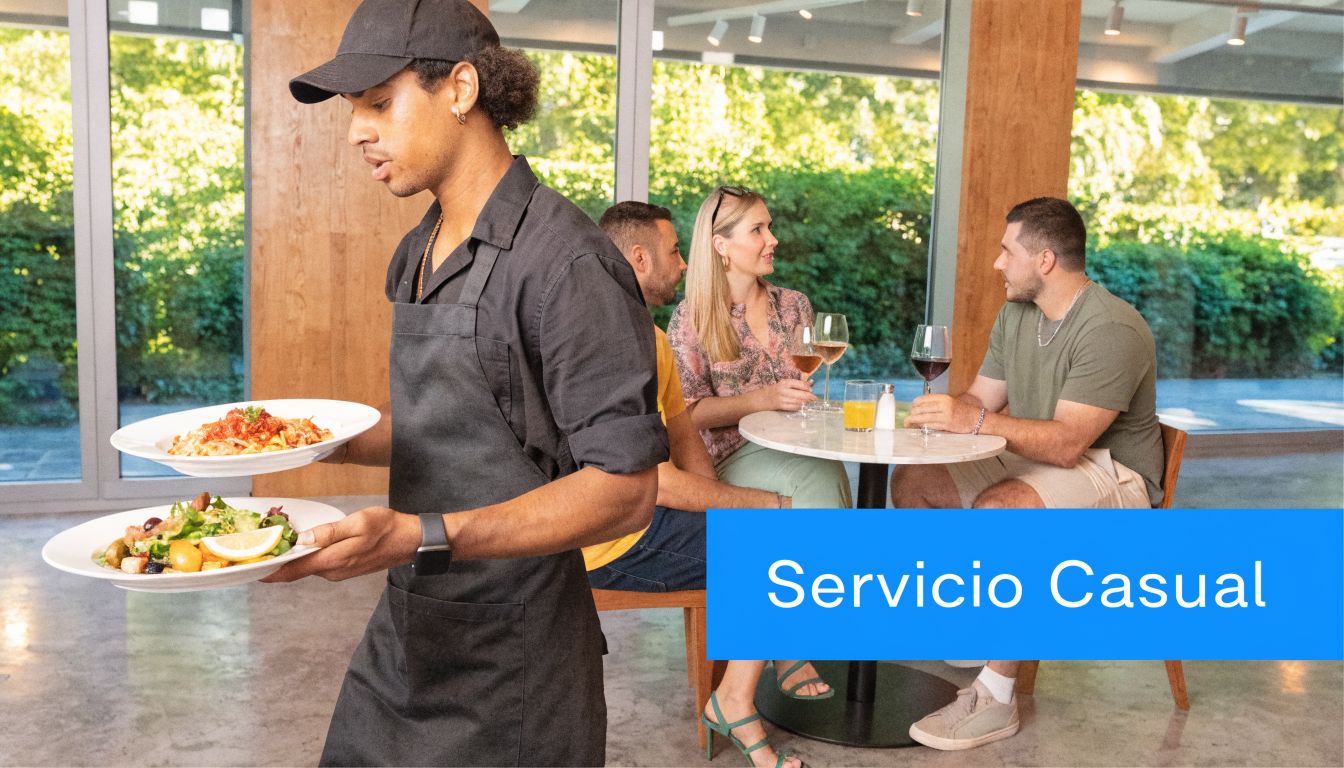
If one model dominates the operational conversation in Mexico, this is it. American service, also called plated service, gained ground because it simplifies. The kitchen finishes the dish, the front of house delivers it, and the flow becomes more stable. This works just as well for a specialty coffee shop in La Condesa as it does for a casual restaurant in a shopping mall in Puebla.
The numbers explain it. In Mexico, American service dominates 75% of restaurants and operates in a market with more than 250,000 registered establishments, according to data cited in Scribd on types of services and history. It is no coincidence. The model solves consistency, speed, and visual control of the dish.
Why it dominates in so many businesses
In daily operations, casual service reduces friction between the kitchen and the floor. The kitchen sends out finished plates, the waiter does not do assembly in the dining room, and the experience is more uniform across locations. For a small business with several units, that standardization is worth a lot.
Additionally, this type of service in a restaurant adapts to hybrid concepts. A gourmet burger joint in the State of Mexico can operate with carefully curated aesthetics and contained times. A carwash with a coffee shop in Monterrey can use the same principle: agile service, clear ordering, fast delivery, and a subsequent reminder to return.
What to watch out for so it doesn't become generic
The risk of casual service is not operational. It is commercial. Because it seems easy, many businesses turn it into a forgettable experience. The customer returns, orders the same thing, and nobody recognizes them. That is where the advantage of a CRM with loyalty comes in. A well-designed program can track frequency, favorite products, and campaigns by branch, as explained in this guide on restaurant loyalty programs.
It is useful to capture order modifiers and use them later. "No onion," "oat milk," "outdoor table," "morning visit." This allows you to send relevant messages, not generic promotions. If a branch in Coyoacán sells more breakfasts and another in San Pedro sells more dinners, you should not talk to both segments in the same way.
For coffee shops: reward frequency, not just spend.
For casual chains: segment by branch before launching campaigns.
For hybrid concepts: connect order, visit, and reward in the same flow.
3. Counter Service
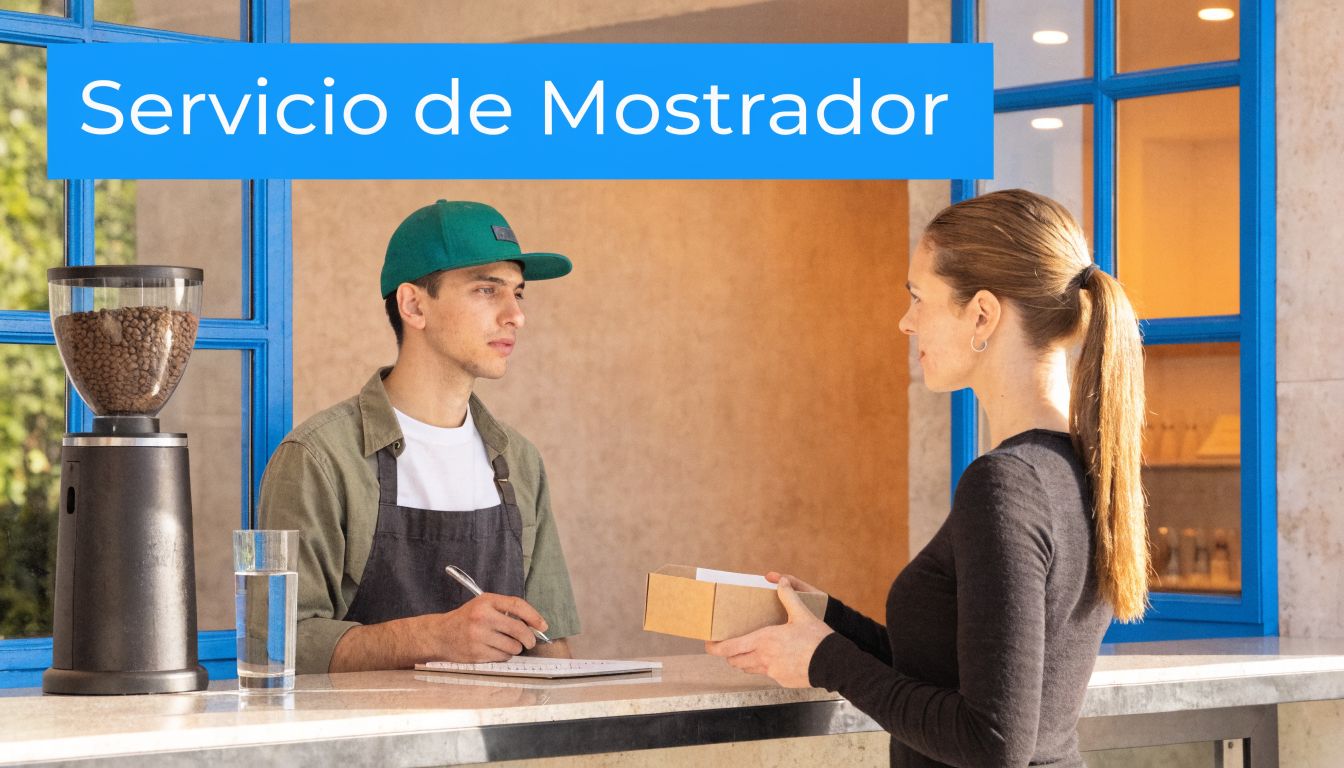
There are businesses where seating, taking orders, and waiting for the waiter simply get in the way. Counter service works when the customer's decision is almost already made. This happens in high-turnover taquerías, modern bakeries in Mérida, coffee bars with high pedestrian traffic, and venues where speed matters more than lingering over the table.
The logic is similar to a well-operated modern gas station. The customer arrives, understands quickly, pays, receives, and goes on their way. When well-set-up, this model reduces friction. When poorly set up, it generates lines, order errors, and abandonment.
When speed actually sells
Counter does not mean coldness. It means designing the experience so that everything is obvious. Clear menu, linear flow, visible waiting area, and orderly delivery. In a busy coffee shop, that can make the difference between a tolerable line and one that scares customers away.
Here, the POS rules. If the system is separate from the customer history, you waste valuable information every day. A good starting point is to integrate checkout, modifiers, and data capture into a restaurant point of sale system that feeds your CRM and doesn't leave tickets isolated.
The typical mistake in taquerías and coffee shops
The most common mistake is believing that, because it is a fast service, there is no need to build a relationship. It is the opposite. Since the interaction lasts a short time, you need to design a simple mechanism to capture name, phone number, or loyalty affiliation. A QR code at checkout, a reward per visit, or a birthday benefit can do the job without slowing down the line.
A counter without data capture sells today. A counter connected to CRM sells today and tomorrow.
It also helps to segment by time of day. The breakfast customer in Puebla does not behave the same way as the late-night craving customer in CDMX. If you identify that pattern, you can trigger more precise messages via WhatsApp and avoid the classic mass coupon that no one feels is meant for them.
4. Grab-and-Go / Delivery Service
It is 9:15 p.m. at a pizzeria in Guadalajara. The kitchen is doing well, orders are going out every few minutes, and app orders keep rolling in. At the register, it looks like a great night. In real operations, not so much. If that volume does not yield first-party data, purchasing habits, and a way to reactivate the customer without paying a commission again, the restaurant is selling rented traffic.
This service includes takeaway, pickup, and delivery. It works very well for concepts that live on speed, repetition, and area coverage, such as dark kitchens in the State of Mexico, burger joints in Monterrey, or virtual brands operating from a single kitchen in Puebla. The point is not just to move orders. The point is to preserve margin while growing recurrence.
Profitable delivery versus third-party delivery
The profitability of this model is decided on three fronts: departure time, quality upon arrival, and the ability to sell again through your own channel. If one fails, the margin squeezes quickly. A lukewarm order, a poorly packed bag, or an unrealistic delivery promise costs more than a complaint. They cost repurchase.
Here, Swirvle provides clear operational value. It allows you to centralize customer data even if the order originated from different channels, tag frequency, ticket size, and delivery zone, and activate useful campaigns instead of mass promotions. In formal service, it helps identify VIPs. In takeaway/delivery service, it helps detect who has already ordered three times through an app and is ready to migrate to direct ordering with a well-targeted incentive.
The goal is not to fight with the platforms. The goal is to use them to acquire demand and then build your own database.
What is best to automate first
There is no need to set up complex machinery from the first month. It is best to automate what impacts repetition and margin the most.
Post-delivery follow-up: a short message to confirm the order arrived well and capture any issues before losing the customer.
Inactive recovery: a campaign for those who stopped ordering 20 or 30 days ago, with an offer designed for direct delivery.
Own-channel benefits: coupon, beverage, or preferred shipping for orders placed via WhatsApp or your own site.
Useful segmentation: separate by neighborhood, time, average ticket, and type of consumption. Someone ordering a daily lunch special at noon in Querétaro does not buy the same way as someone solving a family dinner in Tijuana.
There is a common mistake in this model. Many restaurants invest in ads, photos, and packaging, but do not design the second purchase. Without that piece, takeaway/delivery becomes a volume race with a fragile margin.
A sushi restaurant in CDMX and a pizzeria in Mexicali can have the same symptom: many tickets, little customer memory. The operation changes when each order feeds an actionable database and Swirvle triggers reminders, area-based promotions, and reactivation campaigns with commercial logic. That is when takeaway/delivery stops relying solely on the customer's rush and starts generating predictable recurrence.
5. Self-Service
It is 2:10 p.m. in a corporate cafeteria in Apodaca. Dozens of people come in during the same time window, want to eat quickly, and return to the work floor. If the line moves, the counter looks clean, and payment goes through without friction, self-service delivers on its promise. If restocking is slow or the flow gets stuck at the register, the model loses value in minutes.
That is why self-service works well in buffets, salad bars by weight, industrial cafeterias, and hotel breakfasts. The customer appreciates two very specific things: choosing at their own pace and reducing downtime. In Santa Fe, a salad bar can survive by solving office lunch in less than half an hour. In Cancún, a hotel buffet needs to serve very different profiles with a single operation.
Where this model leaves more margin
Self-service usually wins where there is predictable volume and fast purchasing decisions. A breakfast buffet accommodates families, business travelers, and groups without heavily taxing the floor staff. A pay-by-weight bar in CDMX improves turnover because customers assemble their plates, pay, and free up space faster. A corporate cafeteria in Nuevo León reduces operational friction because it concentrates production and simplifies service.
It has an advantage that many underestimate. The cost is not just in serving. It is also in coordinating waiters, taking orders, correcting mistakes, and managing wait times. In self-service, part of that complexity disappears, but another arises: keeping stations immaculate, constant stocking, and logical circulation.
That is where the experience is defined.
The typical mistake is not in the food, but in the flow
I have seen buffets with good kitchens lose repeat sales due to poor operational sequencing. The entrance gets crowded, clean plates are not ready on time, the main protein runs out right at peak hour, and nobody tracks who came. The customer may have eaten well, but left with a sense of disorder.
In this format, visual order matters a lot. More than in a table-service restaurant. If the buffet bar looks neglected, the diner assumes the food is less fresh, even if the kitchen is working hard.
How to use Swirvle so that self-service does not rely only on volume
Many self-service businesses sell a lot and remember little. That is the ceiling of the model. Swirvle helps lower this dependence on spontaneous traffic with simple and measurable processes.
In a hotel buffet, it is useful to identify frequent guests, peak occupancy times, and basic preferences to activate breakfast, brunch, or themed dinner offers. In a pay-by-weight bar, it helps to register recurring visits and average tickets to launch frequency benefits without giving away too much margin. In corporate cafeterias, the opportunity lies in segmenting by company, shift, or location to offer packages, agreements, and more precise B2B communication.
It also works to place a QR code at the exit or on the table to capture data while the visit is still fresh. If the person has finished eating and the process was smooth, it is easier to get registration, feedback, and permission for contact. Then Swirvle can automate campaigns for weekday returns, branch-specific promotions, or specific messages for high-spending customers.
Self-service looks simple from the outside. Operating it well requires discipline. Those who master flow, replenishment, and data capture turn a functional buffet bar into a profitable and much more predictable unit.
6. Communal Table Service
The communal table sells social gathering. That is its greatest value and also its greatest challenge. If the dishes for sharing come out out of sync, the experience breaks. If they come out well, the group consumes more, stays longer, and remembers the visit better.
This model shines in tapas joints in La Roma, barbecues in Monterrey, family gatherings in Puebla, and countryside dining in Valle de Guadalupe. It also works very well for office teams, celebrations, and weekend lunches where a whole table decides as a group.
The communal table lives or dies by coordination
Unlike individual casual service, here the isolated dish matters less than the sequence. Appetizers, mains, extras, drinks, and times between rounds. If a barbecue dish arrives late or incomplete, it is not just the kitchen that failed. The entire social experience failed.
On the positive side, this service makes it easy to read the purpose of the visit. A family does not behave the same way as a group of friends or a corporate team. If you log that in the CRM at the time of reservation, you can prepare the table better and personalize follow-up.
How to turn groups into recurring customers
The trick is not to talk to the whole group afterward. It is to identify the organizer. The person who booked, who paid, or who coordinated via WhatsApp is usually the person most likely to return with another group. There, it makes sense to automate a thank you and a reward for a future reservation.
Corporate group: offer ease of coordinating upcoming team lunches.
Birthday or celebration: log the date and activate communication before the next event.
Frequent families: recognize regular hours and typical table size.
Weekend friends: drive early reservations with clear benefits.
In this type of restaurant service, the sale does not end when the bill is closed. It ends when you convert a table of eight into several future visits of two, four, or ten people.
7. Experience and Theater Service
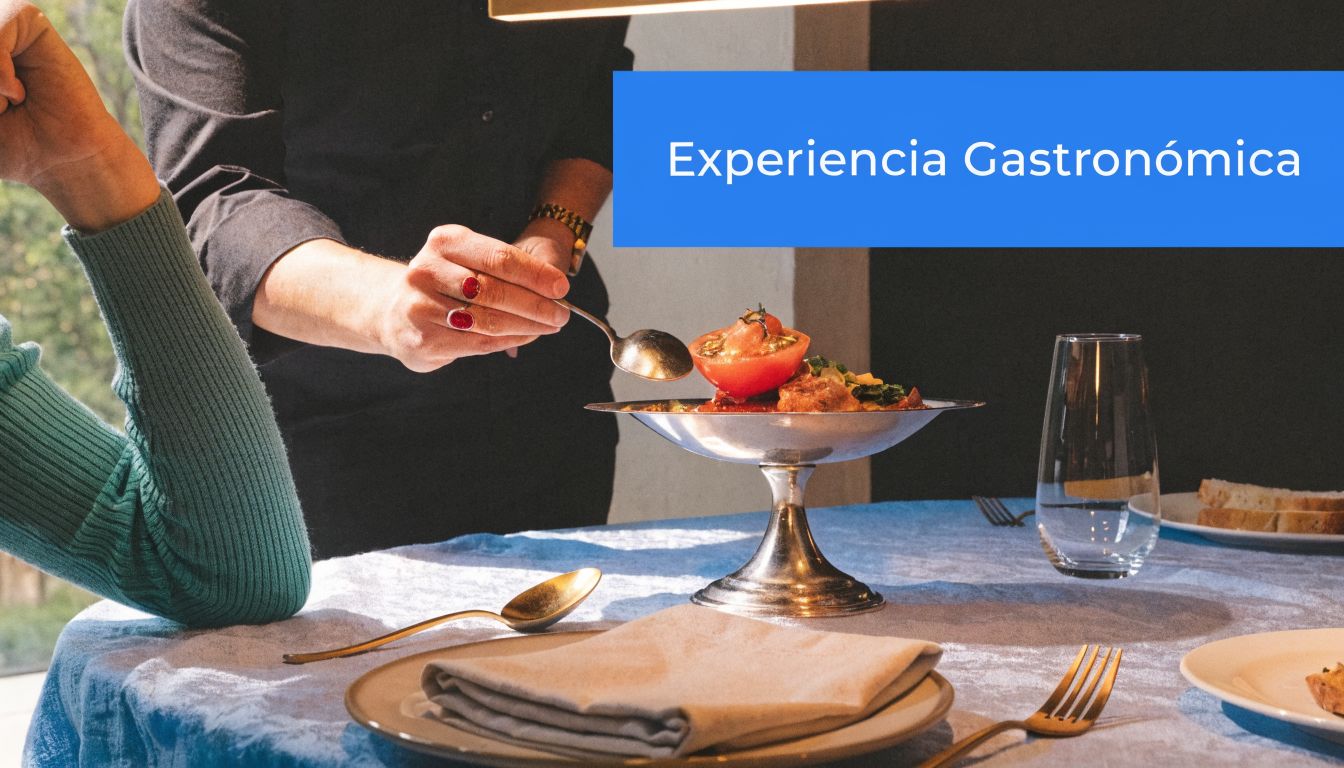
There are concepts where serving well is not enough. The service must also excite, surprise, and maintain a narrative. This happens in tasting menus, themed pop-ups, and immersive setups where the cuisine, lighting, music, and the team's storytelling form a single scene.
In Mexico City or Cancún, this format usually appears in avant-garde restaurants and high-ticket venues. It is not a model to scale carelessly. It requires fine training, absolute consistency, and a lot of preparation before opening doors each night.
When the service also tells the story
Here, the waiter does not just deliver plates. They interpret the pace of the experience. They explain, pause, observe, and adapt. If the customer feels the narrative is memorized rather than personalized, the concept loses its power.
That is why this model depends heavily on prior information. Dietary restrictions, occasion, wine history, anniversaries, and seating preferences are not administrative data. They are part of the script. The better informed the team is before service, the more natural the experience feels.
“Surprise works best when there is preparation behind it, not improvisation.”
The technology behind a memorable experience
A well-used CRM can operate as a living file on the diner. There is no need to fill out endless forms. You just need to save what actually helps to serve them better next time. If a couple celebrates their anniversary every year, if a customer avoids a certain ingredient, or if someone responded very well to a private experience, that information has real operational value.
In Mexico, interest is also growing in integrating hybrid service formats with loyalty and personalization. This angle is highlighted in Ingeniería de Menú on types of restaurant services, which suggests the combination of service and CRM as an underserved opportunity for small businesses. In an experiential concept, this becomes even more powerful because every detail before and after can reinforce the perception of exclusivity.
What does not work is using automation with a mass tone. A cold email after a memorable dinner destroys part of the effect. On the other hand, a carefully crafted message, early access to a new experience, or a well-targeted private invitation does keep the magic alive.
Comparison: 7 types of restaurant service
Model | Implementation Complexity | Required Resources | Expected Results | Ideal Use Cases | Key Advantages |
|---|---|---|---|---|---|
Formal Service (Service à la Française / Service à l'Anglaise) | High, strict protocols and coordination | Highly trained staff, uniforms, spacious layouts, continuous training | Premium experience, lower table turnover, high average ticket | Luxury restaurants, 5* hotels, special events | High-end brand image, personalization, upselling opportunities |
Casual Service (American Service) | Medium, flexible protocols | Quickly trainable waiters, standardized POS, operational manuals | Good turnover, consistency across branches, efficiency | Coffee shops, casual chains, multi-location small businesses | Scalable, low training cost, improved margins |
Counter Service (Counter Service) | Low, simplified processes | Counter/kiosks, integrated POS, less floor staff | Maximum speed, low labor costs, high standardization | Taquerías, food courts, fast-casual, high-traffic coffee shops | Highly efficient, easy to scale, complete order data capture |
Grab-and-Go / Delivery Service (Takeaway / Delivery Focus) | Medium, tech integration and logistics | Specialized packaging, app integrations, optimized kitchen (dark kitchen) | Expanded geographic reach, digital sales, smaller dining area | Dark kitchens, pizzerias, restaurants with high delivery demand | Lower rent, wider reach, digital data for direct marketing |
Self-Service (Self-Service / Buffet) | Medium, flow design and inventory control | Stations/buffet, replenishment systems, waste control | Reduced staffing costs, high turnover, perception of value | Corporate cafeterias, hotel buffets, pay-by-weight restaurants | Less floor staff, high volume, value perceived by customer |
Communal Table Service (Communal / Family Style) | Medium, logistics for groups and shared menus | Large tables, sharing platters, group service training | Higher tickets per group, social atmosphere, event bookings | Tapas, barbecues, family dinners, and group events | Increases average ticket, generates memorable experiences, drives word of mouth |
Experience / Theater Service (Fine Dining Experience Service) | Very high, multi-sensory synchronization | High-level chefs and sommeliers, scenic design, high investment | Extreme differentiation, ultra-premium positioning, media coverage | Tasting menu restaurants, avant-garde concepts, exclusive pop-ups | Unique positioning, deep loyalty, high upselling potential |
The Ideal Service: Your Next Strategic Step
There is no universally better type of service. There is only the one that best aligns with your concept, your location, your operational flow, and your customer's actual behavior. A taquería in Mexico City does not need to copy the protocol of fine dining in San Pedro. A corporate buffet in Nuevo León should not operate like a boutique coffee shop in La Roma. The most expensive mistake is usually wanting to look like another business instead of designing a service that actually works for your own.
The second important decision is not just which model to adopt, but how much control you will have over the relationship with your customers. That is where many restaurants fall short. They set up a good service on the floor or a good delivery output, but they do not capture data, do not segment habits, and do not trigger return visits. Consequently, each day starts from scratch.
Among the different types of restaurant service, some privilege speed, others ceremony, others volume, and others socializing. They all share an operational truth: if you do not document preferences, frequency, purchase channel, and visit context, you waste future sales opportunities. That information is just as valuable for a grab-and-go coffee as it is for an anniversary dinner.
It is also useful to view service as a profitability tool, not just hospitality. A counter model can lower friction and sustain high volume. A formal service can justify a higher ticket if the team masters the experience. A well-designed self-service can serve large groups with more order. A communal table can turn one celebration into several future visits if the restaurant identifies the organizer and nurtures that relationship afterward.
Technology comes in right there. Not to replace the human touch, but to make it more consistent. A CRM like Swirvle allows you to centralize data, segment by branch, record dining habits, and automate campaigns that actually make sense according to the type of service you operate. In a multi-unit small business, this reduces improvisation. In a brand looking to grow, this helps repeat what has already proven to work.
If you are evaluating which path to take, start with a simple question: does your current service help sell more and retain better, or does it just help get orders out? The answer usually makes the next step clear. Choose the right model, execute it with discipline, and use technology to turn each visit into a more profitable relationship.
If your restaurant, coffee shop, dark kitchen, bakery, or branch chain is already operating well but still relies too much on occasional customers, Swirvle can help you convert every service into a real loyalty strategy. Centralize customer data, segment by habits and location, automate campaigns via WhatsApp, email, and push, and measure which actions actually generate return visits and sales. It is a platform designed for small businesses in Mexico and LATAM that want to grow with more commercial control, not just more traffic.
Related Blogs

Sep 19, 2026
Effective promotions to increase sales during low-traffic hours: 2026 guide

Sep 18, 2026
Examples of coffee shop loyalty programs (physical and digital)

Sep 17, 2026
Pros and cons of the "free coffee for the first 100 customers" promotion

Sep 16, 2026
How to organize a private coffee tasting: a practical guide

Sep 14, 2026
How to optimize Google Business Profile for barber shops

Sep 13, 2026
The best customer retention software for coffee shops
Try Swirvle for free
No card required · 30 days free
Start your free trial