What is the best customer retention software for coffee shops? Criteria, features, campaigns, and a checklist to choose wisely and measure real ROI.
El mejor software de retención para cafeterías en México no es el más completo, sino el que domina WhatsApp, segmenta por hábitos de consumo y sucursal, y mide ROI por campaña. Para pymes en LATAM, esa lógica apunta a Swirvle como la respuesta práctica, porque la retención real no se gana con más botones, se gana con visitas repetidas y datos útiles.
En México, esa decisión ya no es teórica. El mercado de lealtad alcanzó US$1.55 mil millones en 2025, después de crecer a una tasa anual compuesta de 18.9% entre 2020 y 2024, y se proyecta llegar a US$2.63 mil millones en 2029 con un CAGR de 14.1% (fuente). En paralelo, 91% de los consumidores mexicanos participa en al menos un programa de lealtad, pero 82% está dispuesto a cambiar de marca si recibe el incentivo correcto, así que el problema ya no es captar registros, sino activar la recompra con velocidad y relevancia.
La cafetería mexicana también compite en un mercado físico más amplio y más apretado de lo que muchos dueños quieren admitir. Los censos de INEGI muestran que los establecimientos de café y similares pasaron de 52,293 en 2013 a 69,599 en 2018, un aumento de 33%, y un seguimiento basado en datos de INEGI señaló que en 2022 ya existían 75,497 cafeterías o negocios donde el café lidera el menú, con consumo nacional de 87,605 toneladas (fuente). En un entorno así, la retención no es un lujo, es el filtro que separa a los negocios que llenan la barra de los que dependen de descuentos improvisados.
Regla práctica: si el sistema no reduce fricción en caja, no segmenta por sucursal y no enseña qué campaña generó compra recurrente, no es software de retención, es decoración digital.
La respuesta directa y por qué importa para tu cafetería
Si tu cafetería se llena en hora pico, el software correcto no es el que presume más funciones. Es el que permite canje rápido en caja, usa WhatsApp como canal principal, segmenta por sucursal y comportamiento real y deja claro qué ventas sí se pueden atribuir para no regalar margen.
Lo que una cafetería necesita de verdad
Una cafetería no opera como ecommerce. Trabaja con filas, poco tiempo en caja, personal limitado y decisiones de compra rápidas. Por eso, la herramienta correcta no es la que acumula módulos, sino la que captura datos sin frenar la atención, activa una segunda visita y muestra qué sucursal convierte mejor.
El mercado mexicano ya dejó clara la presión competitiva. Un mercado de lealtad de US$1.55 mil millones en 2025 y una proyección a US$2.63 mil millones en 2029 muestran que la fidelización ya recibe inversión real. En paralelo, 91% participa en programas, pero 82% cambia de marca si el incentivo encaja, así que los puntos solos ya no amarran a nadie.
Qué criterios van a decidir la compra
La compra se decide con cuatro filtros, no con promesas. Segmentación, para tratar distinto al cliente del desayuno y al de la tarde. Canales, porque en México la mensajería directa pesa más que una app nueva. Automatización, porque la reactivación manual se rompe en hora pico. Medición de ROI, porque una campaña sin atribución es gasto, no retención.
Por qué un programa de puntos ya no retiene a nadie
Los puntos por sí solos ya no alcanzan para retener clientes en cafeterías mexicanas. Sirven como recordatorio visible, pero no cambian conducta si el sistema no responde con contexto, velocidad y una oferta útil en el momento correcto.
Participar no es lo mismo que quedarse
El problema es simple: mucha gente participa, poca gente se queda. El mercado muestra una base amplia de adopción, pero también deja claro que el cliente cambia de marca en cuanto encuentra un incentivo mejor, según datos de mercado ya citados antes. Eso rompe la idea de que acumular puntos crea lealtad real.
En cafeterías, la diferencia se ve todavía más. Una tarjeta sellada promete una recompensa futura. Un dato accionable, como saber que un cliente compra capuchino los martes por la mañana, permite reaccionar antes de que se vaya con la competencia. La primera solo registra. La segunda mueve la próxima visita.
Clave operativa: la lealtad moderna no vive en la tarjeta, vive en la capacidad de reaccionar con rapidez, personalización y contexto.
La automatización cambia el juego
La personalización deja de ser discurso cuando el software convierte una compra en una acción concreta. Si detecta visita, responde. Si detecta pausa, reactivará al cliente. Si ve que una sucursal convierte mejor, ajusta el siguiente mensaje.
Eso importa porque una cafetería no puede perseguir clientes a mano todo el día. El equipo necesita atender caja, preparar pedidos y resolver filas. El sistema debe hacer el trabajo pesado, desde el seguimiento post-visita hasta la campaña de regreso. El valor no está en sumar puntos, está en provocar el siguiente comportamiento medible.
Los cuatro criterios que separan un buen software de un gasto inútil
La compra correcta se decide con cuatro preguntas. Si el proveedor falla en una, el sistema no sirve para una cafetería.
Segmentación, canal, automatización y ROI
La segmentación útil no se queda en nombre o cumpleaños. En una cafetería, el sistema debe separar por frecuencia de visita, sucursal, ticket y hábito de consumo. El cliente que compra diario no merece el mismo empuje que el que aparece una vez al mes. Tampoco conviene tratar igual a quien toma café solo y a quien siempre agrega pan o postre.
El canal pesa tanto como la segmentación. En México, WhatsApp ya forma parte de la operación de muchas empresas y reduce fricción para campañas de reactivación y post-visita, como muestra esta referencia sobre uso de WhatsApp. Si el sistema obliga a llevar al cliente a otra app, ya perdió antes de empezar.
La automatización debe correr sola. Post-visita, recompra, recordatorio de visita pendiente y recompensa por hito no deben depender del cajero ni del gerente. Si cada campaña exige trabajo manual, el programa se rompe en la primera hora pico.
El ROI cierra la evaluación. El negocio necesita ver qué campaña trajo una visita, cuál subió el ticket y cuál solo regaló margen. Sin atribución, la retención se vuelve descuento disfrazado.
Criterio | Pregunta clave | Señal de alerta |
|---|---|---|
Segmentación | ¿Puede dividir clientes por sucursal, frecuencia y hábitos de compra? | Solo agrupa por lista general o por fecha de alta |
Canal | ¿Opera en WhatsApp sin obligar a instalar otra app? | Requiere un flujo pesado para cada interacción |
Automatización | ¿Activa mensajes y recompensas sin trabajo manual diario? | Todo depende de que alguien lance campañas a mano |
ROI | ¿Atribuye ventas a campañas y muestra impacto por sucursal? | Solo muestra registros o canjes, no ventas |
Si el negocio ya está comparando soluciones, conviene revisar una guía de criterios de CRM para pymes en este recurso interno, porque la retención en cafeterías se parece más a un sistema de operación que a un catálogo de promociones.
Funciones indispensables que sobreviven a la hora pico
La hora pico es la prueba real. Ahí se ve si el software ayuda o estorba. En una cafetería con fila, dos personas en caja y varias sucursales, no caben procesos lentos ni decisiones manuales en cada visita.
Lo que sí debe hacer el sistema
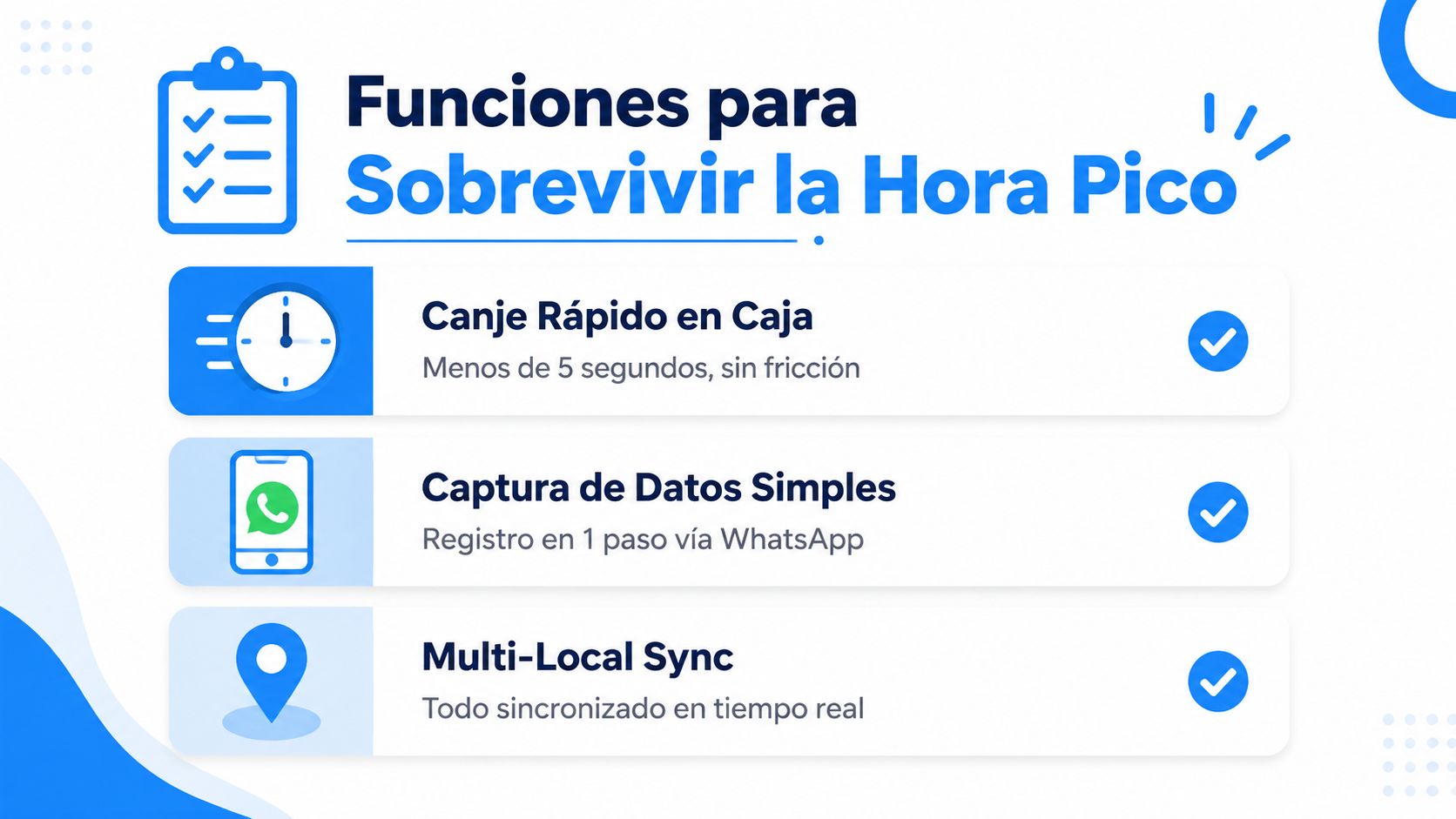
Canje rápido en caja. Si el cajero tarda en aplicar una recompensa, el programa pierde ritmo y el cliente siente fricción. Captura de datos de primera parte con el menor número de pasos posible. Pedir formularios largos en mostrador mata el registro.
Dinámicas de visitas. No basta con saber quién está en la base. Hay que ver quién volvió, cuándo y con qué frecuencia. Reglas flexibles de puntos, compras o sellos. No todas las cafeterías tienen el mismo ticket ni la misma frecuencia de visita.
Si una recompensa obliga al equipo a improvisar, ya salió cara.
Cuándo conviene algo simple y cuándo no
Una tarjeta de sellos digital funciona bien si el negocio quiere algo rápido, visible y fácil de explicar. Sirve cuando el flujo de visitas es frecuente y el personal necesita una mecánica que no detenga la cola. En cuanto aparecen varias sucursales, hábitos de compra distintos o campañas por segmento, esa simplicidad se queda corta.
Ahí entran los cupones inteligentes, las recompensas configurables y la segmentación por comportamiento. El riesgo es claro, un incentivo mal diseñado puede comerse margen sin mover la recurrencia. Por eso el software tiene que permitir ajustar la recompensa, no solo repartirla.
La lógica operativa pesa más cuando el sistema se integra con las automatizaciones del negocio. Un buen punto de partida para entender ese tipo de flujos está en esta página de automatizaciones, porque la retención en cafeterías depende de secuencias, no de acciones sueltas.
Campañas reales que puede correr una cafetería desde hoy
Las mejores campañas no se ven sofisticadas, se sienten oportunas. Una cafetería no necesita inventar una teoría nueva de fidelización. Necesita secuencias que reactiven, aumenten frecuencia y empujen ticket sin estorbar la operación.
Cuatro campañas que sí mueven conducta
Una reactivación de inactivos funciona bien cuando se dirige a quienes dejaron de visitar y se envía por WhatsApp con un mensaje corto, directo y relevante. El disparador debe ser una ventana de inactividad, y la métrica de éxito es la visita recuperada, no solo la apertura del mensaje.
La recompensa por tercera visita sirve para empujar hábito temprano. Una cafetería, un restaurante de comida rápida, una barbería o un salón de belleza pueden usar la misma lógica, porque el objetivo es que el cliente no se quede en la primera compra. El canal ideal vuelve a ser WhatsApp si el negocio ya opera ahí.
El incentivo de hora valle ayuda a mover tráfico cuando la barra está más libre. Una promoción bien segmentada puede llenar el mediodía sin romper el margen en las horas de mayor demanda. El disparador es el horario, y la métrica es ocupación o ventas en la franja objetivo.
Los cupones inteligentes sirven para elevar ticket promedio sin regalar producto a todo el mundo. Un cliente que siempre compra solo café puede recibir un incentivo para añadir panadería. Uno que ya compra combo puede recibir otro estímulo distinto. La lógica cambia por segmento, no por intuición.
Qué cambia según el tipo de negocio
Una cafetería usa estas campañas para aumentar frecuencia. Un restaurante las usa para recuperar visitas perdidas. Una barbería o un salón de belleza puede usarlas para que el cliente regrese antes del olvido. El canal puede variar, pero la idea es la misma, disparar la siguiente acción útil.
Buen filtro: si la campaña no tiene segmento, disparador y métrica, no es campaña, es un mensaje.
Checklist de implementación en dos semanas
La implementación no debe parecer un proyecto eterno. Un negocio pequeño necesita orden, no burocracia. Si el sistema correcto está elegido, la puesta en marcha puede seguir una secuencia simple.
Semana uno
Primero se carga la base de clientes y se limpia lo mínimo necesario. Después se define la mecánica de lealtad, ya sea por visitas, compras o puntos. Luego se crean los segmentos iniciales por sucursal y hábito de compra, porque sin esa separación el resto queda plano.
En paralelo, se activan las dos primeras campañas automatizadas. Una de bienvenida o post-visita, y otra de reactivación. El objetivo no es lanzar todo al mismo tiempo, sino comprobar que el motor responde y que el equipo puede operarlo sin fricción.
Semana dos
La segunda semana se usa para leer el panel y corregir. Los indicadores mínimos son miembros activos, frecuencia de visitas, tasa de canje, ticket promedio y reactivación. Si esos números no están visibles desde el principio, el negocio no tiene control suficiente.
También conviene revisar por sucursal qué mensaje trae mejor respuesta. Una campaña puede rendir en una tienda y no en otra, y eso no es un error del equipo, es una señal de segmentación. La plataforma correcta hace visible esa diferencia rápido.
Swirvle como herramienta para pymes en LATAM
Un software de retención para cafeterías tiene que sobrevivir la hora pico. Si no canjea rápido en caja, no sirve. Si no trabaja por WhatsApp, segmentación por sucursal y atribución de ventas, también se queda corto.
Swirvle se mueve en ese terreno: concentra datos del cliente, cupones inteligentes, dinámicas de visitas, recompensas configurables, automatizaciones, agentes de IA y paneles para medir ROI. Eso ayuda a evitar una lealtad que solo reparte descuentos sin control de margen.
Para una pyme en LATAM, el valor está en operar sin fricción para el equipo de mostrador y sin depender de una app extra en el celular del cliente. Ese es el criterio correcto para cafeterías, restaurantes, barberías y salones que trabajan con equipos pequeños y necesitan orden operativo, no una vitrina de funciones.
Quien quiera ver cómo se usa esa lógica en una cafetería real puede revisar cómo Swirvle se usa con punto de venta y lealtad para cafeterías. Ahí se ve el tipo de operación que este enfoque resuelve sin sacrificar velocidad en caja.
Related Blogs

Sep 3, 2026
What is the best customer retention software for coffee shops? 2026 Guide
Sep 2, 2026
Email marketing automation for SMBs with physical stores

Sep 1, 2026
Desserts to accompany coffee: Customer favorites

Aug 31, 2026
Swirvle: restaurant point of sale software with CRM

Aug 30, 2026
How to calculate the selling price of dishes in 2026

Aug 29, 2026
Custom notifications: a practical guide for SMEs
Try Swirvle for free
No card required · 30 days free
Start your free trial