What promotions should I run for El Buen Fin if I have a small business? Eight ideas with examples by industry, WhatsApp templates, and KPIs to measure results.
Eight promotions that actually fit a small business during El Buen Fin 2026. If you run a coffee shop, a restaurant, a bakery, or a corner grocery store, the best promotion for El Buen Fin is one that can be explained in a single sentence, is charged at a price that already includes VAT, and can be repeated once the event is over.
The official portal of the Ministry of Economy sets El Buen Fin 2026 from November 13 to 17. Merchant registration on that portal is free: the Ministry of Economy does not charge fees or duties to participate or use the logo, and there is no need to hire an intermediary. That money stays for supplies, signage, and training for whoever is at the register. The program rules require a clear price with Value Added Tax included, plus an explicit notice of availability and duration. In practice, the sign and the receipt must show what the customer pays, not a pre-tax base.
What promotions should you run for El Buen Fin if you have a small business? Eight, not twenty. Each is judged by three things: how much it costs the business, how the final price with VAT is communicated, and what reason it leaves the customer to return after November 17, 2026. The counter is not an advertisement. If the cashier cannot repeat the rule in one breath, the offer is poorly constructed.
The operating rules allow specific promotions by product, category, or time period within those five days, provided the offer is among the best of the year in terms of value for money. Below is the mechanics, an example by industry, and the risk worth watching before printing the sign.
1. Buy-one-get-one (BOGO) or 3-for-2 on seasonal products
Buy-one-get-one (2-for-1) and 3-for-2 offers are understood before the customer even pulls out their wallet. Take two or three units of the same product and pay for one or two. It works when the unit cost is low and the item already moves on its own. On spiced pot coffee (café de olla), snacks, or sweet bread, the savings are clear. On specialty coffee or expensive oil, that same sign eats up your margin.

In a coffee shop, an afternoon-only 2-for-1 on spiced pot coffee or seasonal frappes drives traffic during the slow hours without touching breakfast, which already sells well. In grocery, a 3-for-2 on the best-selling beverage or snack lets customers compare three items against the price of two, with the final amount and VAT displayed on the shelf. In a bakery, an afternoon 2-for-1 on conchas or cookies goes well with coffee without giving away a whole cake.
Register rule: a single sentence on the sign. “2-for-1 on spiced pot coffee, November 13 to 17, 2026, final price includes VAT, maximum two promotions per receipt.”
The real cost is not “half.” It is the cost of the second unit plus the time of the person preparing it. If that second item was going to sell anyway, the 2-for-1 merely moves up a sale that was already going to happen. That is why it should be reserved for seasonal items and products that are already moving. If the goal is to clear surplus stock, check your inventory control first so you don't mix up clearance with regular counter promotions.
To get them to come back, hand out a coupon for a single item alongside the second unit, valid for several weeks after November 17. That way, the 2-for-1 doesn't stay a one-time visit.
2. Combo or special Buen Fin menu
A combo pairs two or three complementary items at a fixed package price, lower than buying them separately. In restaurants and coffee shops, it raises the average ticket because the decision takes seconds and the kitchen repeats the same prep. At the counter, three combos are the limit. A fourth one only confuses the server and slows down the line.
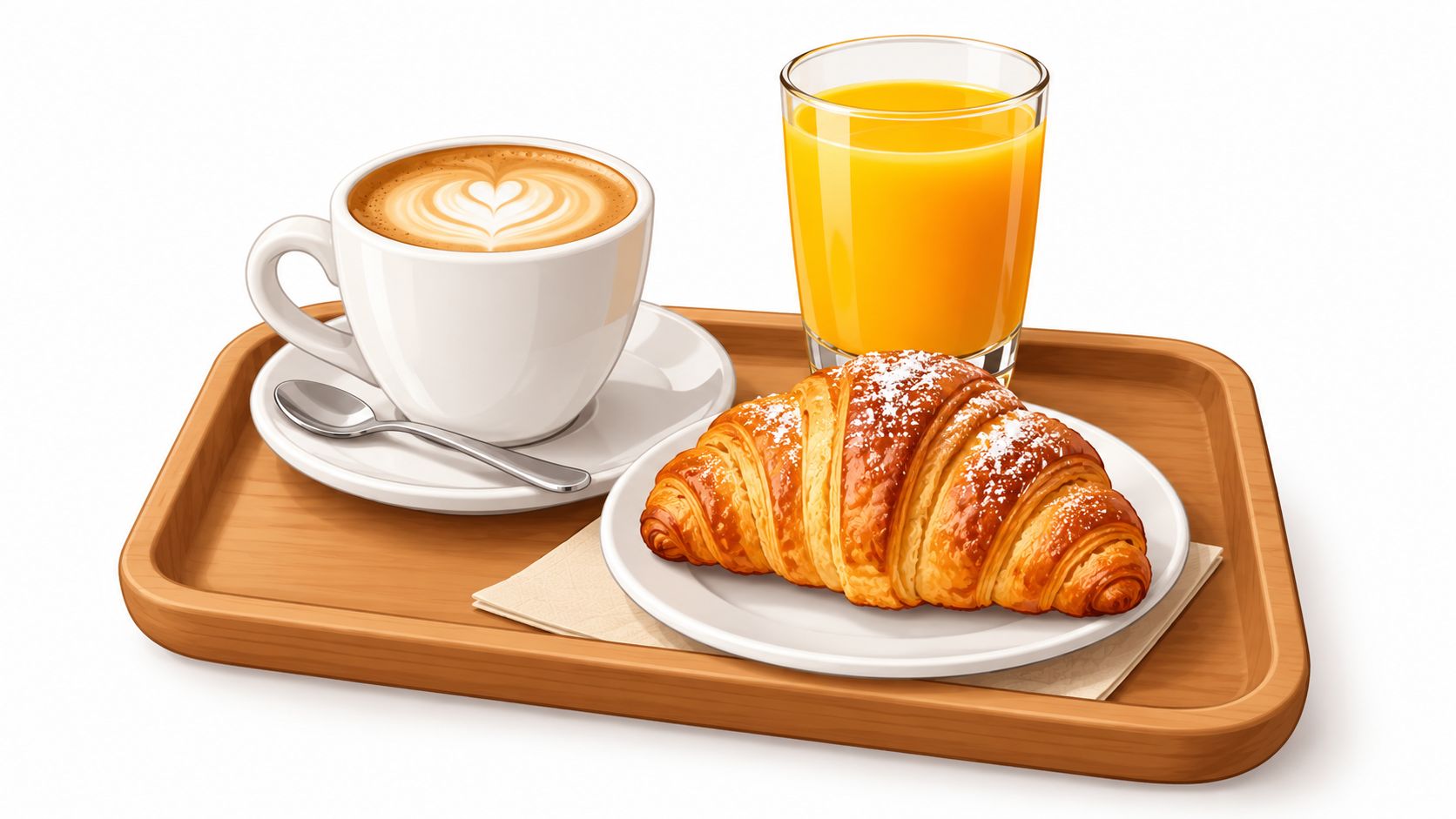
A restaurant can offer soup, an entrée, and the drink of the day at a fixed price during the five days. A coffee shop can offer coffee, sweet bread, and juice on weekday mornings. A taquería can sell an order, a soda, and dessert at a fixed price when customers come in pairs. The name has to be easy to say: “Buen Fin Menu” or “Seasonal Breakfast.” If staff have to read off a list, the combo is too complicated.
Fixed price and margin
Before printing, add up the cost of ingredients, waste, and the server's time. The price on the sign is the final one, VAT included, and the receipt must itemize what is included. An extra, such as almond milk or an extra order, is charged separately and communicated when taking the order. If the combo includes “whatever they ask for,” the kitchen loses control.
The risk is overloading an hour that is already busy. It is better to limit the special menu to one shift and keep the regular menu pricing for the other. At checkout, offer to schedule or reserve the same combo for a date after November 17, with a voucher made out in the customer's name. Today's combo pays for this visit; the voucher pays for the second.
3. Spend-threshold discount (Spend X, Save Y)
This promo rewards the total ticket, not an individual product. If the bill exceeds an amount, the customer receives a discount or an item. In grocery and retail shops, it works because shoppers are already facing the shelf and only need a small nudge to pick up one more item. The threshold must be achievable yet slightly higher than what the register usually sees on weekdays.
The rule should not change halfway through the five days. Changing the minimum on Saturday causes arguments in line and creates distrust with whoever bought on Friday.
Grocery: if today's receipt exceeds the amount, the discount is not applied to that same bill. A voucher is issued for the next purchase, valid after November 17, 2026.
Mini-mart: above the threshold, a small gift item, not a percentage off the entire shelf.
Whole bean coffee: when buying a full bag, a mug or a keychain. The gift has a known cost; an open percentage does not.
Write three things on the sign and receipt: minimum spend, what they receive, and through which day of the event it applies. The price of each product remains the final price including VAT. The benefit is a discount or gift applied on top of that base, not a “plus VAT” price that only appears at checkout.
Anyone designing the percentage from scratch can follow a brief guide on how to set a discount without merely copying the 20% off from the store across the street. Write down the name or phone number of the person taking the voucher. Without that record, the “next purchase” gets lost in their shopping bag.
4. Prepaid packages for coffee shops and restaurants
The package is paid today and used later. It bundles several visits at a fixed price, such as five coffees or five set lunches, and locks in the return trip from the first purchase. The customer sees savings. The business gets paid upfront and secures the next visits.
In a coffee shop, a card for five americanos at a fixed price works well with new customers, because the second cup is no longer decided at the door. In a restaurant, five set lunches to use on weekdays keep the discount from landing on the dish they were already going to order individually. The first redemption can fall between November 13 and 17. The rest come later, which is where the business recovers its margin.
Weekdays only. Without that limit, the package swallows peak hours and regular customers are left waiting.
The sign displays the final package price including VAT, the expiration date, and what is excluded (large sizes, extras, specialty dishes). The receipt shows how many visits are left and the package's expiration date. Before the customer leaves, the cashier reminds them when it expires.
A loyalty program for coffee shops helps you avoid relying on a front-desk notebook to track who has already used their second visit. The main risk is selling more packages than the kitchen can handle. Fewer packages with a clear expiration date is far better than an angry line on Saturday.
5. Gift or sample with purchase in coffee shops and food businesses
A well-chosen, low-cost gift is remembered far better than a 10% discount that nobody bothers to calculate. A cookie, sample, or seasonal cup works in coffee shops and eateries because the first bite decides whether there will be a second visit. The gift must be tied to a minimum purchase. If it is handed to someone who only orders a glass of water, the promo becomes an expense.
In a coffee shop, the seasonal drink comes with a small cookie meant to be eaten at the table, not a to-go bag that gets forgotten. In a bakery, a whole cake includes a slice of a new item, so customers can taste what they haven't ordered yet. In a taquería, a family order includes a flavored water. Water incurs cup and ice costs, which need to be accounted for before advertising it.
Cost, capacity, and sign-ups
Calculate the gift's cost per day and set a daily limit. “The first 40 cookies” creates urgency without discounting the whole menu. Advertise it in-store, not just on social media, because the person already standing in line is the one who can increase their order total right then and there.
Hand out the gift with a visit card or code. That card is the bridge: the fifth visit, now in December, can be redeemed for a drink. Ask for their name at checkout. Without a name, the gift brightens their day but leaves no contact list for follow-ups after November 17.
Choose something that is consumed on-site. A gift that leaves in a bag does not showcase your atmosphere, nor does it give you time to pitch the next purchase. And do not use your high-margin anchor product as a giveaway. A small sample of a new flavor introduces it; giving away the whole cake teaches people to expect everything for free.
6. Off-peak hour specials
An empty hour is invisible inventory. A deal valid only during that window distributes the line, doesn't cannibalize Saturday at 1:00 PM, and gives weekday passersby a reason to stop in. The common mistake is discounting an hour that is already full. That only shifts existing customers earlier and leaves the morning just as slow.
Check hourly receipts from a normal month, not a holiday. Wherever register sales dip, that is where the promo belongs.
Coffee shop: seasonal drink at a special price from 10:00 AM to 12:00 PM, after breakfast has wound down and before lunch begins.
Restaurant: a streamlined weekday afternoon menu, featuring fewer dishes at the same fixed package price.
Bakery: the first batch of the morning at a special price. Early birds won't compete with the 6:00 PM crowd.
The sign and WhatsApp message should clearly state the day, start time, and cutoff time. Saying “in the morning” won't work; someone will argue at 12:05 PM. The off-peak price must be the final price including VAT. Outside that window, regular menu pricing applies, and staff must state this without hesitation.
Track whether those customers return during other hours the week after November 17. If they only show up when it's cheap, the deal filled an hour but failed to build a customer base. If they come back on a Saturday at regular menu prices, run the time slot special again next month with a smaller perk—like an add-on, rather than another discount. The main risk is running out of product at 11:00 AM and having to turn down the promo. Reserve supplies strictly for that block.
7. Seasonal basket or bundle for grocery stores
A basket bundles into one bag what the customer would otherwise compare item by item: oil, rice, beans, coffee, sugar, or cleaning supplies. The savings are obvious because the combined total of the individual items sits right beside it. If the bundle features brands you don't normally stock or slow-moving sizes, customers will do the math and stick to individual items.
Build the bundle with items already on your shelves. Prioritize items nearing their expiration date—always within date and in good condition. That way, El Buen Fin moves inventory that might otherwise spoil after November 17.
Three configurations are plenty for a small shop:
Pantry: cooking oil, sugar, coffee, and rice, with the itemized list printed on the front.
Cleaning: bar soap, laundry detergent, and disinfectant, leaving out the bulk bleach that already sells itself every week.
Coffee to-go bundle: in a coffee shop that sells retail products, ground coffee, sugar, and filters.
The sign must list every product alongside a single final price with VAT included. Avoid “starting at” or “save up to.” At the register, ring up the bundle under a single code to avoid debates over whether the rice was included. Place it right by the checkout line, not at the back of the aisle. The person who has already decided to pay is the one who will add the bag.
Include a coupon with the bundle for a single item from that same basket, valid after the event ends. Next time, the customer comes back for the rice or the coffee, not just the big bundle. The risk is assembling too many and getting stuck with open bundles on the 18th. Better to have 20 complete bundles than 60 half-stocked ones.
8. Coupons and loyalty program to drive return visits after Buen Fin
The line outside during El Buen Fin isn't your profit. The profit comes from the customer who returns in December or January, long after the promotional sign has been taken down. A coupon valid after November 17, paired with points or punch stamps, gives the customer a specific date to return. It also collects a phone number for follow-ups, always with explicit consent.
Set the cost before printing. A coffee stamp costs a drink; a 20% off coupon on the entire ticket costs the entire margin of the second purchase. Opt for rewards with a known cost: dessert, a drink, or a piece of sweet bread.
In a coffee shop, every purchase during those five days earns a digital stamp. Five stamps earn a free drink in December. In a restaurant, a dessert coupon for the next visit, valid for one month, drives a second table sitting without discounting the main course. In a grocery store, every purchase during the campaign earns points toward a product after the promotion ends. Regular customers don't need the same aggressive coupon as someone who hasn't visited in months: offer the former early access or a bonus point; offer the latter a return incentive with a short expiration date.
Ask for WhatsApp consent during the first checkout, not on the third message. Without that opt-in, reminders are just spam.
The minimum effective validity for a coupon is about four weeks after El Buen Fin. Any less gets lost between paydays and holiday shopping; any longer delays the return so much that the customer forgets they have it. A reminder halfway through that window recovers those who tucked the slip into their wallet. Creating smart coupons for your store allows you to segment morning shoppers from holiday-weekend visitors without sending the same message to everyone.
The price of items sold during those five days remains the final price with VAT. The coupon applies to the second purchase: the benefit is unlocked when the customer returns.
Which promotion fits your business type and objective best
Compare each promotion by its cost to you, the final price the customer will see (VAT included), and the incentive it creates to return after November 13–17, 2026. Cost is not just the discount: it also includes the free product given away, prep time, or a seat at the busiest hour that displaces a full-paying customer.
Promotion | Best for | Cost to the business | Final price with VAT included | How the customer returns | Sign that you need to adjust |
|---|---|---|---|---|---|
BOGO (2-for-1) or 3-for-2 on seasonal products | High-turnover, low-cost products | The cost of the extra units given away; calculate margins across total units sold | Show the total amount paid for the two or three units, not just the single-unit price | Include a coupon for a future purchase, with a clear expiration date | Discounted items sell out before inventory can be restocked for regular sales |
Combo or special Buen Fin menu | Restaurants and coffee shops | Total cost of ingredients and prep, plus the margin conceded compared to selling each item à la carte | Display the full bundle price and clearly specify what is included | Provide a reason to order another item or return on another date, without discounting the same combo again | The combo takes longer to prepare and backs up regular orders |
Spend-threshold discount (Spend X, Save Y) | Grocery and retail stores | The discount or gift triggered at the minimum spend; ensure the order margin covers it | State the minimum spend and the total discounted amount, VAT included | Provide a voucher valid on a future purchase for a related category | Customers split transactions to hit the minimum or repeatedly ask at checkout which items qualify |
Prepaid package for coffee shops and restaurants | Coffee shops and restaurants | Supplies for each prepaid visit; factor in regular-price sales you might lose | Advertise the total package price and what it includes | Set a clear expiration date for the remaining visits | Packages get redeemed during peak hours at a lower margin |
Gift or sample with purchase in coffee shops and eateries | Coffee shops and food businesses | Unit cost of the gift and the total volume you can give away without disrupting operations | Clarify which purchase qualifies for the gift and the final price of that purchase | Hand out a coupon for a future visit, distinct from today's gift | Giveaways run out before noon and the offer can no longer be honored |
Off-peak hour specials | Businesses with slow hours | The discount applied during those hours plus the cost of handling extra volume | State the exact time window and the final price valid during that period | Invite them to return during another time slot or day, without extending the discount to peak hours | The offer is redeemed primarily during busy hours |
Seasonal basket or bundle for grocery stores | Corner grocery and retail stores | The combined product margin; avoid pricing without checking each item's individual cost | Show the total bundle price and its contents, VAT included | Add a coupon for a future purchase of products not included in the bundle | The bundle forces together items that customers usually prefer to buy separately |
Coupons and loyalty program to drive post-event returns | Businesses looking to encourage repeat visits | Value of the coupon or reward plus program administrative costs | The current purchase retains its final price with VAT; specify the future perk and its terms | Set an expiration date after El Buen Fin and offer an easy-to-redeem reward | Customers do not understand when the coupon can be used or what purchase is required |
How to turn Buen Fin sales into repeat customers
Pick two or three promotions; running eight will overwhelm your checkout counter. A coffee shop runs smoothly with an off-peak special, a counter gift, and a stamp card. A grocery store thrives on a bundle and a spend threshold. A restaurant does best with a prepaid package. Promote each with its final price, VAT included, and a clear phrase the cashier can repeat effortlessly. If the rule can't fit on the receipt, it doesn't belong in the promotion.
Schedule the first reminder today. Waiting until November 17 to think about it means missing the window: the real value of these five days is measured in December and January visits, when the same customer pays full menu price without the 2-for-1 discount.
Log four data points for each campaign sale on a tracking sheet or POS terminal: which promo was used, at which location, the final ticket amount, and whether a coupon was issued. That will tell you whether the combo increased order values or just substituted an expensive item with a cheap one. If gifts ran out by 11:00 AM while the afternoon stayed empty, your daily cap was off. If the bundle sold out but no one returned for the standalone rice, the follow-up coupon was either not handed out or never promoted.
Review the results sheet the day after the campaign signs come down. A week later, no one will remember what actually happened at the register.
One promotion per category is enough to be part of "Buen Fin"; program rules allow it and require it to be transparent. A clear VAT-inclusive price, valid from November 13 to 17, 2026, with an item limit will always outperform a massive percentage discount that the cashier cannot explain. A customer who ends up arguing over the total will not return, even if they got the deal.
Return coupons work when they include an expiration date and a tangible reward; a plain "thank you for your business" won't motivate anyone. WhatsApp notifications perform best while the customer still remembers the store visit. Those who stop visiting for several weeks can receive a message with a return incentive—and that outreach campaign should be planned today, while the promotional sign is still hanging on the front door.
Swirvle connects point of sale, customer registration, and loyalty programs so that a coffee shop, restaurant, or multi-location store can process payments, log visits, and send return coupons without relying on paper notebooks. During El Buen Fin, this makes it simple to promote specials via WhatsApp (included in the Premium plan) and ensure second visits happen well after November 17. Learn how to set it up at Swirvle.
Related Blogs

Oct 26, 2026
8 ideas: What promotions can I run for Buen Fin if I have a small business?

Oct 25, 2026
What thank-you messages should I send to my customers?

Oct 24, 2026
What questions should you ask in a restaurant satisfaction survey? 8 ideas

Oct 23, 2026
Is it legal to charge a card payment fee in Mexico?

Oct 22, 2026
How to prevent employee petty theft in my business?

Oct 21, 2026
How to Control Food Waste in a Restaurant: 2026 Guide