Discover the top 10 loyalty program examples, strategies, and tips. Complete guide with actionable insights.
The most commonly used loyalty program examples by brick-and-mortar SMBs are points, stamps/visits, tiers, referrals, membership, birthdays, and smart coupons. Which one to choose depends primarily on visit frequency and average ticket (and whether the reward fits within your margin).
This guide lists actionable examples and a table by business type to help you decide without copying programs from giant brands.
Which Example to Choose Based on Your Business Type
Business Type | Mechanics | Typical Reward | On Swirvle |
|---|---|---|---|
Coffee Shop | Visits or points | Drink/product after X visits | |
Barbershop | Visits / packages | Benefit after X visits | |
Car Wash | Visits, packages, or membership | Wash after X or monthly plan | Visits + reminders |
Gas Station | Points per amount | Store product / cumulative benefit | Points on the ticket |
Restaurant | Points or tiers | Dish/dessert or benefits per tier | |
Hardware Store | Points per amount | Discount on next purchase | Points; manage high-cost stock carefully |
Quick rule: frequent visits + stable ticket → stamps; variable ticket → points; status → tiers; predictable income → membership. Points vs. tiers detail: comparison.
1. Points-per-Purchase Programs
This is one of the most classic and effective loyalty program examples, ideal for businesses looking for a direct way to reward every transaction. Its mechanics are simple: customers earn points for every dollar spent, which they can later redeem for rewards.
This model works because it creates a tangible connection between customer spending and the value they receive in return. A pharmacy in Puebla, for example, can offer points for purchasing personal care products, while a barbershop in Monterrey, Nuevo León, could award them for every haircut. The key is for the customer to perceive clear progress toward a reward.
How It Works in Practice
A customer at an ice cream shop in Mérida, Yucatán, buys an ice cream and earns 10 points. Upon reaching 100 points, they can redeem them for a free topping or a discount on their next purchase. This cycle of earning and redeeming encourages repeat visits.
Key Strategic Point: The perceived value of the points is more important than their actual value. Make sure the rewards are appealing and that customers feel their loyalty is truly worth it.
Steps to Implement It Successfully:
Define a clear value: Establish a simple rule, such as "10 pesos spent = 1 point."
Create achievable rewards: Offer small, frequent rewards (e.g., a free coffee at a coffee shop in Mexico City) and larger ones to motivate points saving (e.g., a 20% discount on a large bill at a restaurant in Puebla).
Automate communication: Send automatic notifications via WhatsApp when a customer accumulates enough points for a redemption or when their balance is about to expire. This keeps your brand top of mind.
Segment your customers: Use points data to identify your "VIP customers" and send them exclusive offers, strengthening their loyalty even further.
Although it is a very popular system, it is important to distinguish it from other models. To better understand how it compares to tier programs, you can consult our guide on the difference between points and tier programs.
2. Tiered or Level Programs
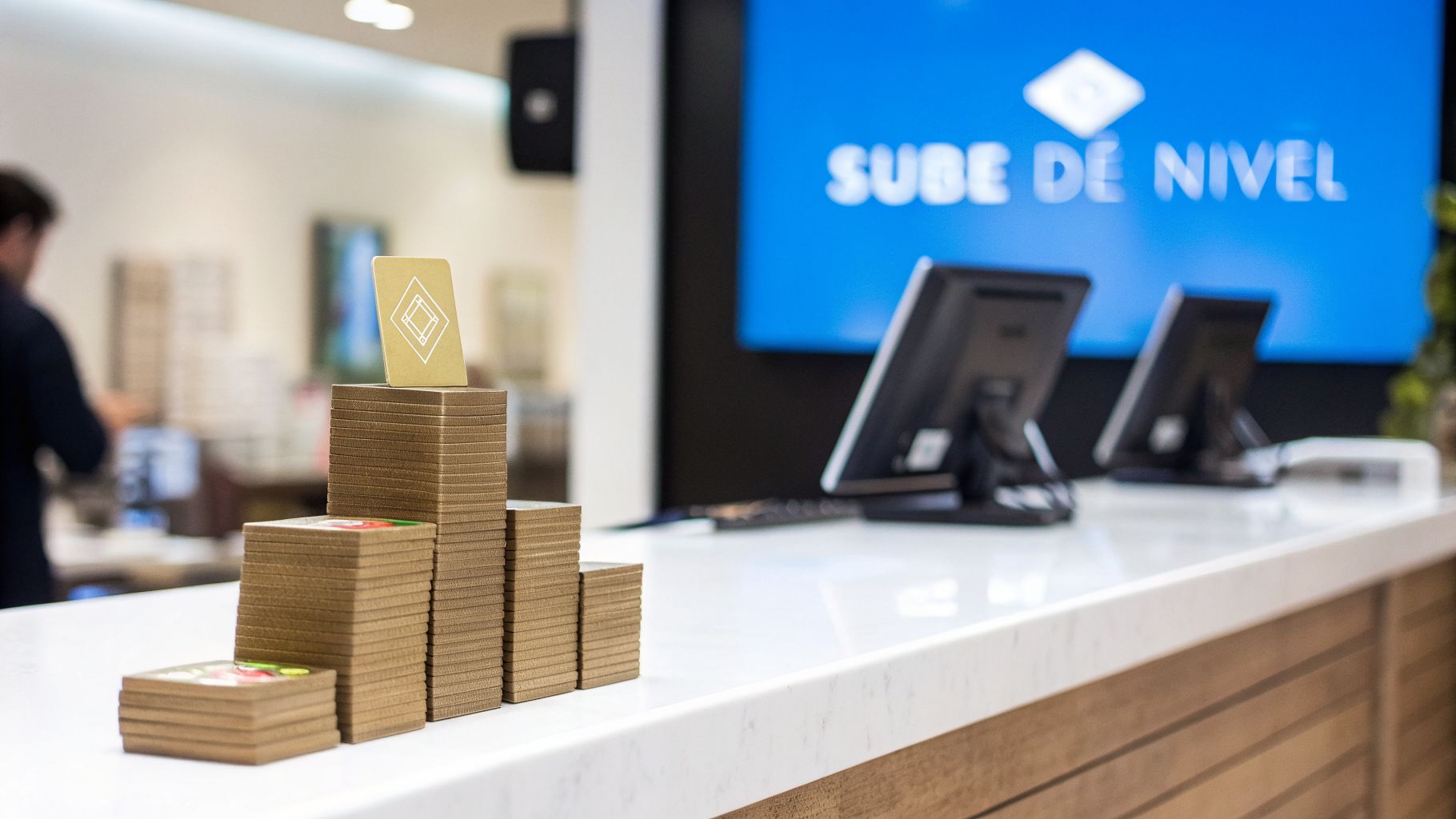
This model is one of the most powerful loyalty program examples for fostering long-term loyalty. Instead of just accumulating points, customers progress through a hierarchical structure (e.g., Bronze, Silver, Gold) as they increase their spending or purchase frequency. Each tier unlocks progressively more valuable benefits, creating a strong sense of aspiration and status.
This system is ideal for businesses that want to reward not just purchases, but continuous engagement. A coffee shop in Mexico City could offer its "Gold" customers priority access to new specialty beans, while a clothing store in Baja California might invite its "Platinum" members to exclusive launch events. The motivation is not just the immediate reward, but the desire to belong to an exclusive group.
How It Works in Practice
A customer at a restaurant in the State of Mexico starts at the "Bronze" level. After spending $2,000 pesos in three months, they move up to the "Silver" level and receive a free dessert on every visit. Upon reaching $5,000 pesos, they reach the "Gold" level, which gives them access to a monthly wine tasting and preferred reservations. This visible progress and increasing benefits incentivize customers to concentrate their spending at that business.
Key Strategic Point: The true power of tiers lies not in the benefits, but in the psychology of exclusivity and progress. Clearly communicate how close a customer is to moving up a tier to create a final buying impulse.
Steps to Implement It Successfully:
Define achievable thresholds: Set spending or visit goals that are realistic yet challenging, such as "Spend $1,500 in a quarter to reach Silver."
Communicate benefits clearly: Create a visual chart showing what is earned at each level (Bronze, Silver, Gold). Transparency is essential to motivate the climb.
Automate progress notifications: Send a WhatsApp message when a customer is just one purchase away from leveling up. For example: "You are only $250 away from becoming a Gold member and getting free drinks!".
Offer exclusive surprises: Within each level, surprise members with unannounced benefits, like early access to sales or a birthday gift, to reinforce the value of their status.
3. Referral or Recommendation Programs
These loyalty program examples turn your most satisfied customers into an active sales force. The mechanics rely on incentivizing current customers to recommend your business to friends and family, leveraging the trust of word-of-mouth marketing in a structured and measurable way.
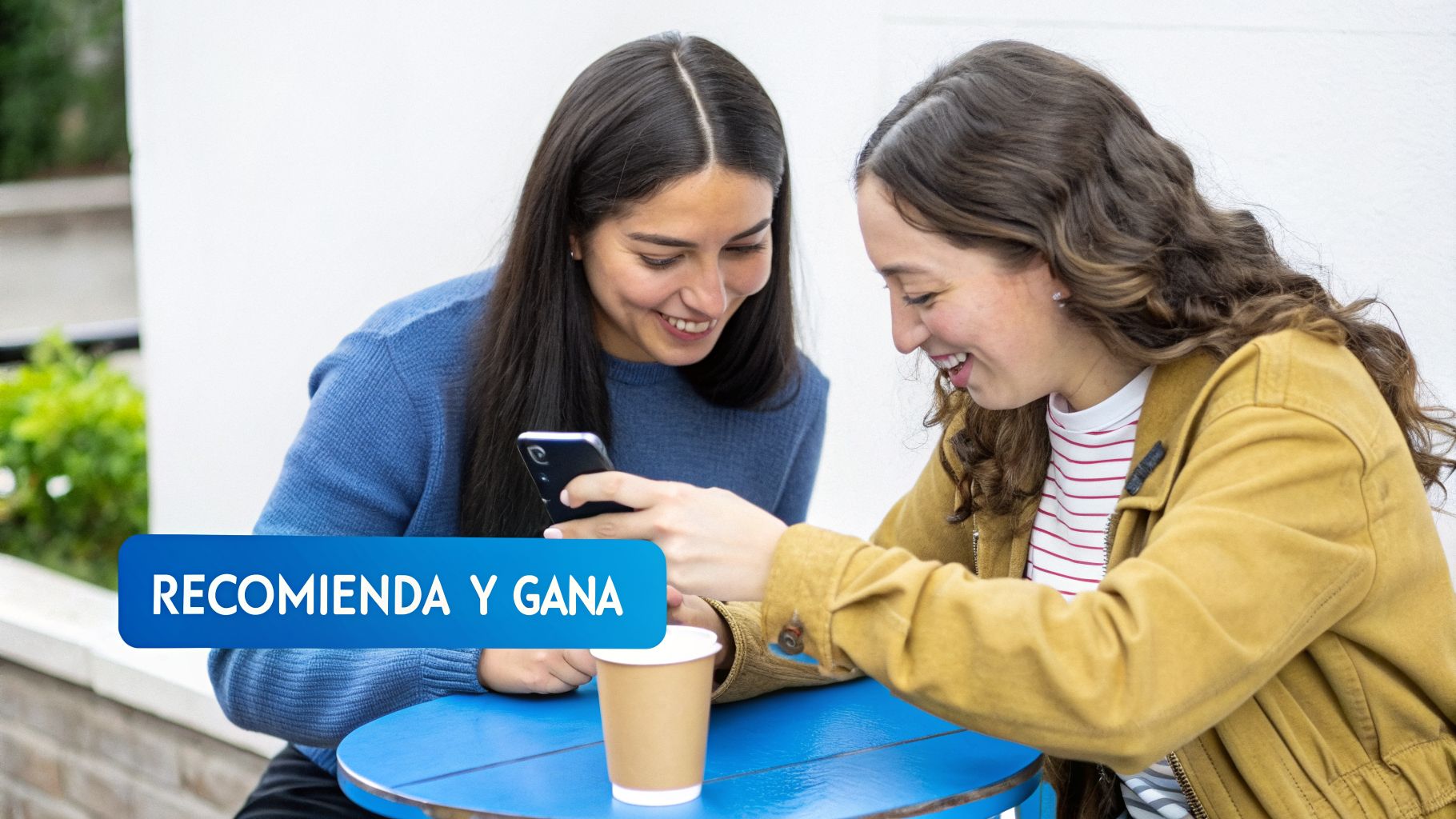
This model is powerful because a personal recommendation is one of the most effective forms of advertising. A customer at a yoga studio in Mexico City who invites a friend generates a new customer with a high level of trust from the very start. Both the referrer and the new customer typically receive a reward, creating a win-win cycle.
How It Works in Practice
A frequent customer at a barbershop in Monterrey, Nuevo León, receives a unique referral link. They share it with a friend, who uses it to get a 15% discount on their first haircut. Once the transaction is complete, the original customer automatically receives credit on their account for their next service.
Key Strategic Point: Ease of sharing is critical. The process must be as simple as clicking a button. If referring requires effort, participation will drop drastically, no matter how attractive the reward is.
Steps to Implement It Successfully:
Simplify the process: Generate a unique referral link or code for each customer. Allow them to share it directly via WhatsApp, SMS, or social media with a single tap.
Define a double, sustainable reward: Offer an incentive for both the referrer (e.g., extra points, a free product) and the new customer (e.g., a welcome discount). Make sure the cost is viable for your business.
Automate tracking and rewards: Set up a system that notifies the customer when their referral makes a purchase and assigns their reward immediately. Instant gratification reinforces the behavior.
Create targeted communication: Design a clear landing page explaining how the program works and send automated reminders via WhatsApp to customers who haven't referred anyone yet, encouraging them to participate.
4. Frequent Buyer Programs with Visit Dynamics
This is one of those loyalty program examples that prioritizes consistency over purchase amount. Its goal is to reward the frequency with which a customer visits your business, making it a powerful tool for increasing recurrence and foot traffic in physical stores.
This model is ideal for fast-moving consumer businesses like coffee shops, bakeries, ice cream shops, or restaurants, where the goal is to get the customer to return multiple times within a short period. A coffee shop in Mexico City can use the classic "buy 9 coffees and the 10th is free" card, while an ice cream parlor in Yucatán could offer a significant discount on the seventh visit. The goal is to build a consumption habit.
How It Works in Practice
A customer at a barbershop in the State of Mexico receives a digital stamp in their app for every haircut. After accumulating 5 stamps, they receive a coupon for a 50% discount on their sixth haircut. This system encourages regular visits and reinforces short-term loyalty.
Key Strategic Point: The reward must be achievable within a reasonable timeframe. If customers feel they need too many visits to get a benefit, they will lose motivation. The key is quick gratification.
Steps to Implement It Successfully:
Define clear and achievable goals: Set a reasonable number of visits for the first reward, ideally between 5 and 10. For example, "Visit us 6 times and get a 50% discount on your haircut."
Communicate progress visually: Use a progress bar or a digital stamp system in an application so customers can clearly see how close they are to their reward.
Create urgency with special offers: Implement dynamics like "double stamp days" at a coffee shop during low-traffic afternoons or to accelerate the redemption of rewards about to expire.
Automate reminders: Send a notification via WhatsApp when a customer is only one or two visits away from earning their reward. A message like "You're just one visit away from your free ice cream!" can be very effective.
5. Subscription or Membership Programs
This is one of the most effective loyalty program examples for creating recurring revenue and a highly engaged customer base. Instead of rewarding individual transactions, the customer pays a recurring fee (monthly or annually) to access a package of exclusive benefits.
This model works because it creates a sense of belonging and exclusivity. A restaurant in the State of Mexico could offer a discounted monthly meal plan, while a coffee shop in Mexico City could launch a membership that includes one free coffee per day. Customers feel they are making a smart investment that generates constant savings and advantages.
How It Works in Practice
A barbershop in Nuevo León launches a VIP membership for a monthly fee. Members get a flat 20% discount on all services and products, priority booking, and a complimentary drink with every visit. This recurring payment ensures a predictable cash flow for the business and guarantees the loyalty of the customer, who will look to maximize the value of their subscription.
Key Strategic Point: The success of a membership relies on the customer perceiving a clear return on investment (ROI). Simply communicate how much they are saving and what unique benefits they receive that are not available to the general public.
Steps to Implement It Successfully:
Set an attractive price: Price the membership fee so that it represents clear savings. For example, if a customer spends an average of $800 a month at your restaurant, a $100 membership with benefits valued at $200 is an attractive offer.
Offer tangible and exclusive benefits: Combine discounts (e.g., 10% off everything), free products, early access to new dishes, or priority service.
Reduce initial friction: Implement a free trial period or a limited-time introductory offer to encourage customers to join with no commitment.
Automate management: Send automated reminders 30 days before renewal and notifications highlighting accumulated savings. This reinforces value and reduces churn.
6. Birthday and Special Occasion Programs
This is one of the loyalty program examples that best capitalizes on emotional connection with the customer. Its focus is on recognizing and celebrating important dates, like birthdays or anniversaries, through automated, personalized offers that generate a sense of genuine appreciation.
This model is extremely effective because it reaches customers at a moment of high emotional receptivity. A restaurant in Mexico City that sends a "free dinner on your birthday" offer creates a memorable experience, while an ice cream shop in Baja California can offer a "double scoop for the price of a single on your day" to associate its brand with personal well-being. The goal is to transform a simple transaction into a celebration.
How It Works in Practice
A customer who registered their birthdate at a pharmacy in Puebla receives, a week before their birthday, a coupon for a $100 peso discount on personal care products. This gesture not only encourages a visit but also strengthens the relationship by showing that the brand remembers them.
Key Strategic Point: The timing of the delivery is crucial. A birthday offer sent 7 to 10 days in advance gives the customer plenty of time to plan their visit and use the benefit, maximizing conversion chances.
Steps to Implement It Successfully:
Capture key dates: Ask for the birthdate naturally during registration or at the point of sale.
Segment the offer: Personalize the gift based on customer value. Send a higher reward (e.g., a 30% discount) to a frequent diner with a high average ticket at a restaurant compared to an occasional customer (e.g., a free dessert).
Automate communication: Use WhatsApp messages with emojis and the customer's name to create a warm, festive greeting. For example: "Happy birthday, [Name]! 🥳 We're gifting you a 2x1 on coffees so you can celebrate with us at our Yucatán branch ☕️".
Create a complete experience: In addition to the discount, offer a surprise treat at the branch, like a complimentary drink at a barbershop or a small dessert at a restaurant. This unexpected extra elevates perceived value and builds long-term loyalty.
7. Smart and Dynamic Coupon Programs
Unlike generic coupons, this is one of the most advanced loyalty program examples because it uses data to personalize offers. The system generates dynamic discounts based on each customer's purchase history, behavior, and preferences, maximizing relevance and, therefore, the likelihood of redemption.
This model is powerful because it makes every customer feel unique. For instance, a pharmacy in the State of Mexico can send a coupon for sunscreen to a customer who regularly buys skincare products but has never tried that category. A restaurant in Tijuana, Baja California, could offer a discount on desserts to regular customers who only order main dishes. Personalization is the key to success.
How It Works in Practice
Imagine a customer who regularly visits a coffee shop in Mexico City and buys espresso but never pastries. The system detects this and automatically sends them a coupon via WhatsApp: "20% off your first slice of cake." The coupon is relevant, timely, and addresses a latent need, encouraging a purchase that might not otherwise happen.
Key Strategic Point: The goal is not just to give a discount, but to use it as a surgical tool to modify buying behavior, whether to introduce new products, increase the average ticket, or win back inactive customers.
Steps to Implement It Successfully:
Define clear segments: Base your coupons on specific behaviors like "customers who haven't returned in 30 days," "customers who only buy in the morning," or "customers who abandoned their online cart."
Create urgency and scarcity: Use phrases like "Valid only this weekend" or "Exclusive to the first 50 customers" to motivate immediate action.
Automate delivery: Schedule coupon delivery via WhatsApp at key moments. For example, send a "2x1 on coffees" offer to a customer of a Puebla coffee shop just before their usual visit time.
Set a minimum amount: Protect your profit margin by requiring a minimum purchase to validate the coupon, such as "15% off on purchases over $500 pesos at our restaurant."
This method focuses on deep personalization. To master this technique, you can explore our guide on how to create smart coupons for my store.
8. Gamification and Challenge Programs
Gamification turns loyalty into a game, making it one of the most dynamic loyalty program examples for capturing customer attention. This system incorporates playful elements like challenges, badges, quests, and rankings to motivate participation in a fun way. It appeals directly to the human psychology of achievement, competition, and recognition.
This model is ideal for businesses wanting to generate high engagement and break away from monotony. For example, a coffee shop chain in Mexico City could launch the challenge "Try 5 single-origin coffees and earn a Connoisseur badge," while an ice cream shop in Yucatán could create the mission "Try every flavor of the month and win a free liter of ice cream."
How It Works in Practice
A customer at a barbershop in the State of Mexico receives a notification: "Mission of the week! Buy a hair product and earn double points." By completing the challenge, they not only earn points but also unlock a virtual "Style Expert" badge. This system of instant rewards and social recognition drives specific behaviors.
Key Strategic Point: The key is to make challenges feel achievable and fun, not like a chore. The perception of progress and the opportunity for friendly competition are the main drivers of this model.
Steps to Implement It Successfully:
Define clear and simple challenges: Limit the number of active missions to 3 or 4 simultaneously to avoid overwhelming the customer. An example could be "Visit our restaurant 3 times this month and win a free dessert."
Align challenges with your goals: Use missions to boost low-turnover categories. For example, a pizzeria in Puebla could create the challenge "Try our new mole pizza and earn 50 extra points."
Rotate and update content: Keep it fresh by changing challenges every 2 to 4 weeks. This builds anticipation and keeps customers looking out for new opportunities.
Encourage healthy competition: Implement public leaderboards (with customer consent) to show who leads in points or completed challenges. Reward not just first place, but the "Top 10" to motivate more people.
Promote social achievement: Allow customers to share their badges and achievements on WhatsApp or social media, turning them into brand ambassadors.
9. Experiential Reward Programs
This type of program focuses on creating deep emotional loyalty by offering rewards that are not products or discounts, but memorable moments and experiences. Its power lies in connecting with customers on a personal level, transforming a simple commercial transaction into a meaningful relationship.
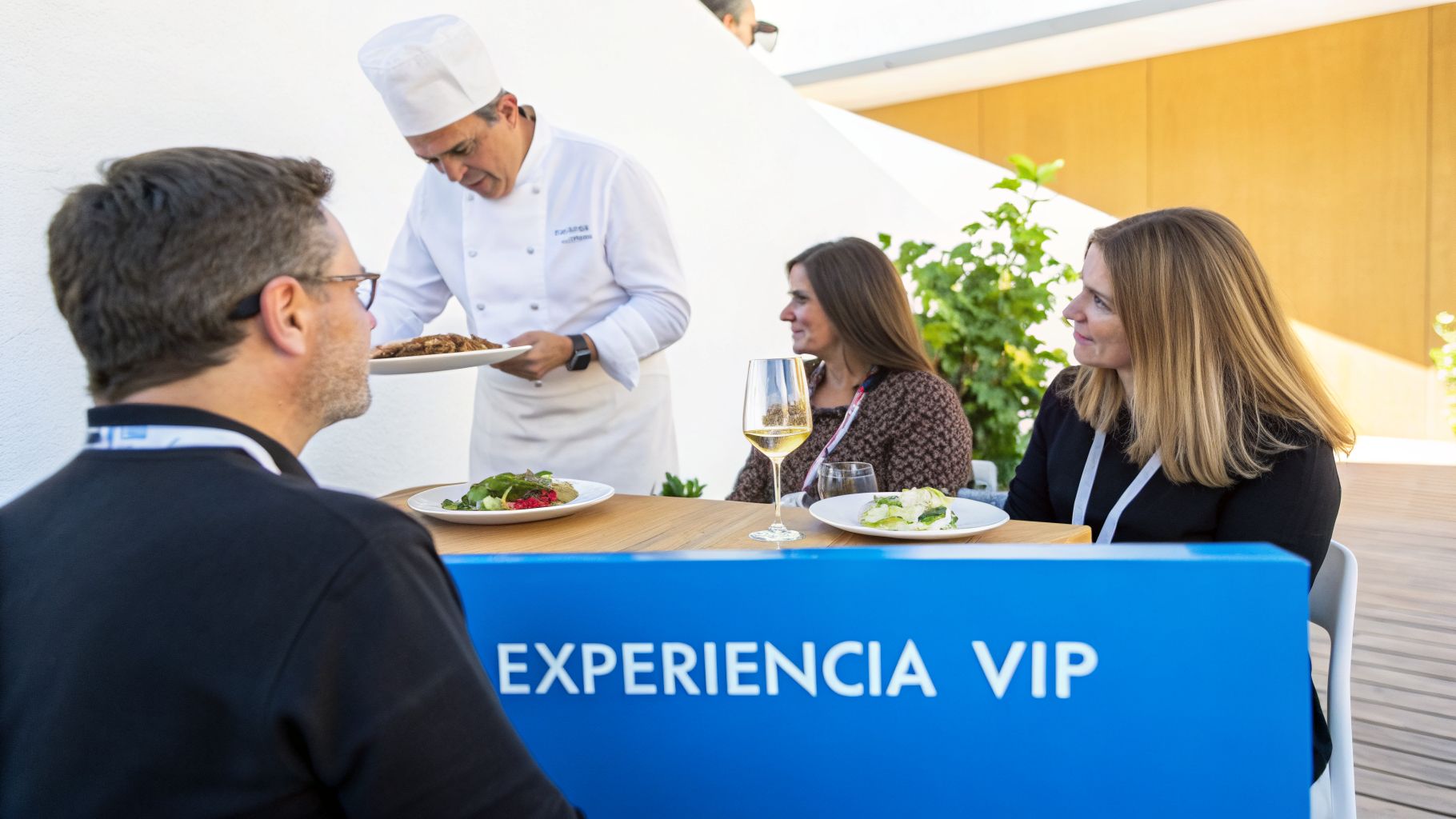
Instead of a free coffee, a customer at a Mexico City coffee shop gets a barista class. Instead of a discount at a restaurant, they receive access to the grand opening of a new branch. These loyalty program examples are ideal for brands wanting to differentiate themselves and build an aspirational community around their business.
How It Works in Practice
A fine dining restaurant in Puebla can invite its most loyal customers to an exclusive dinner with the chef. Similarly, a wine shop in Baja California could organize a private tasting of its new vintage. These experiences cannot be bought with money, making them invaluable and highly desirable.
Key Strategic Point: Experiences generate organic content and aspiration. A customer sharing photos from a VIP event becomes your brand's best ambassador, attracting others who want to experience the same.
Steps to Implement It Successfully:
Define experiences aligned with your brand: Offer a mix of rewards. For example, a barbershop in the State of Mexico can organize a beard grooming workshop for frequent clients or give priority booking access.
Create loyalty "adventures": Design multi-step challenges. "Visit us 5 times this month and win VIP access to our anniversary event." This encourages repeat purchases with a clear goal.
Announce in advance: Build anticipation by announcing upcoming experiences. This keeps customers engaged and aiming to reach the reward.
Document and share: Capture photos and testimonials from each event. Use this content on your social media and email campaigns to show the real value of being a loyal customer.
10. Sustainability and Social Cause Programs
This is one of the loyalty program examples that connects your brand with your customers' values. The system rewards loyalty not just with personal benefits, but with a shared positive impact, where every purchase contributes to a social or environmental cause.
This model is powerful because it appeals to a more conscious consumer, especially younger generations looking for brands aligned with their principles. A coffee shop in Mexico City could donate a percentage of sales from its single-origin coffee to reforestation projects in Chiapas, while a store in Baja California could fund local beach cleanups for every purchase of a specific product. The reward is both emotional and tangible.
How It Works in Practice
A customer at an ice cream parlor in Yucatán who brings their own reusable cup gets extra points. The ice cream shop communicates that thanks to this initiative, 1,000 disposable cups were avoided in a month. The customer feels good about their reward and about having contributed to the environment.
Key Strategic Point: Authenticity and transparency are crucial. Choose a cause that truly resonates with your brand and customers, and communicate clearly and honestly about how the impact is being generated.
Steps to Implement It Successfully:
Choose an aligned cause: If you run a barbershop in Monterrey, Nuevo León, you can partner with a foundation that supports vulnerable youth in the region. The connection must make sense.
Communicate concrete impact: Instead of saying "we help the planet," report with data: "Thanks to your purchase, we have planted 5 trees this month."
Make it verifiable: Partner with a recognized and auditable NGO. Publish annual or semi-annual impact reports to reinforce trust and transparency in your program.
Involve customers in the choice: Let customers at your Puebla restaurant vote on 2 or 3 local causes to which the month's funds will be allocated. Giving them this control increases their commitment and active participation.
Comparison of 10 Loyalty Programs
Program | Complexity 🔄 | Resources ⚡ | Expected Results 📊 | Key Advantage ⭐ | Ideal Use Cases 💡 |
|---|---|---|---|---|---|
Points-per-Purchase Programs | Medium — POS integration and redemption management | CRM and POS infrastructure (medium) | +15–25% purchase frequency | Easy to understand; transactional data | Restaurants, pharmacies, ice cream shops |
Tiered or Level Programs | High — rules, renewals, and communications | Advanced CRM platform and automations | +20–35% spending from top customers | Exclusivity that drives upgrades | Coffee shop chains, premium barbershops |
Referral or Recommendation Programs | Low‑Medium — tracking and anti‑fraud needed | Social integration and unique codes (low) | CAC 70–80% lower; better retention | Cost‑effective acquisition and virality | Barbershops, subscription services |
Frequent Purchase / Visit Dynamics | Low — simple counters and notifications | App or stamp system; constant communication | +30–40% monthly visits | Builds consumption habits at low cost | Coffee shops, pharmacies, ice cream shops |
Subscription / Membership Programs | High — recurring billing and benefits management | Payment infrastructure, CRM, and support | LTV 3–5x; churn ~50% lower | Recurring revenue and strong loyalty | Restaurants, barbershops, premium coffee shops |
Birthday and Special Occasions | Low — date-based automation | Database and automated workflows (low) | Conversion 25–35%; ticket +40–60% | High emotional ROI and low cost | Restaurants, ice cream shops, barbershops |
Smart and Dynamic Coupons | High — ML, segmentation, and real-time POS | Data science, POS integration, and marketing (high) | Redemption 35–50%; ticket +15–25% | Personalized relevance and margin control | Pharmacy chains, restaurants, coffee shops |
Gamification and Challenges | Medium — mission design and UX interface | Digital product, creativity, and notifications | Engagement +25–40%; frequency +35% | High engagement and viral potential | Coffee shops, ice cream shops, youth audience |
Experiential Rewards | High — logistics, partners, and execution | Alliances, operations, and budget (high) | Retention 60–80%; LTV 5–10x | Deep emotional loyalty and UGC | Upscale restaurants, premium brands |
Sustainability and Social Cause | Medium — alliances and transparent reporting | NGO collaboration, certification, and communication | Premium pricing +10–20%; higher advocacy | Purpose-driven differentiation and reputation | Coffee shops, ice cream shops, conscious brands |
Conclusion
The best examples are not the most creative: they are the ones that fit your frequency, ticket, and cash flow. Choose a base mechanic, a clear reward, and measure actual redemptions with your data.
Frequently Asked Questions
Points or stamps?
Stamps/visits if the habit is to come X times and the average spend is similar. Points if the purchase amount varies. Combine them later, not on day one.
How much should the reward be?
There is no magic number: make sure it is perceived as valuable, your margin can handle it, and redemptions don't deplete your star product during peak hours. Test for 30 days and adjust.
Does it work without an app?
Yes. Prioritize registration at the counter (phone number/QR). An app can be a plus, not a barrier.
Related Blogs

Oct 23, 2026
Is it legal to charge a card payment fee in Mexico?

Oct 22, 2026
How to prevent employee petty theft in my business?

Oct 21, 2026
How to Control Food Waste in a Restaurant: 2026 Guide

Oct 20, 2026
What is the global invoice for the general public and when is it issued? SAT Guide

Oct 19, 2026
How to take restaurant orders on WhatsApp without losing any?

Oct 18, 2026
How to Create a WhatsApp Business Catalog to Sell More: 2026 Guide