
Learn what the payback period is, how to calculate it for your SMB in Mexico, and why it is key to measuring your CRM's ROI. A guide with formulas and examples.
It is quickly noticeable when an SME is about to make a major purchase. A coffee shop owner in Puebla requests a quote for a new machine. The manager of a gas station in Estado de México evaluates a loyalty program. A car wash in Nuevo León compares replacing equipment today versus waiting another quarter. The conversation almost always lands on the same question: how long will it take for that money to return to the cash register?
That is where the Payback Period stops being financial theory and becomes an operational tool. For an SME with a physical store, it is not enough for an investment to "sound good." It has to recover capital within a reasonable timeframe because liquidity rules. If the business runs out of breathing room, a good idea can turn into a bad decision.
Table of Contents
The key question: is the investment worth it?
A business does not invest in the abstract. It invests under real pressure. A coffee shop in Mexico City wants a faster machine because it is losing sales during peak hours. A car wash in Monterrey wants to upgrade equipment because each service takes too long. A bakery in Yucatán needs new refrigeration to operate with less friction. The question is not philosophical. It is practical: if the money goes out today, when does it come back?
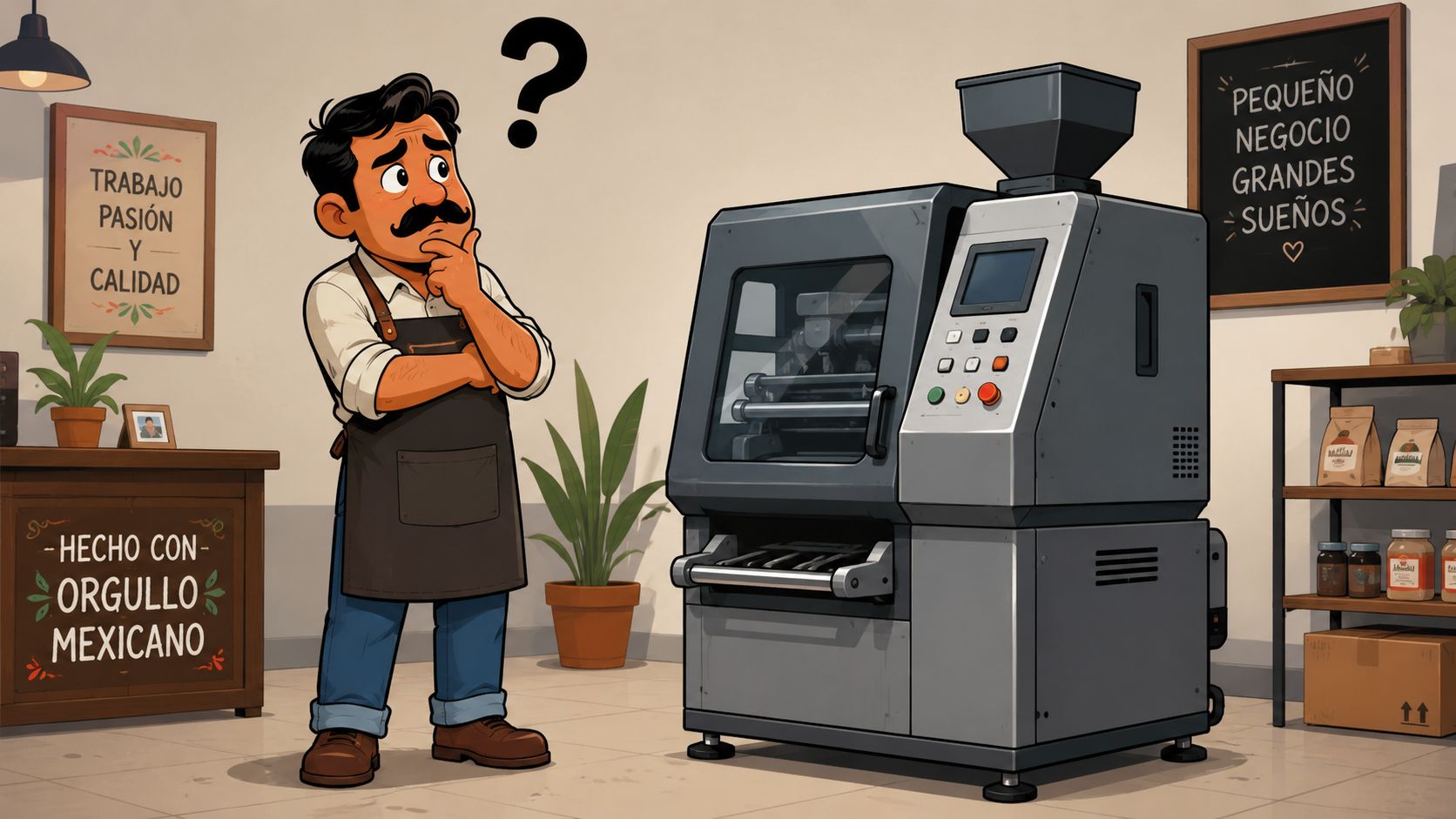
In small and medium-sized businesses, that question carries more weight than an elegant projection. If the investment takes too long to return, the cost is not just in the equipment or technology. It is also in the tied-up cash, in the ability to respond to a drop in sales, and in the dependency on financing.
Rule of thumb: before discussing total profit, it is best to validate if the business can sustain the payback period.
That same criterion is used outside the sales floor. Anyone evaluating a commercial space, land, or an apartment for rent also needs to think about return time, risk, and liquidity. That is why it is helpful to review analyses like Maximize your real estate investment with Feasibility Studies, where the logic of recovering capital also changes the decision.
In businesses with recurring customers, the evaluation improves significantly when the investment is connected to the economic value of each customer. If a coffee shop chain in Baja California or Puebla does not know how much a customer spends over time, calculating payback becomes guesswork. To ground that part, it helps to understand how to calculate customer lifetime value.
The Payback Period serves precisely to structure that conversation. It does not promise to solve everything. But it does answer the question that matters most when capital is limited: if this investment goes in today, when does it stop being a cost and start being oxygen?
What is the investment payback period
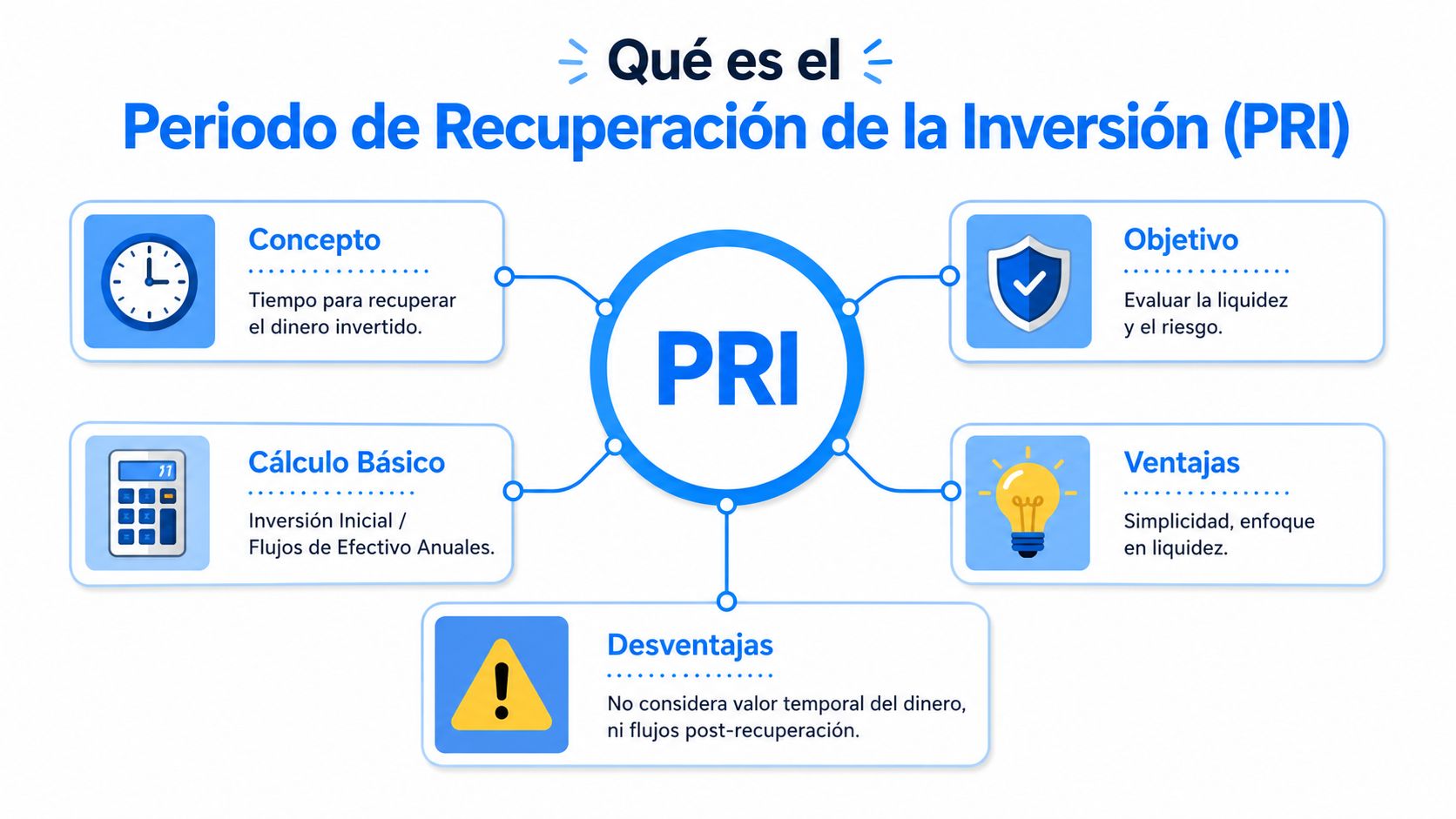
The investment payback period, or Payback Period, is the time it takes for a project to return the money that went out at the beginning. The formal definition in Mexico is clear: the concept of payback period is understood as the exact time a project needs for the accumulated cash flows to equal the initial investment, and BBVA México presents it as a liquidity metric that answers the question of when capital is recovered, useful as a filter for SMEs looking for efficiency (BBVA México).
Thinking about it as a business owner
A simple way to understand it is with a coffee shop in Puebla. If the business buys an espresso machine, the question is not just how much it will sell in total over its useful life. The immediate question is how many months of operation it needs to recover what was paid for it.
Something similar happens in a gas station with a convenience store in Estado de México. If a loyalty program is installed, the useful analysis does not start with a promise of "more loyalty." It starts with a concrete math: how much it cost to implement and what additional cash flow it generates each month through repeat purchases, visits, or average ticket.
That makes the Payback Period a metric very close to daily operations. It does not speak first of future wealth. It speaks of cash recovery. That is why business owners use it to decide more quickly between options competing for the same capital.
What it does measure and what it does not measure
Its main value lies on two fronts:
Liquidity: indicates how soon the money returns.
Operational risk: the longer the timeframe, the longer the business remains exposed.
Prioritization: helps order investments when they cannot all be made at the same time.
It is also wise to set limits from the beginning.
Aspect | What the Payback Period provides | What it does not solve |
|---|---|---|
Quick decision | Helps filter projects | Does not replace full analysis |
Cash | Measures recovery speed | Does not measure total profit |
Risk | Favors less exposed projects | Does not capture benefits after recovery |
The Payback Period is useful because it simplifies a difficult decision. It becomes dangerous when used as the sole metric.
There are two ways to calculate it. The simple payback works when looking for a quick answer and flows are relatively stable. The discounted payback adjusts for the time value of money, which is especially relevant when the investment takes longer or the financial environment demands more rigor.
For an SME with a physical store, that difference matters a lot. A purchase that seems to recover quickly on paper can change when acknowledging that tomorrow's money is not worth the same as today's money.
How to calculate the payback period in your business
Calculating the Payback Period does not require a complex model to start. What it does require is discipline with data. The most common mistake is not in the formula. It is in inflating benefits, mixing revenue with profit, or attributing sales to the project that actually would have happened anyway.
The simple version
When flows are constant, the base formula is:
PRI = Initial investment / Annual cash flow
If the business works better by the month, it can use the same logic in months. The important thing is to maintain the same unit of time in both parts of the calculation.
It works well in cases like these:
Car washes: when new equipment increases service capacity with a fairly predictable cash outflow.
Coffee shops: when an operational improvement reduces times and sustains a stable sales volume.
Convenience stores: when an investment with low seasonal variation yields a relatively uniform benefit.
To avoid distorting the result, the flow used must be net. It is not enough to add expected sales. One must subtract variable costs, discounts, commissions, and any expenses directly linked to the additional revenue.
When cash flows change month to month
Many businesses in Mexico do not have even cash flows. A coffee shop in Yucatán might sell differently depending on the season. A bakery in Puebla might concentrate demand on specific dates. A service station in Baja California might have stronger weeks than others.
In those cases, you do not divide just once. You perform a cumulative sum per period until the total equals the initial investment.
A practical example validated for Mexican SMEs helps illustrate this. For a car wash in Monterrey with an initial investment of 250,000 MXN and a net monthly cash flow of 25,000 MXN, the simple payback is 10 months, calculated as the initial investment divided by the net monthly flow (Hace Cuentas).
That example illustrates why the method is so popular in operations. In a few minutes, it allows you to know if the project recovers capital in a reasonable timeframe for the actual pace of the business.
Useful criterion: if flow changes due to seasonality, promotions, or openings, it is best to model month by month instead of using an optimistic average.
To complement this calculation with a view of total return, it is helpful to review how to calculate return on investment. Payback tells you when capital returns. ROI answers whether the investment ended up generating enough profit.
The discounted version
The discounted payback corrects a central limitation of the simple method. It recognizes that future money is worth less than current money. In Mexican SMEs, this adjustment matters more when the project involves technology, equipment, or improvements with slower recovery.
For this approach, flows are updated using a discount rate or MARR (Minimum Acceptable Rate of Return). In the Mexican financial environment for SMEs, a minimum attractive rate of 10–12% is often discussed, and a discounted payback of less than 12–18 months may be a technical requirement to consider a CRM technology investment viable without relying on external financing.
The difference between both approaches is best seen like this:
Criterion | Simple Payback | Discounted Payback |
|---|---|---|
Calculation | Divides investment by flow or accumulates nominal flows | Accumulates flows brought to present value |
Speed | Fast | More rigorous |
Ideal use | Initial operational decision | More precise financial evaluation |
Time value of money | Does not consider it | Does consider it |
Risk of overestimating | Higher | Lower |
A typical long-term case helps to understand this. For a bakery in Yucatán with an investment of 180,000 MXN, the discounted payback requires updating future flows with a discount rate, for example 12% annually, and if the flows are 20,000 MXN annually, the result could be 3.86 years, that is, 3 years and 10 months (explainer video).
In practice, simple payback serves for screening. Discounted payback serves to avoid fooling oneself. When an SME is going to commit scarce capital, that difference carries weight.
Applying the payback period in Mexican businesses
Theory begins to be useful when it lands on tickets, visits, and gross margin. In SMEs with physical stores, the Payback Period works best if calculated based on actual customer behavior. Not on total business sales, but on the incremental flow that the investment generates in an attributable way.

Car wash in Monterrey
The car wash case is straightforward. If the business invests in new machinery, the math must start from three real data points:
Initial outlay
Additional net flow per month
Exact moment when the accumulated sum equals the investment
When those data points are stable, reading them is quick. If the business recovers quickly, the investment relieves pressure. If it takes too long, it absorbs cash for longer than many SMEs can tolerate.
This type of analysis works very well in Nuevo León, where many businesses operate with a strong focus on turnover and speed. It also applies to automotive service shops in Estado de México or car wash chains in Mexico City, where the bottleneck lies in capacity and service time.
Coffee shop and retail with recurring customer
In coffee shops, convenience stores, bakeries, and small retail formats, the challenge is usually not a single large sale. The challenge is repeat purchase. There, the Payback Period changes logic. The investment is not always paid off by an extraordinary ticket, but by the sum of many additional visits.
This makes it necessary to separate very well the variables that do matter:
Initial cost of the project: implementation, setup, training, and any operational adjustments.
Attributable incremental flow: extra visits, higher ticket, or better retention with real impact on cash.
Reasonable operational horizon: do not project benefits that the business cannot sustain yet.
A coffee shop chain in Puebla or Baja California could use this logic to evaluate a customer relationship program. If the investment improves repeat purchases, the important data point is not "more traffic" in the abstract. It is how much additional net margin each active customer leaves and in how many months that flow pays off the outlay.
A good payback calculation in physical retail does not come from commercial enthusiasm. It comes from attributable sales and a conservative margin.
In Mexican SMEs with physical stores, there is a useful operational benchmark for investments in CRM and loyalty: a payback between 6 and 12 months is usually seen as a viable benchmark to sustain operations without relying on constant external financing, and keeping it below 12 months becomes a healthy sign in this type of implementation (analysis on PRI).
Gas station and convenience store
A gas station in Estado de México or a station with a store in Puebla has an interesting pattern. Part of the income depends on the location's traffic, but another part depends on frequency, repeat purchases, and consumption habits. If the business launches a loyalty scheme, the Payback Period must look at the cash effect that can actually be sustained.
It is not wise to use all branch revenues as if they were a consequence of the project. It is better to isolate comparable groups. For example, recurring versus non-recurring customers, or prior and subsequent periods with conservative criteria.
In these businesses, the analysis improves when looking at:
purchase behavior per visit,
recurrence per customer,
margin generated per additional transaction,
cost of acquisition and retention.
This approach is also useful for chain coffee shops in Mexico City, mini-marts in Baja California, or food stores in Yucatán. When the business operates on recurrence, the Payback Period depends less on brand discourse and more on the ability to convert an investment into measurable cash flow.
The key point is not using a pretty formula. It is avoiding two common traps: counting non-attributable sales and using overly optimistic averages. On the floor, that always ends up lengthening the actual recovery.
Limitations of the payback period and how to use it well
The Payback Period solves an important question, but it does not solve the entire decision. Its greatest strength is speed. Its greatest weakness is too. When an SME relies solely on that metric, it may choose a project that returns money quickly but creates less total value.
The most common mistake
The method leaves out cash flows after the point of recovery. In other words, two investments can "pay for themselves" in a similar timeframe and still have very different results afterward. One may continue generating cash for years. The other may stall as soon as it recovers the outlay.
Nor does it measure overall profitability. Other tools, such as ROI or NPV, are needed for that. Payback serves best as a first filter, not a final verdict.
If an investment does not pass the recovery filter, it rarely deserves further analysis. If it does pass, it is still not approved.
Another practical limitation appears when the business poorly estimates incremental flow. In coffee shops, gas stations, or convenience stores, it is very common to attribute an improvement to the investment that actually comes from season, location, or external promotions. This bias artificially shortens the timeframe.
Where CAC Payback comes in
In businesses that invest in marketing, retention, or repeat purchase, a modern variant carries a lot of weight: the CAC Payback Period. This metric answers how many months it takes the business to recover what it spent to acquire a new customer.
In Mexico's startup ecosystem, a payback of less than 12 months to recover customer acquisition cost is considered healthy, while periods exceeding 18 months can signal inefficiency, which is especially delicate for SMEs that depend on recurrence (Ecosistema Startup).
That data does not only apply to tech. It also makes sense for a coffee shop in Mexico City, a car wash chain in Nuevo León, or a service station in Puebla that invests in campaigns to attract and retain customers. If the acquisition cost is recovered slowly, the business grows with friction. If it is recovered quickly, there is more room to reinvest.
Used correctly, the Payback Period does not compete with other metrics. It orders them. First, it filters whether the investment puts cash at risk. Then, it confirms if it actually leaves value.
How to reduce your payback period and accelerate ROI
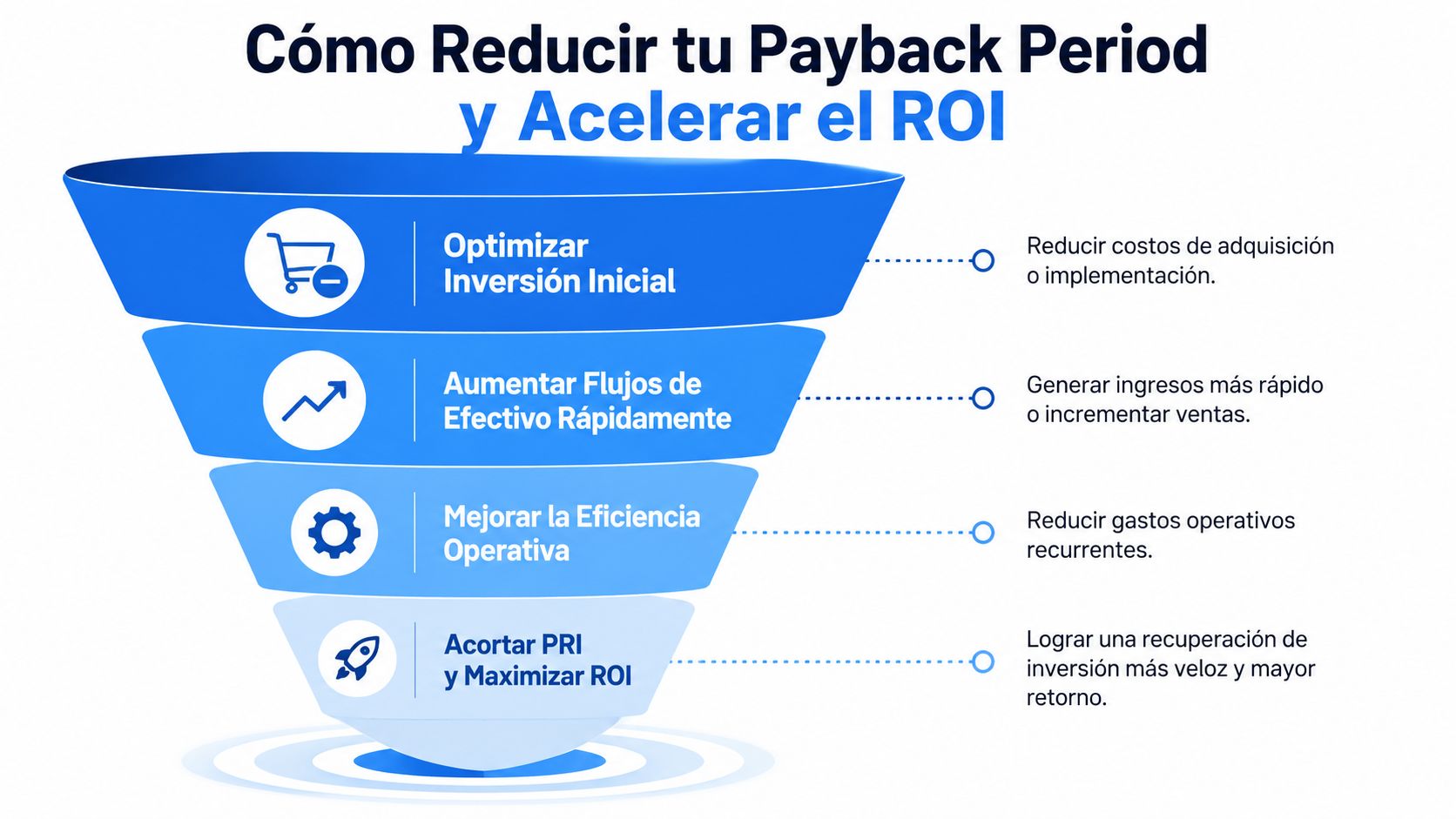
Shortening the Payback Period does not depend on "doing financial magic." It depends on moving the right levers. In practice, there are only two paths: lowering the initial outlay or increasing the attributable net flow faster. Almost always, the second path has more impact.
Three levers that actually move the timeframe
The first lever is raising purchase frequency. A coffee shop in Puebla, a gas station in Estado de México, or a store in Baja California recovers any investment faster when customers return sooner. There is no need to depend on a single large purchase. There is a need to build repetition.
The second is raising the ticket with commercial logic. Poorly designed coupons destroy margin. Tiered rewards, segmented campaigns, and offers linked to buying habits usually push net flow better. In food businesses, this is worth much more than launching blanket discounts.
The third is attributing sales with discipline. If the business does not know which campaign, promotion, or dynamic produced the repeat purchase, it cannot optimize. There, it is useful to delve deeper into the concept of acquisition cost because reducing the cost of bringing in a customer and recovering that expense sooner has a direct effect on payback.
It is also wise to monitor labor and tax costs linked to the operation. In that conversation, a clear reading on HeyTalent on exemptions can help to better understand which concepts impact the cost structure and how that modifies the actual return on certain decisions.
What actions usually fail
Not everything that "activates sales" improves recovery. Some practices make it worse:
Open discounts: they sell more, but erode margin and delay the return.
Campaigns without segmentation: they generate noise, not profitable repeat purchases.
Long implementations: they consume time and cash before producing flow.
Superficial measurement: if there is no clear attribution, the business believes it is recovering sooner than is actually occurring.
The best project is not the one that promises the most. It is the one that returns cash quickly and in a measurable way.
For an SME with a physical store, the most effective combination is usually simple: acquire better, retain better, and measure better. When those three pieces work together, the Payback Period stops being a concern and becomes a controllable operational goal.
If the goal is to recover CRM, loyalty, and physical store campaign investments faster, Swirvle helps centralize customers, automate repeat purchases, attribute sales, and clearly measure which actions actually generate flow. For SMEs that want to grow with control over cash and return, that is the type of visibility that makes any payback calculation useful.
Related Blogs

Oct 11, 2026
How to set up a WhatsApp loyalty program for my business?

Oct 10, 2026
What Day of the Dead promotions work in coffee shops and restaurants?

Oct 9, 2026
How can I track my business's daily sales?

Oct 8, 2026
How to do a daily grocery store inventory without wasting time?

Oct 7, 2026
What does a CRM look like in practice for a coffee shop or restaurant?

Oct 6, 2026
Which campaigns work to fill a restaurant during the week?
Try Swirvle for free
No card required · 30 days free
Start your free trial