
The Starbucks value proposition is a reliable, customizable coffee experience in a comfortable space, with its app and its rewards program.
Starbucks does not just sell coffee. It sells a repeatable experience: a reliable beverage, a comfortable space to stay, and a digital layer that makes it easy to return.
That explains why it can charge more than the average coffee shop without relying solely on the bean or the recipe. Its strength lies in combining product, service, atmosphere, personalization, and loyalty into a single promise.
Here we cover what Starbucks promises the customer. If you are looking for how it executes that promise (loyalty, data, app and marketing), we explain it in the 10 Starbucks strategies you can apply in your business.
How we analyze the Starbucks value proposition
To evaluate the Starbucks value proposition in this article, we use six concrete criteria: product quality, in-store experience, personalization, convenience, loyalty, and consistency between brand promise and actual execution. The idea is not to repeat corporate talk, but to review what the customer actually receives when ordering, paying, consuming, and returning.
We also distinguish between two concepts that are often confused. The value proposition is the reason a customer chooses the brand; the value chain is the set of internal activities that allow that promise to be delivered. Here we focus on the former: what value the consumer perceives and why that value sustains price and frequency.
Editorially, I prioritized primary sources from Starbucks for Rewards, expansion, and strategy data, and only added external references when they help interpret why a consistent experience increases loyalty. My takeaway is simple: the interesting thing about Starbucks is not that it invented premium coffee, but that it managed to turn it into a habit.
What is the Starbucks value proposition?

Definition (~40 words): The Starbucks value proposition is to sell coffee and food with predictable quality, real personalization, a comfortable “third place,” digital convenience, and rewards that turn daily purchases into habits—charging a premium for the full experience, not just the bean.
Table of 5 pillars (before the deep dive analysis)
Pillar | What the customer receives | How it looks in practice |
|---|---|---|
1. Consistent product | Familiar taste and menu between visits | The same "usual" latte, with no bad surprises |
2. Personalization | Control over the drink | Tailored milk, shots, size, and syrups |
3. Third place | Space between home and work | Wi-Fi, seating, and an environment to stay |
4. Digital convenience | Less friction when ordering and paying | App, Mobile Order, fast payment |
5. Loyalty / community | A reason to return and feel recognized | Rewards, Stars, name on the cup |
Starbucks does not compete to be the cheapest option; it competes to reduce friction, raise perceived quality, and turn a daily purchase into a routine. These five pillars reinforce each other and explain why the brand maintains premium pricing with recurrence.
1. Consistent product quality
Starbucks does not need every customer to be a coffee expert. It is enough that the experience is predictable: stable flavor, familiar menu, similar preparation between locations, and visible standards. This consistency reduces the perceived purchasing risk. The customer feels they know what they are going to get.
2. Personalization
The value is not just in choosing a drink, but in customizing it. Size, milk type, shots, temperature, syrups, or toppings turn the order into a personal decision. This sense of control increases satisfaction even before consumption, because the product feels "made for me" and not just "served to everyone."
3. In-store experience and the "third place" logic
The brand has insisted for years that its stores must function as a space between home and work. In its corporate and experience communication, Starbucks links design, comfort, and service to this idea of dwelling and daily connection, not just a quick Starbucks experience transaction.
4. Digital convenience
The app, mobile payment, ordering ahead, and Rewards integration add a decisive practical layer. Starbucks turns a potentially slow purchase into a quick, repeatable action. When a brand saves time without losing personalization, it stops competing just on product and begins competing on ease.
5. Sense of community and brand
The value of Starbucks is also symbolic. The brand conveys familiarity, belonging, and a recognizable aesthetic. It is not always about "community" in a deep sense; sometimes it is enough for the customer to feel identified with the ritual, the menu language, and the environment. Studies on brand experience show that sensory, affective, and intellectual experiences strengthen preference and loyalty beyond the functional product in the Journal of Consumer Psychology.
How the 5 pillars connect in operations
The five pillars in the initial table are not "marketing in the abstract": each one lowers price sensitivity. If the product is consistent, the customer argues less about the cost; if they customize, they perceive control; if the store functions as a third place, the ticket includes use of the space; if there is an app and Rewards, repetition becomes a habit.
Each element pushes in the same economic direction: it lowers price sensitivity. If the drink is consistent, the customer argues less about the cost because they are buying certainty; if they can customize, they feel greater control and perceive more value; if the store functions as a comfortable space, the ticket incorporates the use of the space in addition to the product. It is no coincidence that Starbucks has turned its loyalty layer into a core asset: in the first fiscal quarter of 2025, it reported 34.6 million active Starbucks Rewards members in the United States, a scale that shows how much its model depends on recurring customers and not on isolated purchases (data reported in official communications and Starbucks loyalty coverage).
Digital convenience multiplies this effect. Starbucks announced a "reimagined" loyalty program in 2026 with Green, Gold, and Reserve levels, differentiated benefits, and greater personalization, making it clear that the reward is no longer just about accumulating points, but receiving value according to the level of relationship with the brand reimagined Starbucks Rewards program.
My takeaway here is that Starbucks charges a premium not only for objective quality, but because it packages multiple utilities together: drink, comfort, recognition, time savings, and habit. Understanding how a loyalty program works helps to see why this mix produces recurring returns: when value is cumulative, switching brands "costs" the customer more, even if a competitor's coffee is cheaper.
In essence, Starbucks does not sell products; it sells a standardized, reliable experience. You know quite well what you are going to get, regardless of the location. In daily consumption, that predictability is worth a lot.
How Starbucks adapted its model to the Mexican market

Adapting Starbucks in Mexico was not just about opening stores with the same global menu. The local execution combines product range, design, operation, and convenience so that the brand promise feels recognizable but not foreign. There lies the key difference: an international value proposition only truly works when it maintains consistency without erasing the local context.
In Mexico, Starbucks has used formats and locations that respond to very specific urban habits: stores built for dwelling, high-traffic points, and a mix of indulgence consumption, informal meetings, and functional purchases. Furthermore, the brand has linked part of its local story to Mexican coffee. In its country operations, Starbucks highlights its sourcing of domestically produced coffee and its historic relationship with coffee-growing regions such as Chiapas Starbucks Mexico.
There is also concrete local evidence of scale and continuity. By 2022, the brand was already operating 753 stores in Mexico, spanning 61 cities—a relevant base to sustain a proposition centered on convenience and familiarity Starbucks Mexico. In 2024, the opening of 72 new units was also announced as part of an investment plan of 4.5 billion pesos and a goal to reach 1,000 stores by 2026 Alsea.
This local context coexists with the company's broader international expansion. In its 2025 annual report, Starbucks noted that the international business grew by 7% in net revenues and that it opened 526 company-operated stores in the last 12 months; in the fourth fiscal quarter of 2025, the international segment reached 2.1 billion dollars in revenue, an increase of 9% year-over-year 2025 annual report. This expansion describes more than just size: it describes a brand strategy based on being close, looking familiar, and adapting without breaking standards.
How that promise lands in Mexico
When ordering: the customer finds a recognizable menu with room for personalization, but also releases and flavors tailored to local preferences and relevant seasons in the Mexican market.
When staying: many stores maintain the third place logic, with space for meetings, brief work sessions, or comfortable waiting; this stay is part of the perceived value, not an accidental extra.
When paying: the experience relies on the app, digital media, and Rewards, which reduces friction for an urban consumer prioritizing speed.
When returning: rewards and operational familiarity turn an occasional purchase into a routine. This is the least flashy part and, in my view, the most powerful.
Where other local brands compete on price or with artisanal product as their single argument, Starbucks in Mexico competes with a complete package: brand recognition, personalization, physical space, and digital repetition. This balance helps in increasing customer retention, because the customer does not just evaluate "if the coffee is good," but whether the overall experience solves a daily need better than other options.
How does Starbucks communicate its value proposition to justify its price?
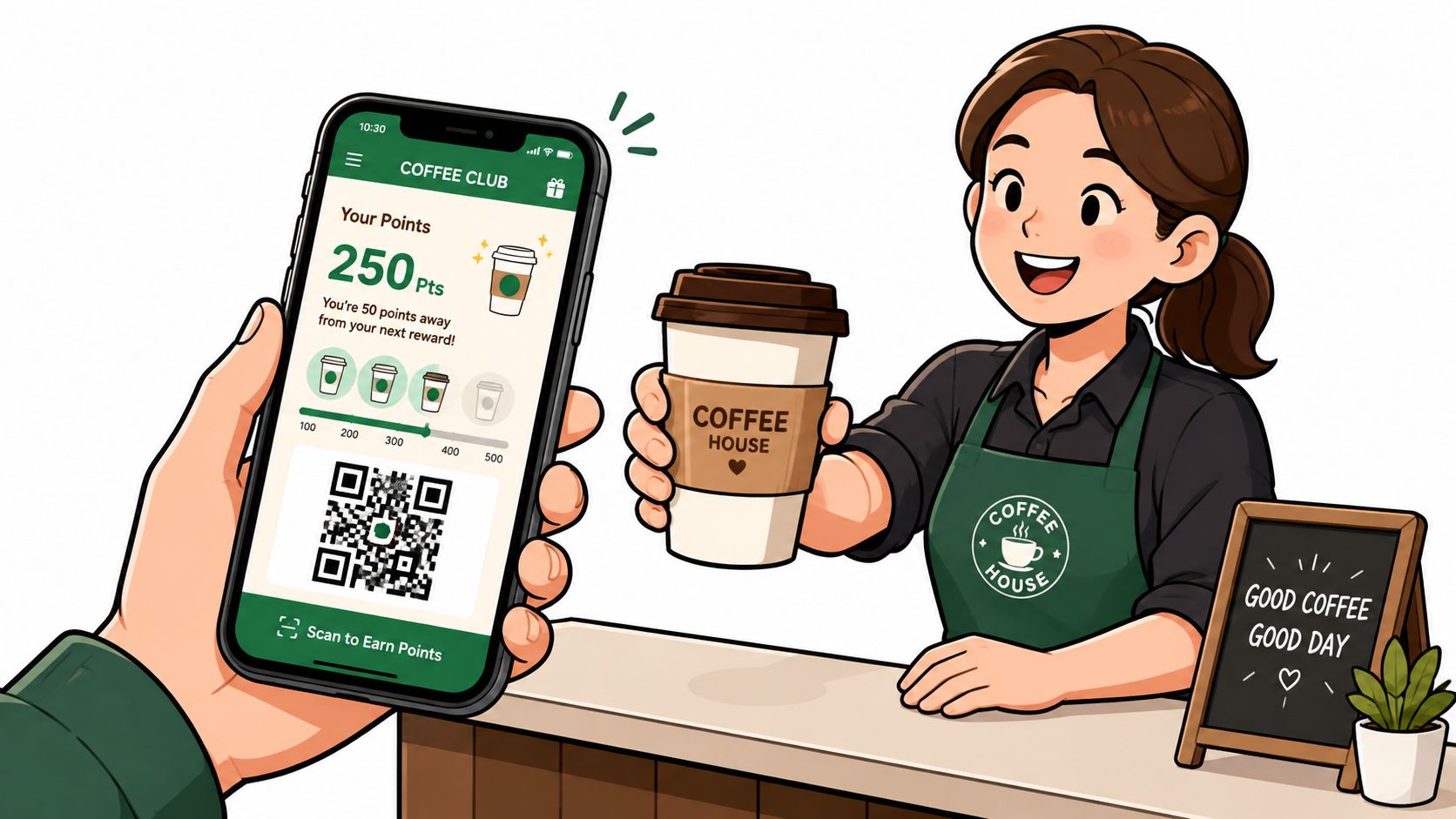
Starbucks justifies its premium price by communicating value in a cumulative way. It does not tell the customer "pay more just because"; it shows cues of quality, customization options, operational consistency, digital ease, and rewards for repetition. Together, these mechanisms make the price seem like part of a superior experience rather than a simple premium markup.
Quality signaling
Menu language, visible preparation, store design, and standardization function as signals. Even when consumers cannot technically evaluate the coffee, they do interpret quality codes: cleanliness, presentation, process order, and product familiarity. This drives brand preference and supports average ticket size.
Personalization as perceived control
Being able to adjust a beverage changes the perception of value. The customer does not just compare one latte against another latte; they compare their exact drink against a more generic option. This psychological difference matters a lot in premium pricing. My impression is that here Starbucks gains more from the perception of control than from the actual complexity of the product.
Operational consistency
Store layout, expected speed, and homogeneous preparation reduce uncertainty. When a chain delivers consistently between visits, the customer argues less about the price because they are buying confidence. This consistency increases the likelihood of repurchase more than a one-off promotion.
Digital convenience
The app makes the experience more predictable and faster. Starbucks has explained that its digital ecosystem aims to integrate ordering, payment, and rewards into the same flow to simplify repeat digital customer relationships. For a high-frequency business, reducing waiting time and payment steps can affect both frequency and preference.
Rewards and habit
Rewards does not just "reward"; it trains the customer to return. With personalized offers, Stars, and tiered benefits, the program transforms single visits into visible progress. This progress makes the premium price feel like part of a relationship with a return. Additionally, Starbucks has continued to reinforce the link between personalization and engagement in the recent evolution of its program official 2026 announcement.
The practical conclusion is less romantic than it often seems: Starbucks does not win because it "charges high prices and people pay"; it wins because it turns price into a sum of perceived utilities. If you want to apply some of this logic without hurting your margin, it is worth reviewing how to structure a discount to reward recurring behavior without training the customer to only buy on sale.
Why does the Starbucks value proposition work?
It works because it solves several daily needs in a single purchase. A person does not necessarily walk in looking for the best possible coffee in absolute terms; they often look for speed, a known standard, a place to wait, a drink to their liking, and the feeling that their money is buying more than caffeine. Starbucks brings all of that together in an easy-to-repeat format.
It also works because it reduces decision-making. The customer knows how to order, what to expect from the menu, how to pay, and what they get if they return. In saturated markets, reducing friction can be just as valuable as improving the product. That is why the Starbucks value proposition does not depend solely on aspirational branding: it depends on repeatable execution.
There is also a clear financial point. When a brand manages to make the consumer perceive quality, control, and convenience at the same time, they become less sensitive to small price differences. This translates into greater recurrence and a ticket that tolerates extras, customizations, or complementary purchases. From the outside, it looks like "brand magic"; in reality, it is a fairly disciplined value architecture.
I would be cautious with a widely repeated idea: not everything Starbucks does is replicable. Its brand power, its operational scale, and its global physical presence cannot be copied. What is transferable is the logic: defining precisely what extra value the customer receives in addition to the product and making sure that promise appears on every visit.
The growth of Starbucks as proof of its value in Mexico
When analyzing a business model, numbers usually tell the most honest story. And the story of Starbucks in Mexico has been, for years, a validation that its proposition connects with urban, aspirational, and convenience consumption habits.
For any SMB, this phenomenon serves as a useful benchmark, though not as a literal template. Growth alone does not prove a brand has the best possible experience, but it does indicate that its offering finds enough repeat demand to sustain expansion.
Expansion as a thermometer of success
Since its arrival in Mexico, Starbucks has used expansion as a way to reinforce availability, recognition, and habit. This logic is visible in concrete local figures: in 2022 it already operated 753 stores in 61 cities in the country Starbucks Mexico, and in 2024 its local operator announced 72 additional openings within an investment plan of 4.5 billion pesos with a goal of reaching 1,000 stores by 2026 Alsea.
This local perspective aligns with its broader international strategy: the company reported a 7% growth in international net revenues and 526 new company-operated stores in the last 12 months in its 2025 results Annual Report 2025.
What is relevant to this analysis is not just the number of openings. It is the fact that its value depends on being present at the right moments of the day and on the customer's daily commutes. A proposition based on convenience and familiarity requires physical density.
The real achievement of the Starbucks value proposition is not convincing people to pay more for coffee. It is having built an experience so clear and repeatable that expansion reinforces the brand and the brand, in turn, makes expansion easier.
Figures that validate a strategy
In the Mexican market, the strongest signal is not just staying power, but the continuity of investment and openings. Having 753 stores, a presence in 61 cities, adding 72 openings in 2024, and sustaining a goal of 1,000 units by 2026 suggests that the proposition is not just an aspirational narrative: it translates into scalable operations, purchase frequency, and enough confidence to continue investing Alsea.
Practical lessons from Starbucks for your SMB
Now let us bring all of this strategy down to earth. The Starbucks value proposition may seem out of reach, but in reality, it is a very useful source of inspiration for any SMB. It is not about replicating their millions, but about adapting their mindset.
Forget about thinking that you only sell a product. Whether you have an ice cream parlor in the State of Mexico or a pharmacy with a small coffee corner in Mexico City, real change happens when you start building a complete experience around what you offer.
Create a unique experience with what you already have
No, you do not need designer armchairs or a corporate Wi-Fi network to start building your own "third place." The experience is woven through details that, often, do not cost money, but attention and care.
Atmosphere is your signature: think about it. A well-curated playlist, impeccable cleanliness of your store, and warm lighting can transform a simple space into a cozy corner where people actually want to stay.
Inviting aromas: scent matters. A restaurant in Puebla can let the aroma of freshly made mole drift out onto the street. A gift shop in Nuevo León could use a signature scent that its clients immediately associate with a quality experience.
Consistency builds trust: this point is key. You must ensure that every customer receives the same quality and the same friendly treatment, regardless of who is behind the counter or what time they visit.
Personalize service to create a genuine connection
This is where an SMB can not only compete but can win by a wide margin. Unlike a global chain, you can actually get to know your customers by name.
The real power of an SMB lies not in competing on price, but in its ability to build authentic human relationships. Remembering a customer's name or their favorite order is a gesture that no large corporation can replicate at scale.
For example, your coffee shop's barista can memorize that María orders her latte with oat milk. A pharmacy owner in Baja California can ask a regular customer how they did with their last treatment. It is these small acts that build a loyalty that money alone cannot buy.
In fact, Starbucks' own strategy continues to move in that direction. With its plan to return to the store experience, the company has reinforced the idea that human connection and service remain crucial Starbucks experience.
Build a community around your brand
Your business can be much more than a simple point of sale. It has the potential to become part of the rhythm of your neighborhood. A great way to achieve this is to organize small, low-cost activities that invite people to gather in your space.
Imagine an ice cream parlor in Yucatán organizing a lottery afternoon, or a bookstore with a monthly book club. These initiatives transform customers into community members and your location into a preferred meeting spot. If you add a digital strategy to that, you can start to create a loyalty program that rewards that participation and motivates returns.
How to apply the Starbucks formula with affordable technology
The useful part of the Starbucks model for an SMB is not copying a massive app or a multi-tiered loyalty program from day one. It is taking three transferable principles and making them measurable.
1. Document the experience you want to deliver
Define what should always happen: service response time, service tone, product presentation, and post-purchase follow-up. Without that standard, there is no consistent value proposition, only good intentions.
2. Design a minimum layer of personalization
You do not need a complex system to start. You can record basic preferences, remember frequent purchases, or segment customers by consumption habit. If you need that operational base, it is helpful to understand what a CRM system is before automating anything.
3. Create a repeat mechanism
Recurrence can be driven by simple rewards, timely reminders, or frequent visit benefits. The important thing is that the incentive reinforces the experience and does not erode margins.
My editorial observation is this: what an SMB can copy is the discipline of designing experience, personalization, and repeat visits as a system; what it cannot easily copy is the symbolic weight of a global brand. Here, it pays to be realistic. In many cases, less technology well-used works better than an ambitious promise poorly executed. If you want to explore tools to organize that foundation, you can check out https://swirvlehub.com.
This map outlines the most important lessons that an SMB can take from the Starbucks model and adapt to its own business.

As the image shows, focusing on customer experience, service personalization, and community building are three pillars that any SMB can work on to build a strong and durable value proposition.
"Apply it tomorrow" checklist (coffee shop / SMB)
You do not need Starbucks' scale. You need to execute a minimum version of the 5 pillars tomorrow:
Product: choose 1 signature drink and standardize weight, time, and presentation (reference photo at the station).
Personalization: post 3 clear modifiers on the menu (plant-based milk, extra shot, syrup) with prices in MXN.
Third place: a 15-minute store "reset" before opening (visible cleanliness, playlist, scents, Wi-Fi details posted).
Convenience: activate an order-ahead channel (WhatsApp with a cutoff time) or a "ready in 5 minutes" counter option.
Loyalty: launch a digital stamp or simple points (e.g., 10 visits = drink) and record at least the name + favorite product of your top 20 customers.
Measure for 7 days: retention of those 20, average ticket, and % of customized orders.
If you already checkout with a POS and want to link tickets + rewards without loose papers, a platform like Swirvle helps organize loyalty and operations in the same flow—not pretending "to be Starbucks," but making what you promise measurable.
Frequently asked questions about the Starbucks value proposition
It is normal that, after analyzing a giant like Starbucks, questions arise. How does all of this translate to the scale of my own business? Let us ground these ideas with answers to questions you are probably already asking yourself.
Can I apply this if I do not sell coffee?
Of course. Forget about coffee for a moment. The real lesson of Starbucks is not in the bean, but in the obsession with customer experience. That principle is completely universal.
Think, for example, of a bookstore in Puebla. It can easily become the "third place" for its clientele if it creates a club atmosphere, with a classic rock playlist, a complimentary coffee, and decor that invites them to stay. Or a pharmacy in the State of Mexico, which can differentiate itself by implementing a loyalty program that not only rewards recurrence but helps staff remember the specific needs of its regular customers.
The product is just the starting point; real value is built around it.
Do I need a lot of money to create a good value proposition?
Not at all. In fact, thinking that everything is solved with a large investment is one of the most common myths. Customer experience is almost always built with details that cost more attention and creativity than money.
A greeting by name, a store that smells clean, a playlist that connects with your audience... These are gestures that do not hit your budget but have a huge effect on customer perception.
Differentiation is not always in the budget, but in creativity and attention. SMBs can outperform large chains in closeness and personalization, two of the most powerful pillars for building loyalty.
Furthermore, technology today has democratized access to marketing and customer retention tools that were previously exclusive to large corporations.
How do I know if my value proposition is working?
This is where intentions part ways with results. The definitive answer lies in the data. To know if your efforts are really paying off, you need to measure three key indicators:
Customer retention: are people coming back? Simple and direct.
Average ticket: are they spending a little more on each visit?
Referrals: do they talk about you and bring their friends without you asking them to?
A good CRM system gives you visibility over these metrics. It allows you to see more clearly which strategies are working and, above all, helps you justify every peso you invest in improving your customer experience.
With Swirvle, you can implement these strategies hassle-free and measure their real impact on your business. The platform allows you to create loyalty programs, segment customers, and automate campaigns so you can focus on what you do best: serving well and growing. Discover more at https://swirvlehub.com.
Related Blogs

Oct 22, 2026
How to prevent employee petty theft in my business?

Oct 21, 2026
How to Control Food Waste in a Restaurant: 2026 Guide

Oct 20, 2026
What is the global invoice for the general public and when is it issued? SAT Guide

Oct 19, 2026
How to take restaurant orders on WhatsApp without losing any?

Oct 18, 2026
How to Create a WhatsApp Business Catalog to Sell More: 2026 Guide

Oct 17, 2026
How to set up quick replies in WhatsApp Business?